
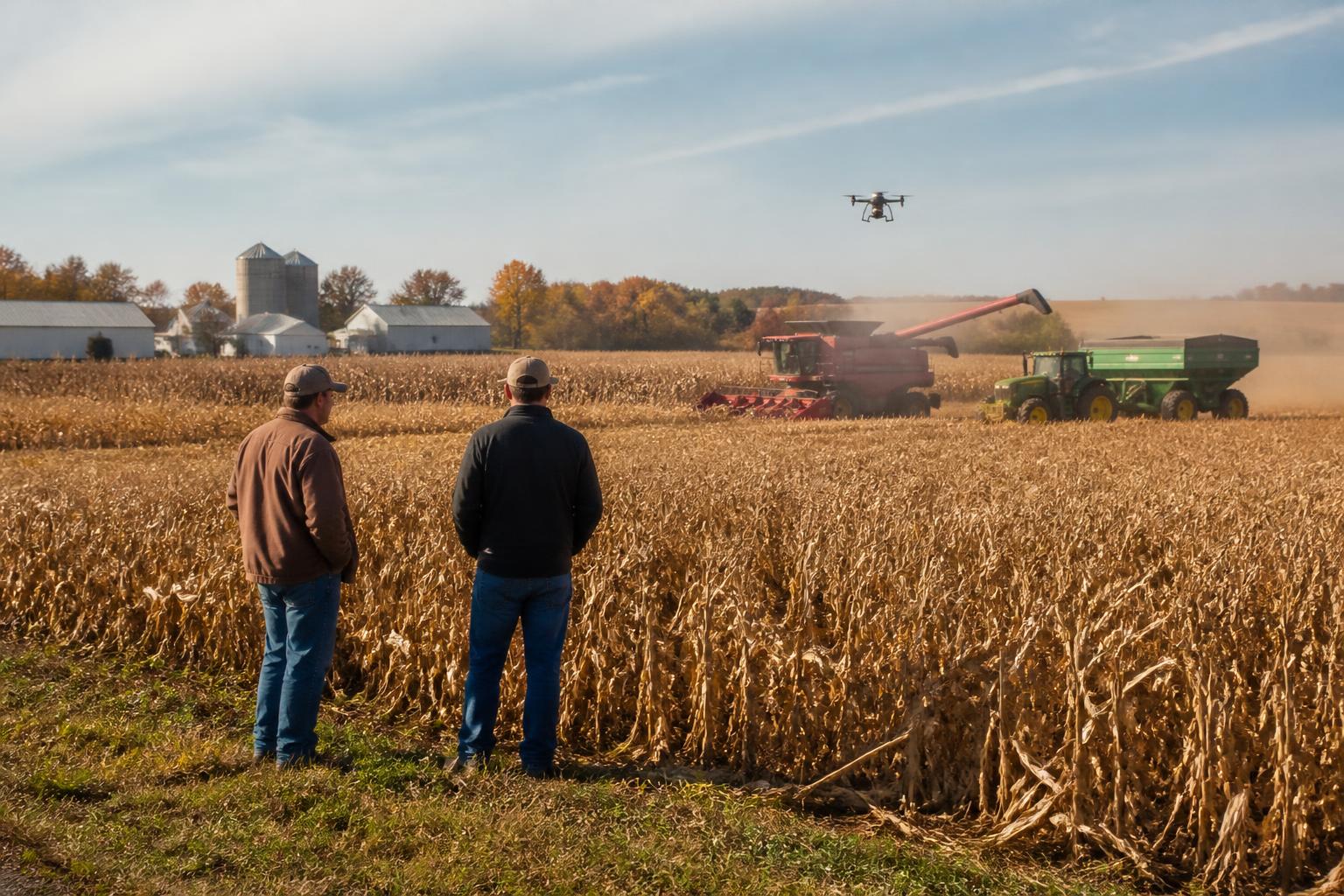
With the autumn harvest season well underway across Delaware, producers are navigating a complex market environment. As combines roll through fields in Kent and Sussex counties, many are balancing the physical demands of the harvest with growing concerns regarding the reliability of federal crop data and the underlying stability of agricultural credit.
Recent discussions among agribusinesses suggest that discrepancies in USDA reporting have led to increased scrutiny of yield forecasts. Farmers often rely on this data for forward contracting and storage decisions, and uncertainty in these reports can complicate local grain marketing strategies. If you are looking to secure your current inventory or assess pricing, you can review current grain market supply pressures and financial planning resources to help navigate this volatility.
The Credit Landscape and Federal Support
Financial observers have noted that significant government aid packages, while providing essential stopgap measures, may be masking deeper structural risks within agricultural lending. For Delaware producers, maintaining a clear view of debt-to-asset ratios is increasingly important as interest rates and input costs continue to evolve. Experts suggest that regional lenders may be looking for more robust, data-backed business plans as we transition into the next production cycle.
Technology and Future Crop Reporting
In response to concerns regarding data accuracy, there is a growing push toward integrating artificial intelligence to refine crop estimation. While these tools are still in the early stages of adoption, the goal is to provide a more granular, real-time look at production metrics. For the Delaware farmer, this could eventually mean more precise regional insights that help refine input purchasing and marketing timelines.
What it means for the market
The convergence of unpredictable harvest data and long-term financial uncertainty creates a need for enhanced caution. As the season progresses, focusing on reliable, localized market data and maintaining conservative financial buffers will be key to weathering potential instability in the grain markets.
Comments
No comments yet - be the first to share your take.