
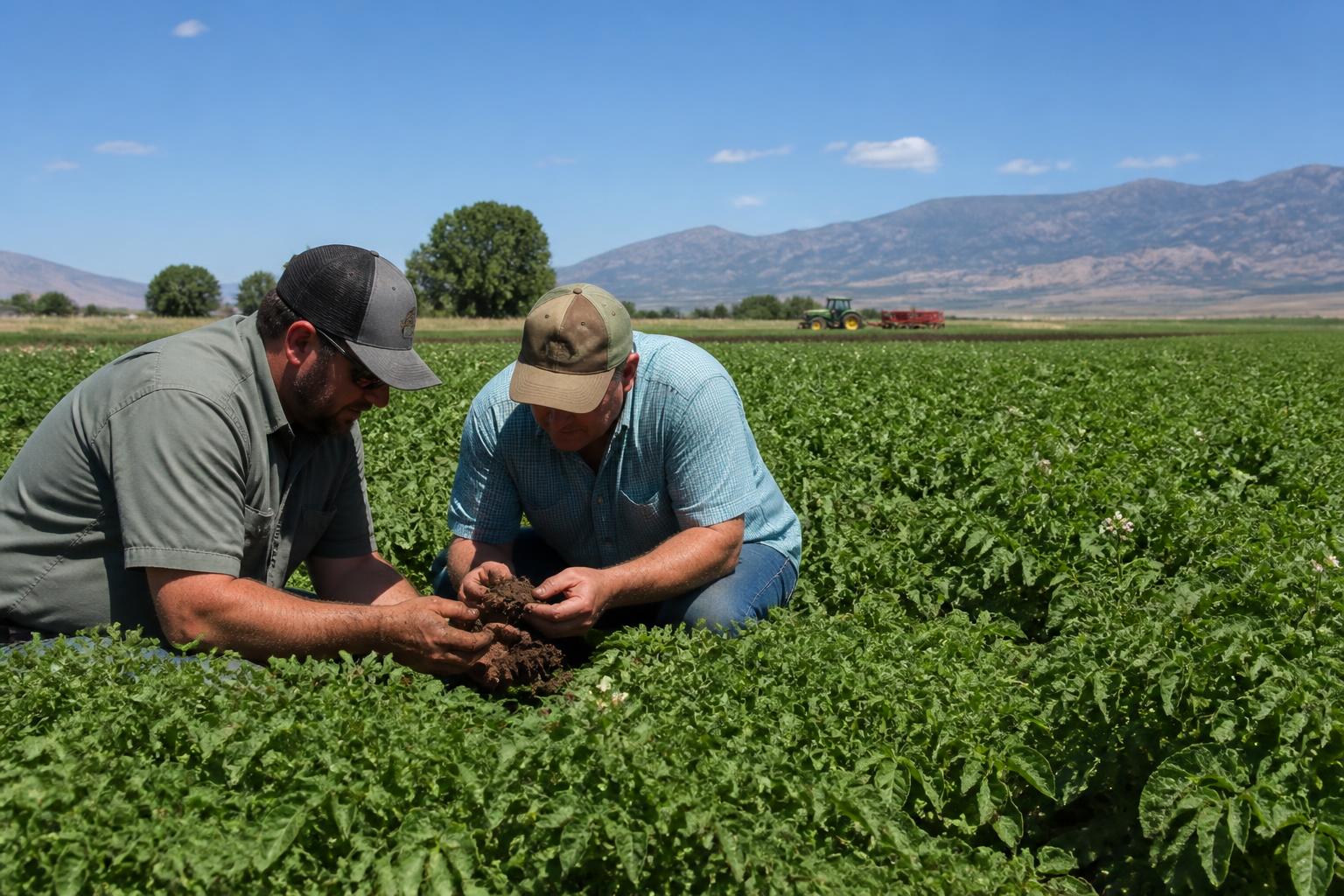
As mid-summer heat settles over the Rocky Mountain region, Colorado crop producers and livestock operators are actively adjusting their nutrient programs. Rising commercial input expenses, fluctuating export realities, and persistent regional dryness are forcing a shift in how fertilizers and soil health are managed. From the potato fields of the San Luis Valley to the dryland wheat and corn fields of the eastern High Plains, securing crop yields now requires a highly strategic approach to every pound of nitrogen, phosphorus, and potassium applied.
With seasonal temperatures climbing at the end of June, the focus is transitioning from bulk crop nutrition to targeted, high-efficiency applications. Maximizing fertilizer return on investment (ROI) has become the defining objective for agribusinesses looking to hedge against market volatility and unpredictable weather patterns.
Leveraging Soil Organic Matter to Mitigate Fertilizer Costs
One of the most sustainable trends gaining momentum across Colorado is the systematic focus on building and preserving soil organic matter. Improving organic matter serves as a natural insurance policy against high fertilizer prices by enhancing the soil's biological activity, structure, and water-holding capacity. In dryland cropping systems, soils rich in organic biology can store more moisture and unlock otherwise bound nutrients, directly reducing the volume of synthetic fertilizers required to reach yield targets.
With regional water scarcity impacting irrigation schedules throughout the state, farmers must balance their water allocations with fertilizer applications, similar to the broader Colorado grain market water pressures observed this season. Soil organic matter acts as a sponge, retaining precious summer rainfall and ensuring that applied liquid and dry fertilizers do not leach away or volatilize before crops can utilize them.
Targeted Nutrients for Specialty Crops Under Pressure
Colorado's specialty crop sectors, including potato production in the San Luis Valley and emerging chile operations, are facing significant cost headwinds. Potato growers, in particular, are grappling with high input costs, export market risks, and tariff uncertainties. In these high-value cropping systems, there is little room for nutrient deficiency or waste. Growers are increasingly deploying split applications, fertigation, and tissue sampling to feed the crop precisely when demand peaks during the vegetative and tuber-bulking stages.
To maximize fertilizer efficacy under dry summer conditions, growers are also closely watching pest pressures, as detailed in our analysis of Colorado crop protection strategies. Suppressing pests like the Colorado potato beetle and wireworms ensures that crops possess the root health necessary to efficiently uptake applied nutrients, preventing costly fertilizer runoff or under-utilization.
Low-Input Pathways and the Livestock Connection
For Colorado livestock producers and mixed-crop farmers, nutrient management is deeply intertwined with forage production and herd economics. The national cattle herd has contracted to its lowest level in 75 years, driving up livestock values but also prompting cattlemen to seek more sustainable, cost-effective operating models. Many Colorado ranchers are adopting low-input management paths, focusing on grazing rotation, cover crops, and natural manure distribution to fertilize pastures rather than relying on commercial synthetic inputs.
By relying more heavily on natural biological cycles and pasture diversity, these low-input operations are insulating themselves from the volatile retail fertilizer market while maintaining forage quality through the peak grazing months of summer.
Key Takeaways for Colorado Producers
- Prioritize Soil Biology: Investing in cover crops and organic matter management improves long-term nutrient retention, lowering dependence on commercial synthetic fertilizers.
- Implement Split Applications: Avoid single-dose fertilizer applications in dry conditions; instead, use tissue testing and precision fertigation to match current crop demand.
- Integrate Livestock and Crops: Utilize natural manure and managed grazing rotation to cycle nutrients cheaply on forage acreage, minimizing synthetic nitrogen purchases.
What it means for the market
For the broader fertilizer market, the current trend toward biological efficiency and low-input farming in Colorado signals a structural shift in seasonal demand. While commercial fertilizers remain a cornerstone of local crop production, the adoption of soil-health practices and precision agricultural technology suggests that future demand will favor specialized, high-efficiency formulations over raw bulk tonnage. Suppliers and distributors who can offer customized nutrient-stabilizing products, soil diagnostic services, and integrated biological solutions are likely to find the strongest footing in the evolving Rocky Mountain agricultural economy.
Comments
No comments yet - be the first to share your take.