
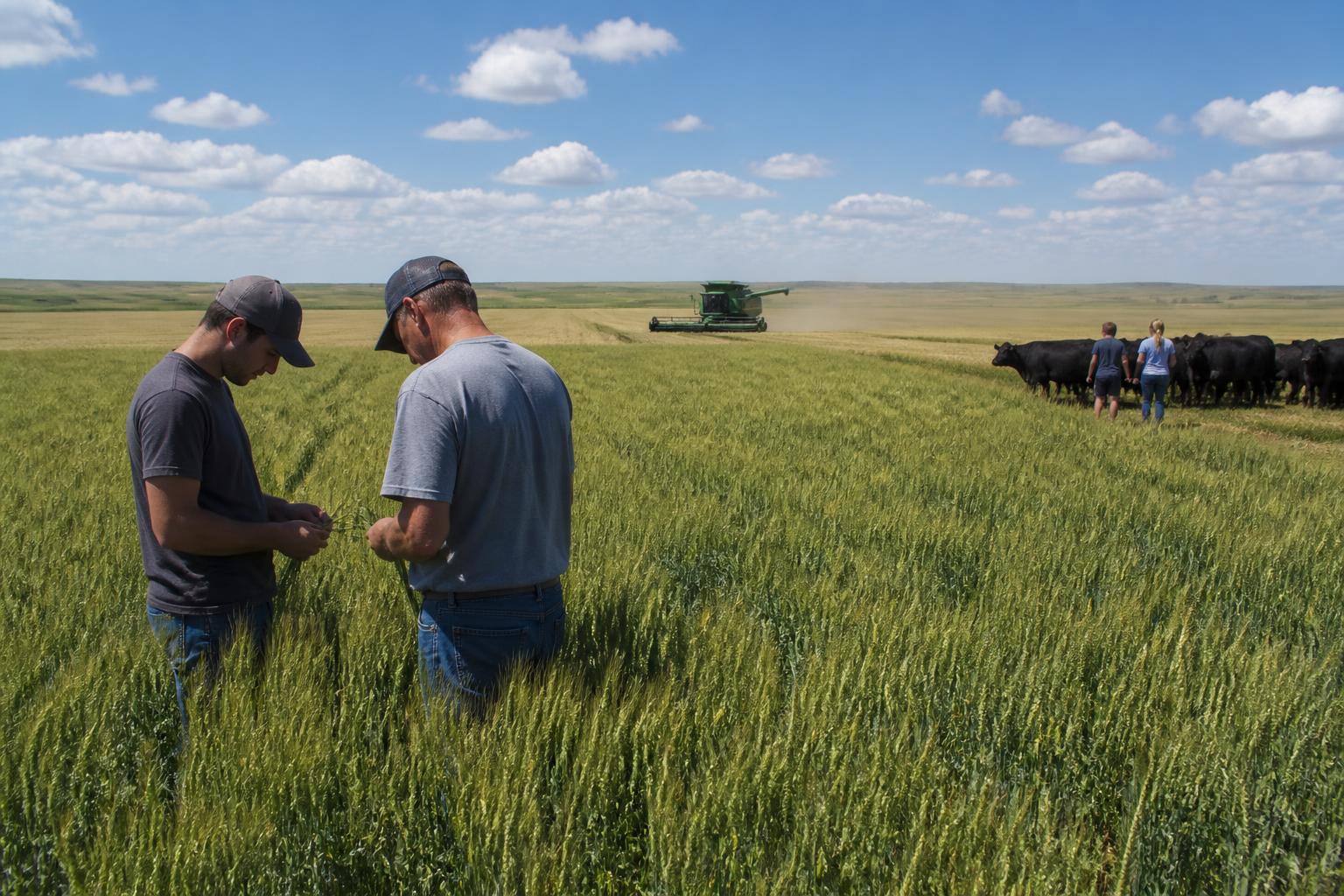
With dry summer conditions intensifying across South Dakota, Governor Kristi Noem has declared a state of emergency in response to widespread drought. To assist livestock producers facing immediate forage shortages, the declaration permits the immediate haying of roadside grasses along state-managed highway ditches. While this emergency measure offers a critical lifeline for cattle operations, it also triggers immediate shifts in local agricultural transport and road safety protocols during this active summer shipping season.
Navigating Roadside Rules and Freight Coordination
For South Dakota carriers and farmers, harvesting forage from highway right-of-ways requires strict adherence to safety regulations to prevent roadside accidents. Transportation corridors such as Interstate 29 and Interstate 90 see heavily increased agricultural traffic during the summer, meaning any slow-moving mowing equipment or flatbeds loading bales on the shoulder must remain highly visible.
Typically, local operators must coordinate with the South Dakota Department of Transportation regarding permits, cut-off dates, and clearance rules. The emergency declaration temporarily eases some of these procedural hurdles to accelerate forage collection, but it also increases the density of farm-to-field transport on high-speed roadways. Haulers should refer to previous updates on South Dakota agrologistics and roadside transport rules to ensure they remain compliant with core safety requirements even under emergency declarations.
The Freight Dynamics of Sourcing Distant Forage
When localized drought limits immediate pasture availability, livestock operations are forced to look farther afield for feed. This shift changes regional flatbed demand, driving up short-haul freight rates as hay is moved from areas with surplus ditches to dry counties. Transporting large round or square bales over long distances requires careful load securement, proper strapping, and adherence to regional weight limits.
Furthermore, because the heat of July increases the risk of dry-matter combustion, haulers are urged to check trailer wheel bearings, brake systems, and exhaust pipes frequently to avoid sparking roadside fires. This logistical strain comes at a time when many operators are already balancing their equipment and fuel budgets against sluggish regional grain economics, making transport efficiency absolutely critical to maintaining farm margins.
Key Logistics Takeaways for South Dakota Operators
- Priority Access: The emergency declaration allows immediate haying of state highway ditches to help offset severe pasture deficits.
- Load Security: Flatbed operators must double-check straps and chains, as loose forage debris on busy highways poses severe hazards to high-speed passenger traffic.
- Fire Prevention: Extremely dry summer conditions require haulers to monitor equipment temperatures and spark risks when staging trucks on dry roadside grass.
- Local Coordination: While some requirements are waived, always verify county-level and state right-of-way boundaries before starting any harvest activity.
What it means for the market
The activation of roadside haying will temporarily ease local feed deficits, but it also highlights the vulnerability of the region's broader agricultural logistics network during weather anomalies. Forage availability remains tight, and the cost of transport will play a major role in determining final delivery prices at the farm gate. Trucking fleets and independent owner-operators should expect sustained demand for flatbed and step-deck trailers throughout the rest of the summer as South Dakota producers scramble to secure and transport enough winter feed to sustain their herds.
Comments
No comments yet - be the first to share your take.