
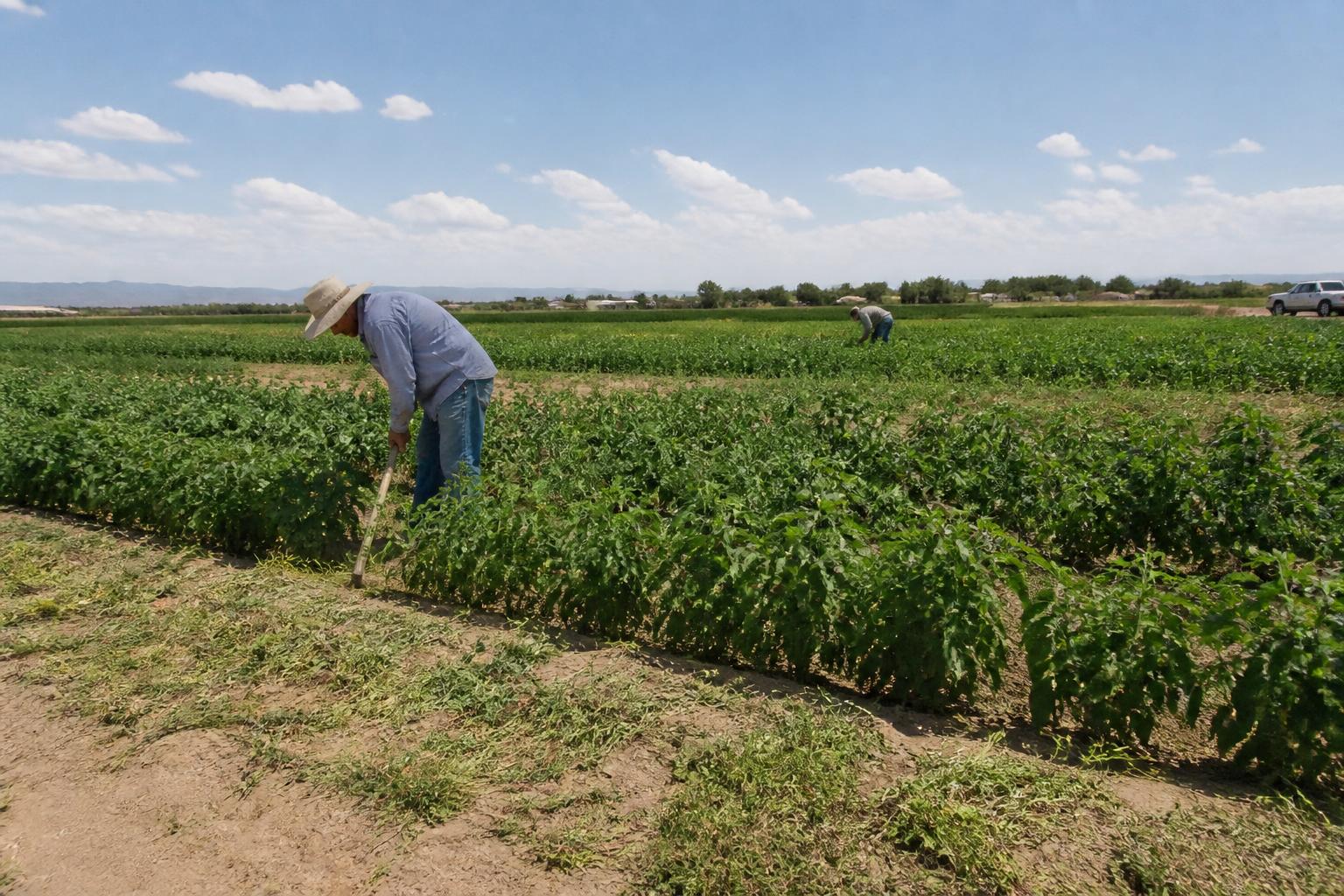
New Mexico's diverse agricultural sector, which drives significant economic value with total impact estimates reaching between $40.23 billion and $50.5 billion, is navigating a challenging mid-summer landscape. Producers in the Land of Enchantment are dealing with the dual pressures of tight operational margins and extreme regional aridity. Under these conditions, adopting robust protection strategies for both soils and crops has transitioned from a long-term sustainability goal to an immediate economic necessity.
As summer heat intensifies, localized conservation practices are helping growers preserve precious soil moisture and protect high-value crops like southwestern chile peppers. However, managing input costs, volatile fertilizer markets, and regional biosecurity threats remains critical to maintaining profitability through the season.
Soil Protection and Conservation in Arid Environments
Implementing protective ground cover is proving highly beneficial for southwestern growers. Recent agronomic research highlights that hot, arid soils see measurable improvements in organic matter and moisture retention when cover crops are utilized. In New Mexico, where water availability is a constant concern, these soil protection practices prevent topsoil degradation and enhance biological activity.
Local producers are increasingly leveraging USDA conservation programs to implement these protective strategies. This structural support allows them to continue supplying fresh food to local communities while shielding their fields from extreme summer heat, wind erosion, and severe evaporation.
Chile Peppers and Special Crops at a Crossroads
The iconic Southwest chile pepper industry is currently at a critical crossroads. Labor challenges, water scarcity, and evolving pest pressures are forcing growers to look toward advanced crop protection technologies. To remain competitive, growers are exploring new biological and technical tools that can optimize chemical applications, improve pest resistance, and streamline field management.
Integrating these advancements is essential for protecting yields in highly sensitive specialty crops during periods of high thermal stress. Producers seeking to mitigate these financial and biological risks are actively adjusting their chemical and input strategies. For a deeper look at managing these challenges during the peak season, see our guide on summer protection priorities for New Mexico producers.
Managing Input Volatility and Regional Biosecurity
Beyond the fields, New Mexico's agribusinesses must manage broader economic and biological risks. The national farm economy continues to brace for fertilizer market volatility, putting a premium on precise input management to protect tight margins. For producers, soil testing and precision application are key safeguards against unexpected market spikes.
On the livestock front, regional biosecurity remains a major focus across the country. For example, recent animal movement regulatory updates in other states, such as Missouri's response to the threat of the New World screwworm, highlight the constant need for regional vigilance. For New Mexico ranchers, maintaining strict health protocols and monitoring livestock movements are vital safeguards against transboundary pests and diseases that could disrupt interstate and international trade.
What it means for the market
For New Mexico farmers, grain handlers, and input buyers, survival in a tight-margin year hinges on proactive protection. Investing in soil health through cover crops, embracing targeted crop protection technologies, and closely monitoring biosecurity threats will help stabilize operations. Despite high input volatility, protective conservation and smart management will be key to sustaining the state's massive agricultural economic footprint through the hot summer months.
Comments
No comments yet - be the first to share your take.