
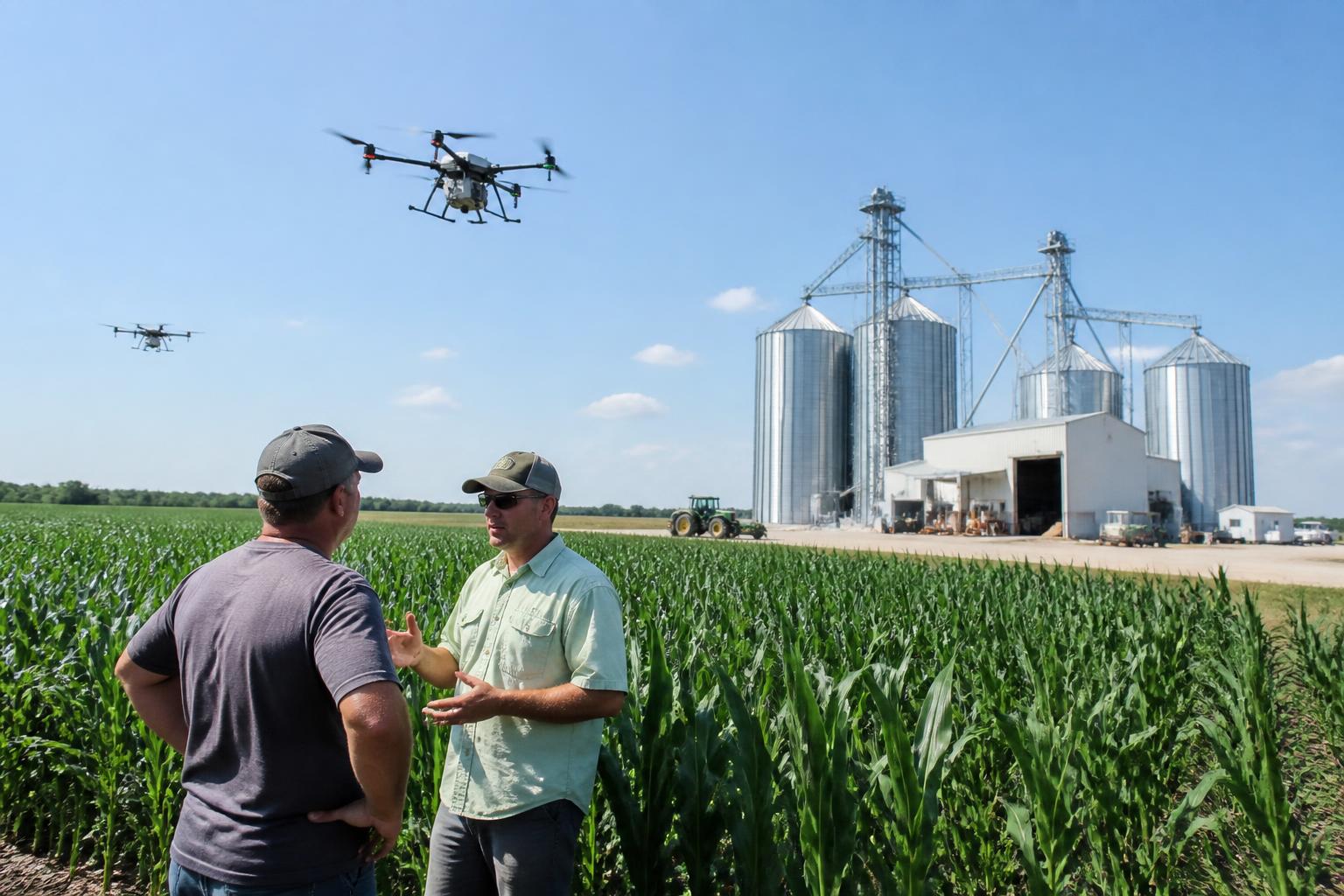
Mid-summer in Indiana brings a concentrated focus on crop health and the logistical readiness of our state's storage and processing infrastructure. As fields across the Hoosier state progress through critical growth stages, farmers are balancing the immediate demands of field maintenance with long-term capital investments in grain handling and storage capacity.
Recent developments, such as the grand opening of new milling facilities in Wabash County, signal a strengthening of regional supply chains. These additions are vital for local producers who need reliable, high-capacity outlets to manage the output of Indiana's diverse agricultural landscape. For those currently reviewing their own storage strategies, understanding the evolving economics of on-farm grain infrastructure remains a priority as the industry looks toward the upcoming harvest cycle.
Precision Tech and Crop Protection
The reliance on modern technology to mitigate field threats continues to grow. As scouting efforts intensify, the adoption of drone-based sprayer systems is becoming more prominent across Indiana farms. These tools offer precise, efficient application capabilities that can be critical when addressing late-season pressure, such as the impact of tar spot on corn crops in susceptible regions. Staying ahead of these biological pressures is key to maintaining yield quality, especially in an environment where environmental stewardship and regulatory compliance remain central to state-wide operations.
Managing On-Farm Resources
Beyond crop health, the economic landscape for Indiana farmers remains dynamic. Cost-conscious management of input storage and land rental remains a significant part of the planning process. As operations look to expand or upgrade, factors such as fluid fertilizer storage compliance and regional logistics continue to impact the bottom line. Ensuring that your infrastructure meets both environmental standards and operational needs is a standard yet vital component of risk management for the modern Indiana agribusiness.
What it means for the market
The current market environment suggests that Indiana producers are prioritizing resilience through infrastructure improvements and advanced technology. While market volatility and input costs persist, the focus on local processing capacity and efficient, technology-driven crop protection is helping to insulate operations against wider disruptions. For farmers, this means that strategic investments in storage and monitoring are not just operational choices but long-term hedges against market and logistical uncertainty.
Comments
No comments yet - be the first to share your take.