
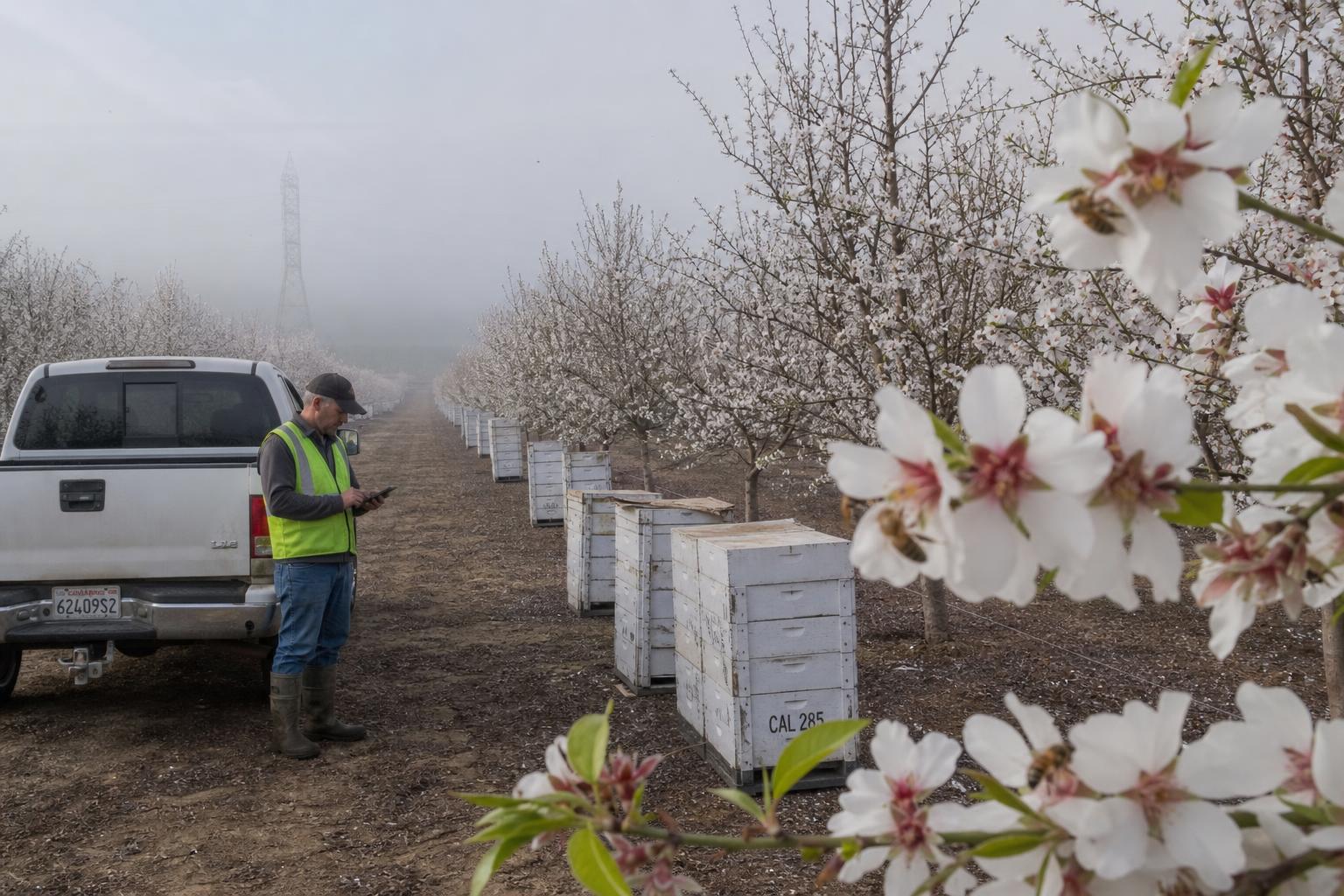
Pollinator health remains a crop protection issue with direct market consequences for U.S. specialty crop growers, seed producers, beekeepers, and input suppliers. USDA Agricultural Research Service research has identified a key mechanism used by Nosema ceranae, a major honey bee parasite, to weaken infected bees.
The work does not create an immediate treatment recommendation, but it gives the market a clearer view of why colony health can deteriorate and why pollination reliability should be part of seasonal risk planning alongside pesticides, weeds, disease pressure, and delivered input costs. For broader input budgeting context, see AgroPost's brief on delivered fertilizer cost before spring commitments.
What USDA research found
ARS entomologist Yan Ping "Judy" Chen reported that Nosema ceranae can divert iron from infected honey bees for the parasite's own reproduction. Honey bees normally obtain iron from flower pollen and use it for immune function, reproduction, and development.
The research focused on transferrin, a protein that binds and transports iron from pollen out of the bee gut and through the bee's body. In infected bees, the parasite uses that pathway to pull iron toward its own spore production. As the bee becomes more iron deficient, it produces more transferrin, which can give the parasite more opportunity to capture iron.
ARS also reported that reducing transferrin production was linked with less iron loss, better immune function, and improved survival in infected bees. The agency noted that there is no truly effective treatment for Nosema ceranae, but the findings point toward possible future approaches based on iron regulation or transferrin synthesis.
Why this matters to growers and handlers
Pollination risk is not limited to beekeepers. Any crop plan that depends on managed honey bees can be affected when colony strength is reduced before or during bloom. That includes potential impacts on hive availability, pollination scheduling, and the reliability of fruit, nut, vegetable, seed, and forage seed production programs.
For grain handlers and elevators, the direct exposure is usually smaller than it is for specialty crops. Still, pollinator health can influence regional farm cash flow, local input demand, and trucking patterns where pollination-dependent crops are a major part of the acreage mix. Crop protection decisions can also affect relationships between growers, applicators, and beekeepers.
Crop protection angle: protect yield without adding bee stress
The research reinforces the need to treat pollinator health as part of integrated crop protection. A bee colony already fighting parasites may have less resilience when exposed to avoidable stress during bloom.
- Coordinate spray timing: Align pesticide applications with label requirements and local pollinator protection guidance, especially near bloom.
- Communicate with beekeepers: Share field locations, crop stage, and planned application windows when hives are nearby.
- Watch plant health timing: Disease and insect pressure still need control, but application decisions should account for pollinator presence and crop stage.
- Build pollination into budgets: Pollination services are an operational input, not an afterthought, for crops that require managed bees.
Key takeaways for the U.S. market
Nosema ceranae remains a major honey bee parasite problem. ARS describes it as one of the parasite issues contributing to beekeeper colony losses.
The mechanism matters. The parasite's ability to hijack iron helps explain how infection can weaken bee immune function and survival.
No immediate product shift is confirmed. The research points to possible future treatment pathways, but it does not establish a commercial control option for growers or beekeepers.
Pollination planning belongs in crop protection strategy. For operations managing pesticide programs, custom application, or crop contracts, bee health is part of market risk management.
What it means for the market
For AgroPost users, the practical message is to keep pollination risk visible in crop protection planning. Honey bee parasite pressure can affect the dependable supply of pollination services, while pesticide decisions during bloom can affect already stressed colonies. Growers, applicators, beekeepers, and input retailers should use pre-season communication, label compliance, and realistic pollination budgeting to protect yield potential and reduce avoidable market friction.
Comments
No comments yet - be the first to share your take.