
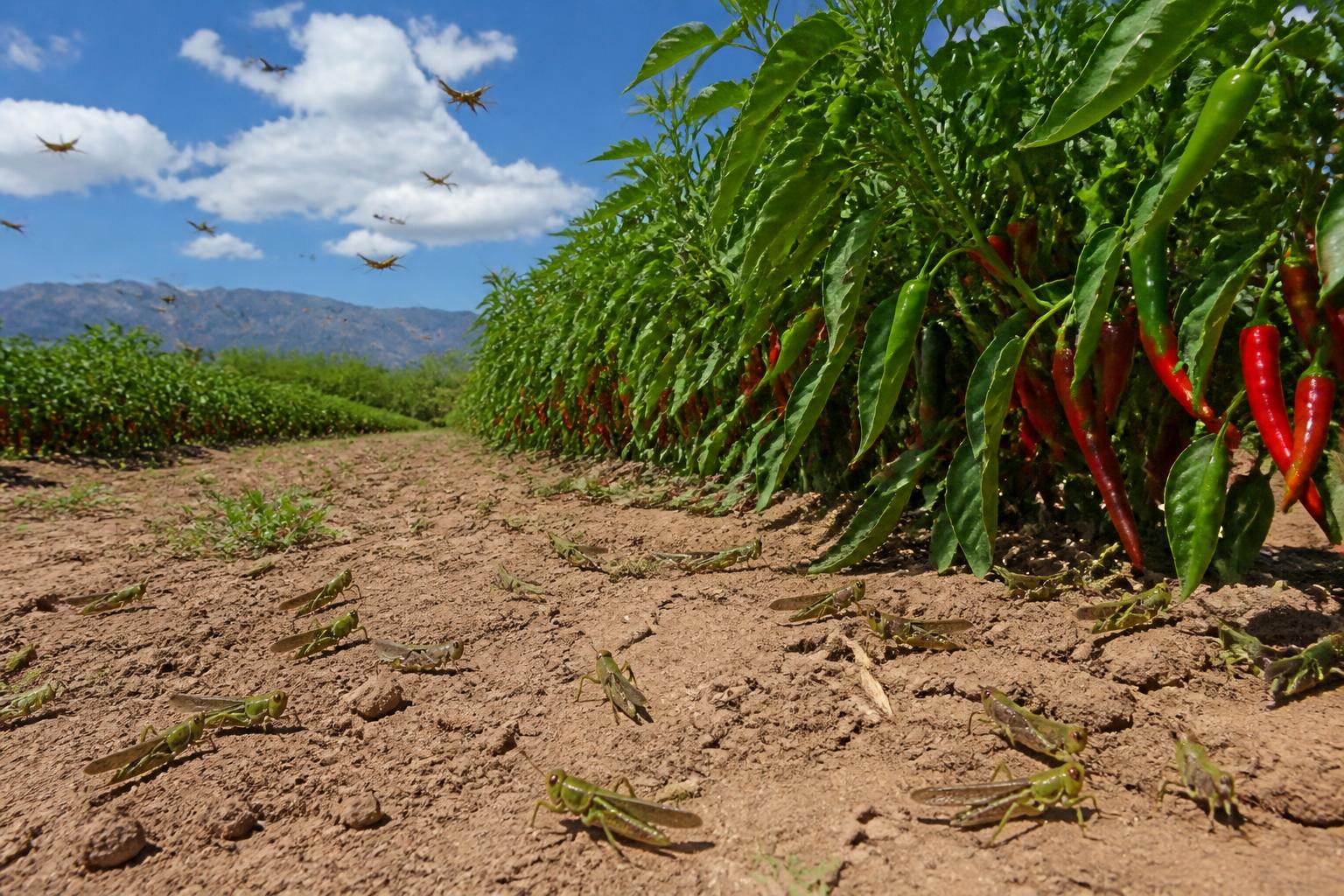
Summer has arrived in the Southwest, bringing seasonal challenges to New Mexico agribusinesses. Crop protection and market positioning are top of mind for regional growers as pests, climate conditions, and global trade shifts converge. Most notably, the National Weather Service radar recently detected massive grasshopper swarms over Albuquerque, highlighting the severe pest pressures that can rapidly threaten local rangeland, forage, and grain crops during dry summer spells.
For grain handlers and livestock feed producers along the Rio Grande corridor, managing crop quality while navigating changing logistics is essential. With global trade patterns shifting and domestic production facing challenges, maintaining the strict quality standards upheld by USDA grain inspectors remains vital for sustaining access to both domestic and international markets.
Pest Pressures and Biological Solutions in the High Desert
The recent radar-detected grasshopper swarms near Bernalillo County underscore the volatile environmental conditions New Mexico farmers face. These pests can rapidly defoliate vegetation, causing significant damage to summer feed crops and pastures. In response to long-term biological and ecological challenges in the state, New Mexico State University (NMSU) in Las Cruces has launched its first Ph.D. program in applied and agricultural biology. This academic expansion is expected to bolster local research into pest management, soil health, and resilient cropping systems tailored to the arid southwest climate.
Additionally, livestock and grain producers are monitoring broader biosecurity concerns. The USDA recently confirmed the presence of New World screwworm in the United States, raising the stakes for livestock health and the feed grains that support the sector. These shifting dynamics highlight why staying informed about summer regulatory and biosecurity challenges in New Mexico is critical for keeping local operations competitive.
Global Market Shifts and Digital Tools for Producers
On the market front, domestic feed demand is experiencing indirect pressure from global livestock trends. Australia has been expanding its grain-fed beef exports as U.S. beef production falters, a shift that influences domestic feed grain consumption patterns. To navigate these complex pricing environments, the USDA has introduced its first Market News mobile app. This digital tool gives New Mexico growers and grain elevators instant access to commodity price reports, market trends, and supply data directly from the field.
As farmers work to secure profit margins, access to real-time data helps them make timely marketing decisions. Proactive marketing is especially important as agricultural groups welcome the confirmation of Jamieson Greer as the new U.S. Trade Representative, which could bring new developments to bilateral trade channels and export opportunities for U.S. grains.
Key Takeaways for New Mexico Growers
- Monitor local pest activity: Utilize regional extension reports and radar-based pest alerts to implement early mitigation strategies against grasshoppers and other migratory insects.
- Adopt digital tracking tools: Download the new USDA Market News mobile app to monitor grain price movements and regional feed demands.
- Focus on grain quality: Partner with USDA grain inspectors to ensure all shipments meet the high-quality benchmarks required to access premium export markets.
What it means for the market
New Mexico grain and forage producers must adopt a highly proactive stance this summer. Protecting yields from sudden pest swarms while optimizing grain quality will be the dividing line between profitability and loss. By utilizing real-time market data apps and preparing for shifting feed demands driven by global livestock adjustments, Southwest agribusinesses can remain resilient against both environmental and economic headwinds.
Comments
No comments yet - be the first to share your take.