
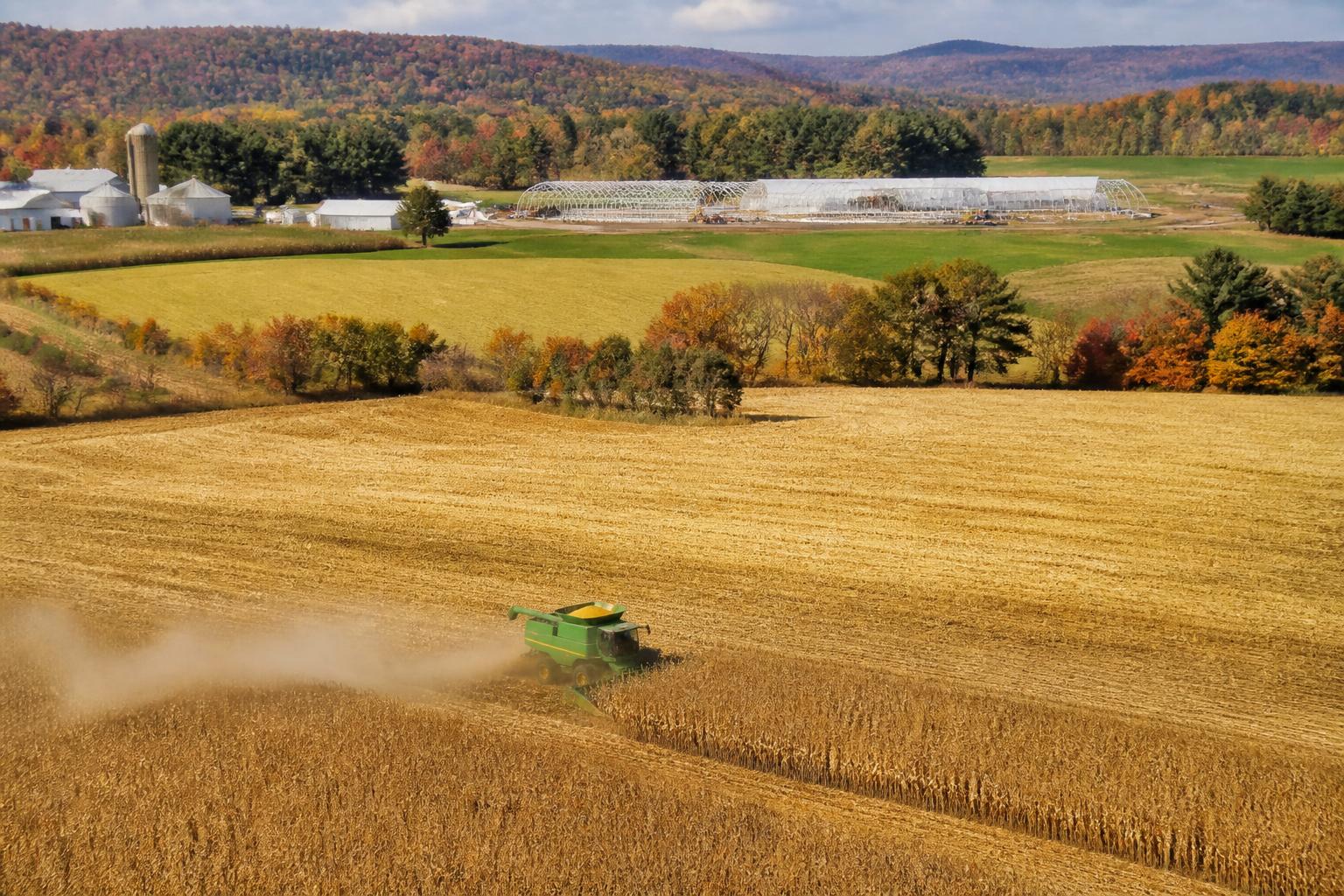
As Pennsylvania producers move through the busy fall harvest window, the conversation across the state is increasingly focused on the future of working lands. While growers are managing the current season's logistics and crop yields, the encroachment of industrial infrastructure, particularly large-scale warehouse development, remains a primary concern for the stability of local farming operations.
Protecting the agricultural footprint has become a focal point for many in the region. Recent state-level efforts to preserve farmland are aimed at buffering these critical areas against the pressures of urbanization and commercial sprawl. These initiatives are essential, as the competition for acreage impacts not just individual family farms but the broader regional supply chains that support everything from grain storage to livestock production.
Evaluating Land Use and Future Growth
For many agribusinesses, the expansion of logistics hubs in rural corridors raises questions about long-term operational viability. The tension between industrial development and active farmland requires careful navigation. Farmers are carefully managing their harvest logistics and resource allocation, knowing that the physical availability of land is a finite variable in their business planning. Strengthening land tenure is a strategy that many are prioritizing to ensure that production capacity remains stable for future growing cycles.
Resilience Through Strategic Planning
Beyond land preservation, producers are looking at ways to enhance efficiency through technological adoption and better nutrient management. As the industry faces evolving regulatory environments and fluctuating input costs, the integration of new science and management practices is helping some farms sustain profitability on smaller, high-value footprints. For those planning their next steps, staying informed on strategic agribusiness management is key to weathering regional pressures.
Key Takeaways
- Farmland preservation continues to be a critical tool for maintaining agricultural output against commercial development.
- Logistics and warehouse construction are increasingly competing with rural land use, requiring producers to account for land access in their long-term growth plans.
- Efficiency in nutrient application and crop management remains a priority to offset rising operational costs during the fall season.
What it means for the market: The regional agricultural landscape is undergoing a significant transition where land security is just as vital as market prices. For landowners and agribusinesses, the emphasis on protecting core farming assets is likely to drive more conservative land-use decisions and an increased reliance on specialized, high-yield agricultural technology as they head into the upcoming year.
Comments
No comments yet - be the first to share your take.