
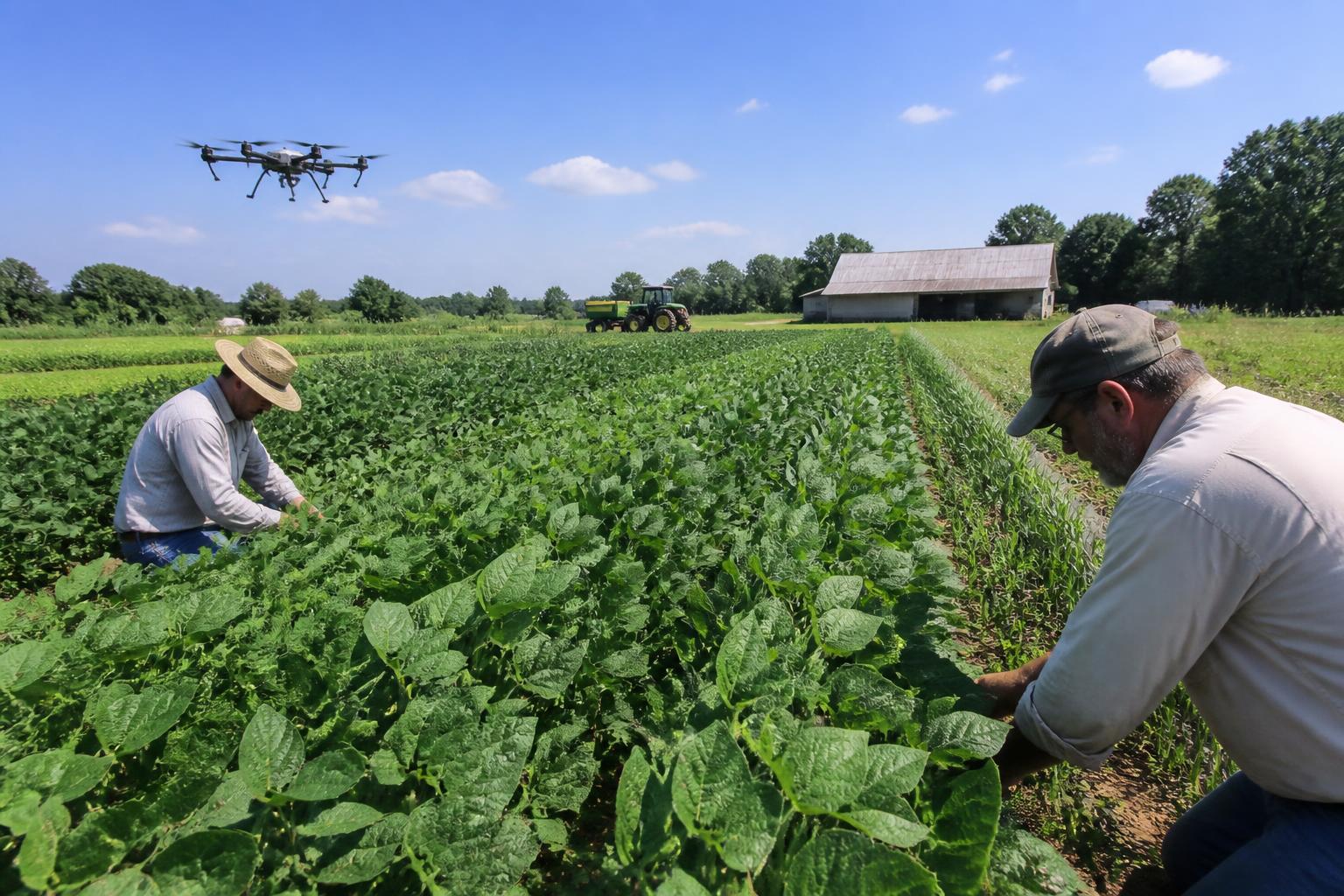
As the Alabama summer heat peaks this June, crop protection has taken center stage for growers across the state. From the fertile soils of the Tennessee Valley down to the coastal plains of Baldwin County, high temperatures and seasonal humidity are driving intense weed pressure and pest activity. For Alabama corn, cotton, peanut, and soybean producers, maintaining clean fields is a complex challenge requiring a balance of conventional chemistry, biological tools, and regenerative management.
With weed resistance presenting a persistent threat to traditional chemical regimens, agricultural experts and local advisors are emphasizing the need for integrated pest management (IPM). As summer temperatures peak, integrating biological solutions with conventional chemistry has become a vital strategy for protecting yields, a trend detailed further in our overview of protected cultivation and biologicals in Alabama.
Confronting Weed Resistance in Alabama Fields
Herbicide-resistant weeds, particularly Palmer amaranth and other aggressive broadleaf species, continue to test the limits of standard spray programs. In southern Alabama and the Wiregrass region, crop advisors stress the importance of using multiple modes of action and timely post-emergence applications to prevent weeds from going to seed. Relying on a single chemistry class is no longer viable for long-term control.
To combat this, many Alabama farmers are adopting advanced application technologies, including precision nozzle systems and targeted spraying, which can reduce chemical drift and optimize coverage. State extension services frequently update growers on the latest resistance maps, helping operators customize their chemical tank mixes to the specific resistance profiles of their counties.
Regenerative Agriculture and Soil Health Practices
Beyond chemical applications, there is growing national and regional momentum around regenerative farming practices to suppress pests naturally and improve soil resilience. Academic research and high-profile climate advocates have increasingly highlighted how regenerative techniques, such as cover cropping and reduced tillage, can naturally disrupt weed cycles and enhance moisture retention during dry summer spells.
In Alabama, where sandy soils in some regions are prone to nutrient leaching, cover crops like cereal rye or crimson clover can help shade out early-season weeds and build organic matter. While organic production still faces logistical and agronomic hurdles, the recent integration of biological biostimulants and organic-approved pest control methods is gaining traction among conventional growers looking to reduce their overall chemical footprint and protect soil microbes.
Diversification and Management Timing
Adjusting the planting calendar has also emerged as a viable protection strategy. Some growers are experimenting with ultra-early soybean planting systems, which allow the crop to canopy before peak summer weed emergence and escape late-season insect pressure. Additionally, alternative crops like sesame are drawing interest in the lower Southeast due to their high drought tolerance and relatively low pest management demands compared to traditional row crops.
For cotton and peanut growers, managing the mid-to-late summer transition requires diligent scouting. Ensuring that application equipment is calibrated correctly and that products are rotated systematically helps preserve the efficacy of existing chemical tools and protects valuable yields ahead of the fall harvest.
Key Takeaways for Alabama Producers
- Diversify Chemical Modes: Avoid relying on single-herbicide programs to prevent further resistance development in stubborn broadleaf weeds.
- Integrate Biologicals: Consider incorporating biostimulants and biological crop protection tools to support plant health during summer heat stress.
- Leverage Soil Health: Explore cover crops and minimal tillage where practical to suppress weed germination and retain soil moisture.
- Monitor Crop Timing: Evaluate early planting windows or alternative drought-tolerant crops to naturally reduce late-season pest vulnerability.
What it means for the market
For chemical retailers, custom applicators, and grain handlers across the state, the shift toward integrated and regenerative crop protection is reshaping summer input demand. Demand for multi-mode premixes, biological adjuvants, and precision application services is expected to remain strong as farmers seek to maximize every dollar spent on protection. For logistics providers moving inputs along major Alabama corridors like I-65 or out of the Port of Mobile, staying aligned with these evolving seasonal management trends is essential for keeping the regional supply chain running smoothly.
Comments
No comments yet - be the first to share your take.