
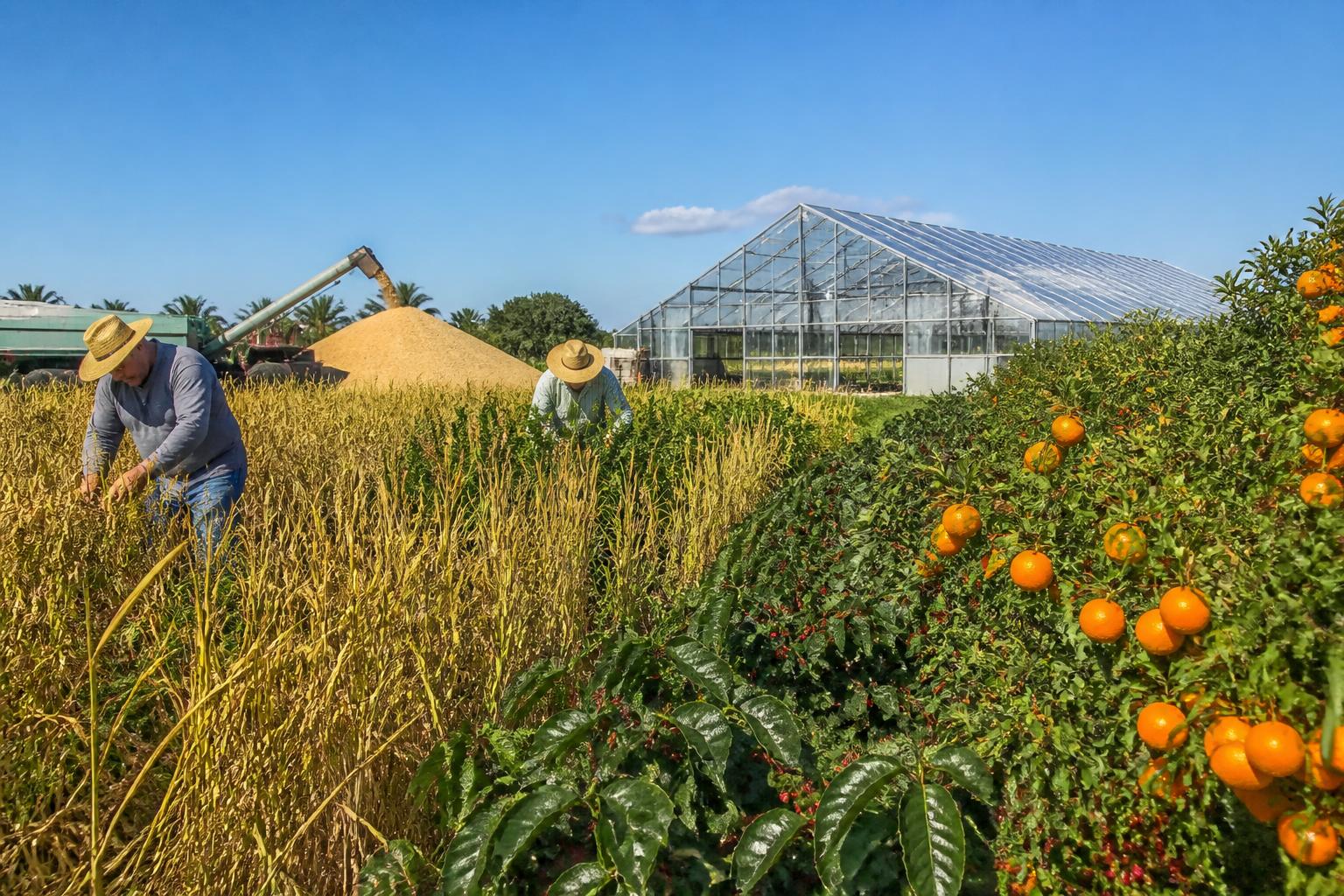
Florida agriculture is currently navigating a period of significant transition as producers work through seasonal adjustments and lingering operational challenges. Following recent weather events that impacted various sectors of the state, many growers are reassessing their production strategies to maintain resilience in a tightening economic climate. From the nursery operations across the state to field crops in central and southern regions, the focus remains on stabilization and adapting to evolving supply chain conditions.
Refining Input Strategies
Fertilizer management continues to be a primary concern for Florida agribusinesses. With price fluctuations impacting purchasing power, many producers are scaling back on applications or seeking alternative formulations to balance crop health with financial sustainability. This adjustment period highlights the broader need for efficient nutrient management, as growers monitor market signals from major suppliers and adjust their logistics accordingly to optimize fertilizer investment and delivery windows. Maintaining soil productivity while keeping input costs in check remains a delicate balancing act as the fall planting window progresses.
Diversification and Market Potential
Looking ahead, there is an ongoing interest in diversifying Florida's agricultural portfolio to mitigate risks associated with traditional crop cycles. Researchers and commercial interests are evaluating the potential of new cash crops, including specialty varieties that may be suited to the state's unique climate and extended growing seasons. Concurrently, advancements in controlled-environment agriculture are gaining traction. Efforts to improve the viability of indoor and hydroponic farming are helping to address some of the long-standing operational pressures faced by greenhouse operators, offering a potential hedge against unpredictable weather patterns.
What it means for the market
For grain handlers, input buyers, and transportation providers, the current market signals a move toward cautious, data-driven planning. Expect continued scrutiny on operational expenses and a sustained focus on supply chain efficiency as stakeholders look to capitalize on the extended growing opportunities that characterize the region. Agribusinesses that emphasize flexible logistics and cost-effective input sourcing are likely to be better positioned as we move through the remainder of the year.
Comments
No comments yet - be the first to share your take.