
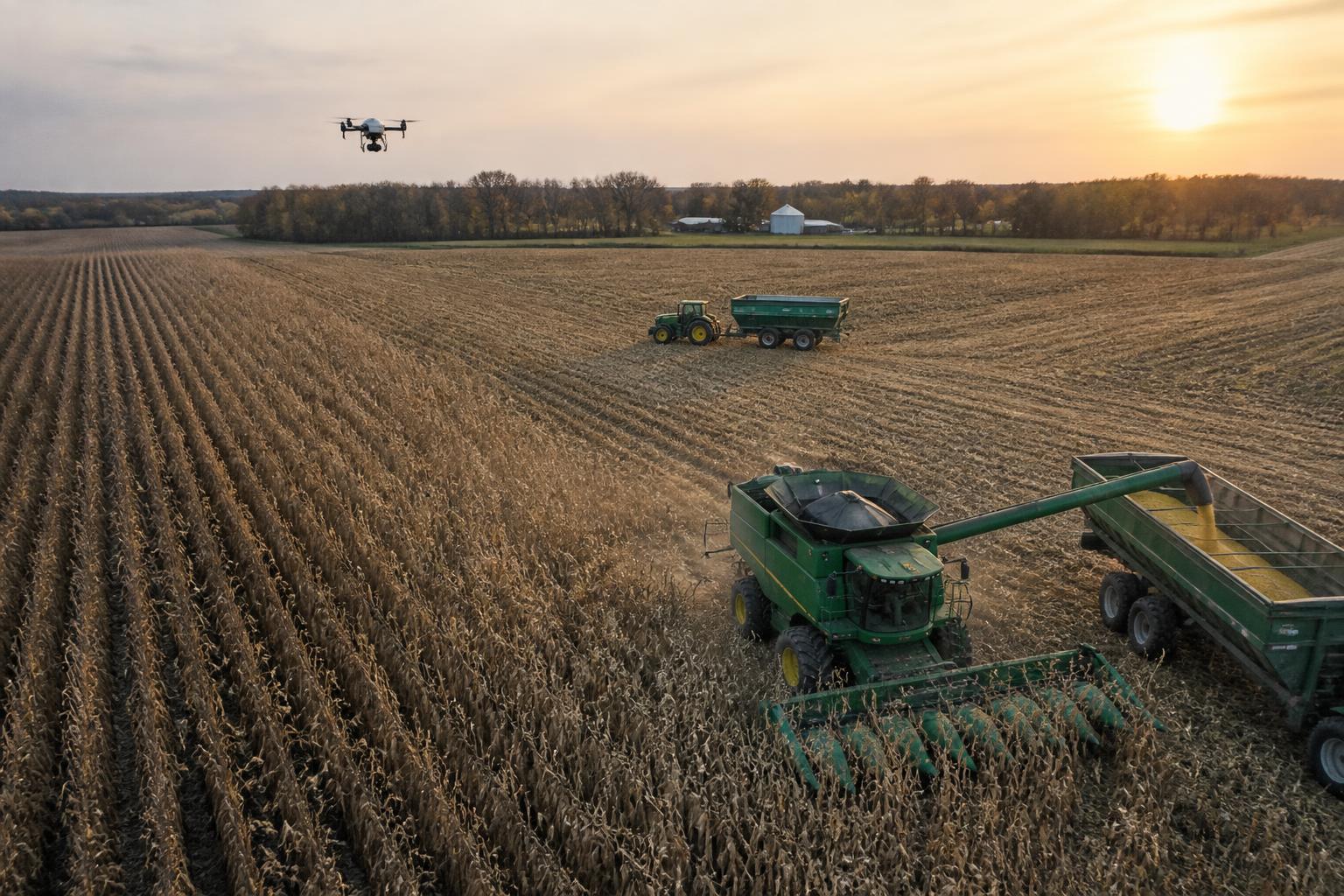
As the fall harvest accelerates across Alabama, the focus for row crop producers has shifted toward balancing efficient field logistics with long-term infrastructure stability. With grain moving steadily from fields in regions like the Tennessee Valley and the Wiregrass toward local elevators, the industry remains attentive to the consistent demand for reliable storage capacity and sound logistical workflows.
For many Alabama farmers, this season is marked by an increased reliance on precision agriculture tools. The adoption of drone technology is playing a more prominent role, offering producers a view from above to assess crop health and monitor field conditions, which can be critical as harvest timelines tighten. This technological shift, coupled with recent state-level investments in irrigation grants, is helping some operations bolster their yields against the environmental variability often seen throughout the state.
Infrastructure and Regulatory Compliance
Beyond the field, the Alabama agricultural sector continues to navigate the complexities of operational growth and regulatory requirements. As businesses such as the processing industry expand through new regional projects, maintaining compliance with labor laws remains a focal point for employers. Ensuring that all personnel documentation is handled through established verification systems is a routine, yet essential, part of managing a modern agricultural operation in the state.
Efficient transport and harvest logistics continue to be the backbone of a successful season. From managing equipment movement along rural corridors to coordinating the influx of grain at terminal points, operators are prioritizing clear communication and adherence to state load regulations to keep the supply chain moving without unnecessary delays.
What it means for the market
The current landscape suggests a push toward modernization and sustainability. While producers manage the immediate pressures of the fall harvest, the dual focus on upgrading irrigation capacity and refining data-driven crop management is setting a foundation for long-term stability. For agribusinesses and transport providers, staying aligned with these evolving infrastructure needs will be key to supporting Alabama’s output as the state seeks to maintain its competitive position in the broader market.
Comments
No comments yet - be the first to share your take.