
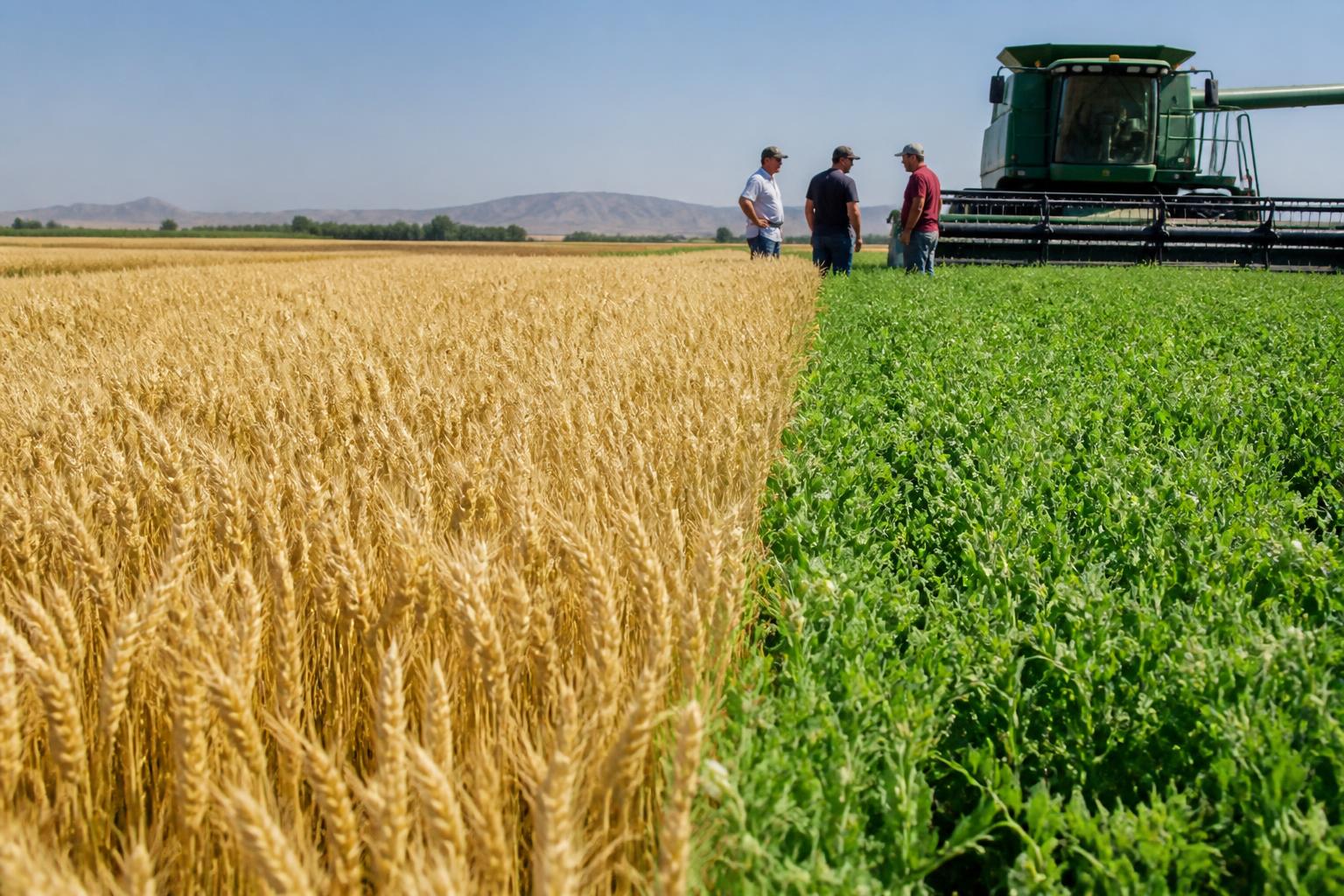
Montana growers are navigating a dynamic summer season marked by unpredictable national weather patterns, evolving international export opportunities, and localized resource disputes. As mid-summer approaches, agricultural operations from Broadwater County to the eastern plains are shifting focus toward high-efficiency crop management, combine maintenance, and strategic market positioning.
While global supply chains remain volatile, consistent purchasing of U.S. agricultural commodities by international buyers like China has kept export corridors active. For local operations, keeping pace with these shifts requires balancing field-level logistics with broader demand trends.
Export Alliances and Global Demand Signals
Despite ongoing geopolitical tensions, international demand for premium U.S. grain and oilseed products remains a key driver for Pacific Northwest export terminals. Montana producers, who heavily rely on rail and port infrastructure to move wheat and specialty peas, are keeping a close eye on these trade developments. Proactive market networking is becoming essential; regional initiatives like the Montana Ag Network continue to work on building new strategic alliances to diversify market opportunities for local sellers.
This push for stronger market relationships comes at a time when staying informed on regional pricing is vital. Growers trying to navigate shifting global demand can make more informed delivery decisions by analyzing the current trends in Montana's wheat market to better time their elevator deliveries.
Local Water Access and Specialty Crop Diversification
Water availability remains a defining factor for high-yield summer production in the state. The complex nature of Western water law was recently highlighted by a notable legal victory for a Montana hemp farmer who successfully defended critical water rights. This decision underscores the regulatory and environmental challenges faced by producers attempting to diversify into alternative crops, such as hemp or pulse varieties, in semi-arid river basins.
Securing reliable irrigation and managing soil moisture is increasingly vital as summer heat intensifies. Crop safety and precision application of inputs are necessary to protect yield potential without exceeding tightening operational budgets.
Machinery Preparation for the Summer Rush
With the summer harvest season on the horizon, machinery readiness is the top priority for grain growers. Given the high stakes of harvest downtime, many operators are utilizing specialized aftermarket combine parts to optimize threshing, reduce grain damage, and prevent harvest loss. Upgrading components like rotors, concaves, and pre-cleaners helps maximize the efficiency of combines, ensuring that high-quality grain is preserved during field operations.
These maintenance decisions are more than just mechanical; they are financial. Investing in machinery efficiency during the summer months is a practical way of managing high input costs with precision tactics, ensuring that every bushel harvested contributes directly to the bottom line.
What it means for the market
For Montana's agricultural sector, the upcoming weeks will require a balanced approach of careful operational management and active marketing. Strong international purchasing interest provides a stable demand floor, but localized crop conditions and water availability will ultimately dictate regional yields. Elevators, carriers, and growers who focus on maximizing machinery efficiency, securing reliable logistics, and monitoring international trade shifts will be best positioned to protect their margins this season.
Comments
No comments yet - be the first to share your take.