
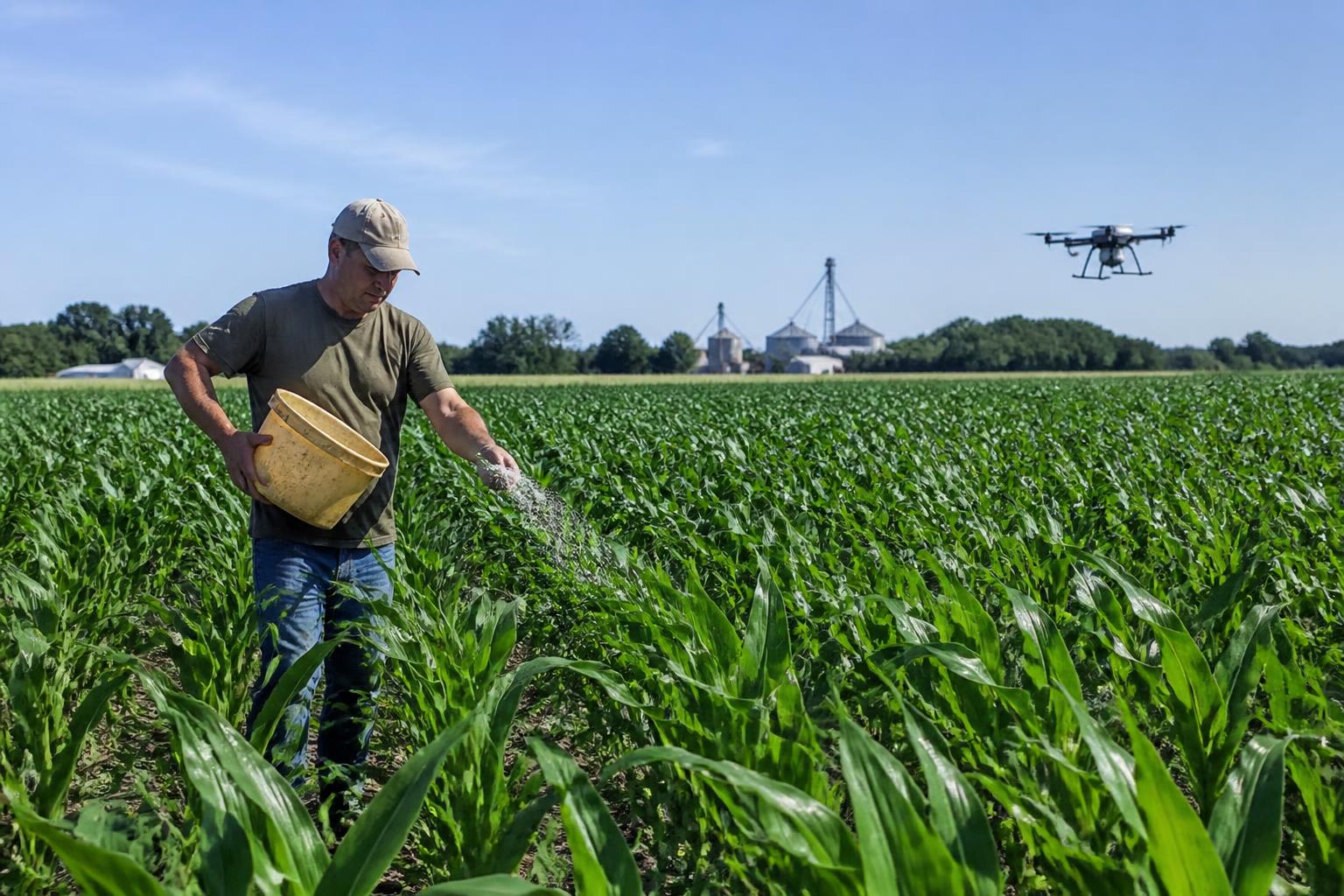
As summer settles over Maine's agricultural landscape, growers in Aroostook County and across the state are focusing heavily on crop protection strategies to maximize yields. For Maine's signature potato industry and emerging grain acreage, mid-season management demands a precise balance between environmental stewardship and robust pest management. New local innovations and technical advancements are helping farmers keep protection products exactly where they are needed most.
With unpredictable summer weather patterns, state researchers and commercial growers are looking to cutting-edge tools to take the guesswork out of field applications. From biological soil amendments to localized meteorological models, Maine's agricultural sector is actively testing new methods to build crop resilience and protect tight margins.
Local Meteorology and Precision Application Tech
Timing crop protection applications is one of the most stressful operational decisions a farmer faces. To address this, a University of Maine weather forecasting program is designed to lessen stress on local farmers by providing highly localized atmospheric data. Access to accurate micro-climate forecasts allows operators to avoid applying treatments right before unexpected heavy downpours or high-wind events, which can cause costly product runoff or drift.
In tandem with better weather intelligence, application technology is evolving rapidly. Modern spray systems utilize advanced nozzle designs, pulse-width modulation, and real-time mapping to ensure that crop protection products stay targeted exactly where intended. This not only improves efficacy against weeds, fungi, and insect pests, but also limits off-target movement, helping growers remain compliant with regional environmental guidelines.
Biological Innovations: Lobster Shells and Soil Pathogens
Maine is uniquely positioned to merge its maritime resources with terrestrial agriculture. University of Maine researchers have been actively testing the use of lobster shells to thwart potato soil pathogens. By utilizing chitin-rich shells, which are a byproduct of the local seafood industry, scientists hope to naturally stimulate beneficial soil microbes that suppress harmful fungal and bacterial pathogens. This circular economy approach offers a promising non-chemical path to safeguarding potato quality and supply chains during summer.
Integrating these natural soil-borne solutions with traditional seed treatments and target-specific foliar controls allows growers to adopt a multi-layered integrated pest management (IPM) strategy. By boosting the plant's defense from the root level up, farmers can potentially reduce reliance on expensive synthetic inputs over the long term.
Key Takeaways for Maine Growers
- Leverage localized weather tools: Utilize regional meteorological programs to optimize spray windows and minimize product waste.
- Explore bio-based amendments: Stay updated on local research regarding organic byproducts, like lobster shells, to suppress persistent soil pathogens naturally.
- Optimize spray precision: Invest in boom and nozzle technologies that maintain precise target delivery, reducing drift risks.
What it means for the market
For Maine's agribusinesses, potato shippers, and input distributors, the summer of 2026 highlights a shift toward high-tech, localized crop protection. By combining state-level academic research, maritime waste-stream innovations, and advanced weather forecasting, Maine farmers can better defend their crops from mid-summer pest pressures. While input costs remain a persistent challenge, adopting smart application technologies and bio-controls will help secure regional yield volumes and reinforce the market competitiveness of Maine-grown commodities.
Comments
No comments yet - be the first to share your take.