
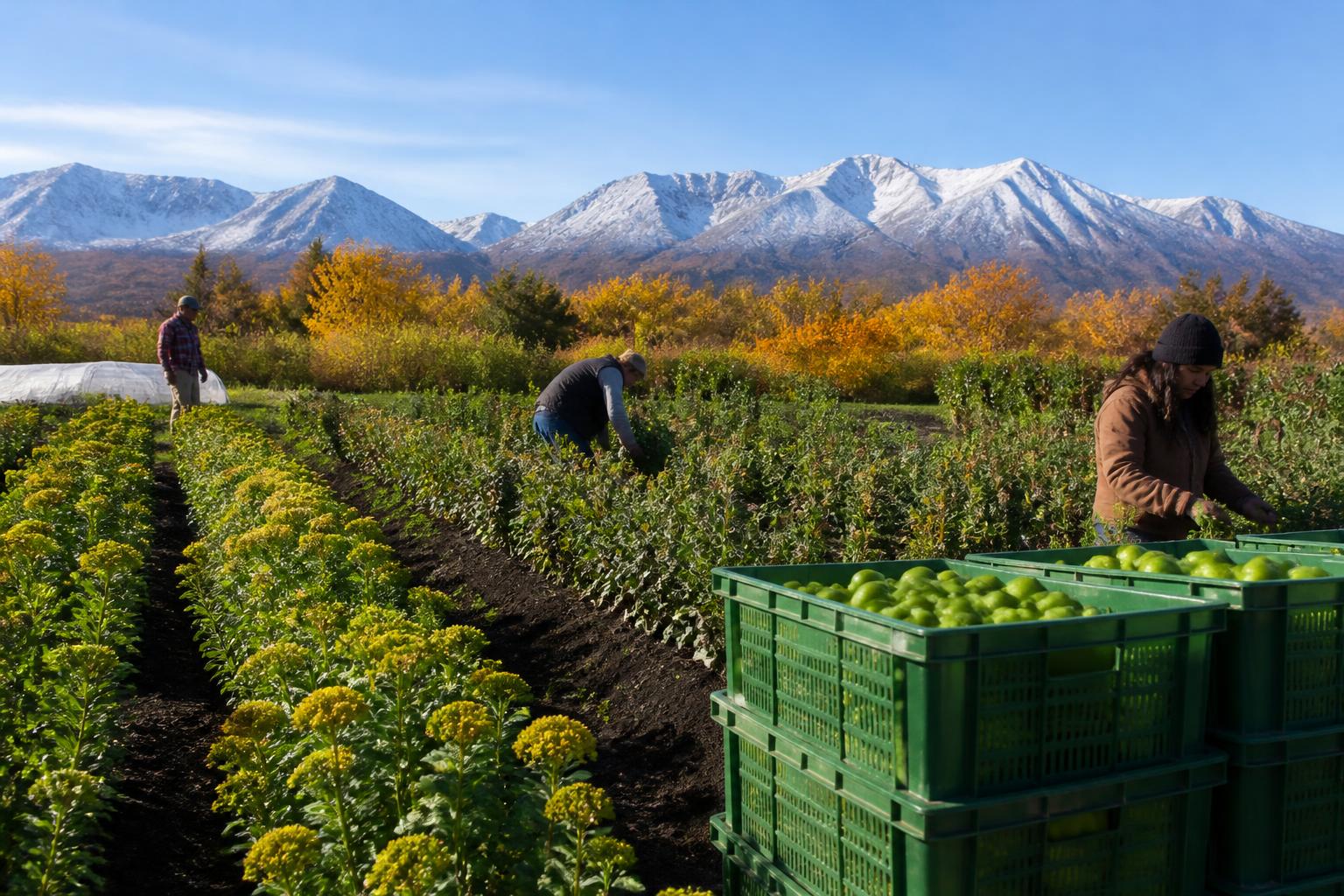
The Evolving Landscape of Alaskan Agriculture
As the fall harvest season winds down in Alaska, the focus for many producers has shifted from the field to the complexities of the supply chain. Despite the unique environmental and geographical constraints inherent to the region, a growing community of farmers is proving that niche agriculture can thrive. Whether moving high-value crops like rhodiola or exploring opportunities for regional food security, the state's agricultural sector is increasingly defined by its ability to innovate around logistics.
Successful farm operations in places like the Matanuska-Susitna Valley or the Kenai Peninsula are often those that maintain tight control over their distribution paths. For growers, this means balancing the limited window of the short growing season with the reality of high transport costs to reach major population centers or export hubs. Understanding how to manage these market-driven risks is becoming a baseline requirement for new and established operations alike.
Leveraging Air and Ground Logistics
Efficient movement of goods remains a primary challenge for Alaskan agribusinesses. While ground transport is the workhorse for local distribution, air freight has emerged as a crucial bridge for high-value or perishable products. Partnerships between carriers and producers have historically facilitated the movement of goods across long distances, demonstrating that specialized supply chains can be scaled when infrastructure is aligned with harvest cycles.
For those looking to expand, access to arable land continues to be a persistent hurdle. As highlighted in recent discussions on expanding market access, the physical footprint of agriculture must grow to match the rising demand for locally sourced products. Producers often find that collaborative logistics models—where multiple small-scale operations share transport costs—can provide the necessary margin to survive in a volatile climate.
Building Resilience into the System
Operational stability is the bedrock of any successful agricultural venture in the North. Given the potential for unexpected environmental hurdles, from seasonal weather shifts to geological challenges, diversity in crop selection and market outlets is essential. Farmers are increasingly adopting flexible business models that can pivot as logistical options change throughout the year.
What it means for the market
The Alaska market is moving toward a more integrated approach, where the distinction between farming and logistics is narrowing. For agribusinesses, this signifies that investment in transport partnerships and distribution networks is just as vital as investment in seeds or machinery. As local production models mature, those who can secure reliable transport channels will be the best positioned to capitalize on the increasing appetite for Alaskan-grown specialty goods.
Comments
No comments yet - be the first to share your take.