
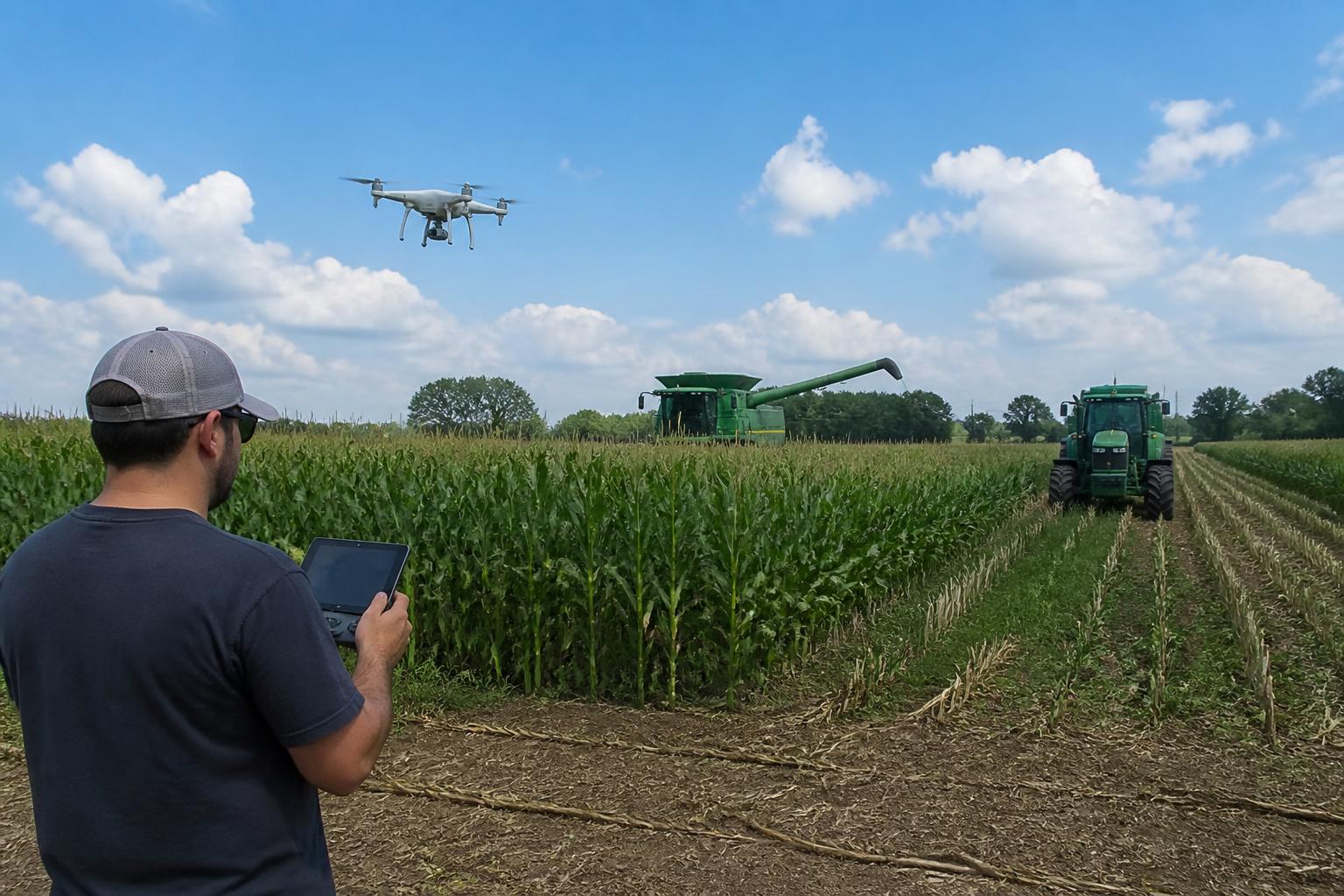
As summer swings into full gear across Indiana, corn and soybean growers are facing a complex web of crop protection decisions. Between managing early-season disease risks, adopting high-tech application tools, and navigating geopolitical uncertainties that threaten input supply chains, maintaining a clean field this June requires both agronomic precision and strategic planning. Local agricultural cooperatives and research institutions are increasingly focusing on ways to streamline these processes for Hoosier producers.
With summer disease pressures mounting, growers are urged to keep a close eye on their fields; for instance, proactive scouting is essential for managing emerging risks like tar spot, as detailed in our guide on Indiana crop protection and early tar spot monitoring. Ensuring that application methods are precise can make the difference between a highly effective treatment and wasted chemistry.
Taking Crop Protection to the Skies with Drone Integration
Indiana is rapidly positioning itself as a central hub for advanced agricultural technology, particularly in aerial applications. Known strategically as the "Crossroads of the Sky," the state is actively developing initiatives for drone leadership. For local farmers, this translates to more accessible and efficient drone-based spraying services that can target crop pests and diseases with surgical accuracy.
Using unmanned aerial vehicles (UAVs) allows operators to apply fungicides and insecticides without damaging standing crops, which is especially valuable during the rapid growth phases of mid-summer. Progressive growers across the state are increasingly integrating these automated systems into their daily operations, capitalizing on improved sensor technology to detect crop stress before visual symptoms fully manifest. This tech-first approach helps optimize chemical use, reducing overall input costs while protecting yield potential.
Managing Volatile Input Supply Chains and Logistics
While technology offers field-level solutions, global events continue to cast a shadow over input markets. Indiana agribusinesses and farmers are keeping a watchful eye on geopolitical tensions, particularly conflicts involving Iran, which have raised significant concerns regarding the cost and availability of essential fertilizers and crop protection chemicals. Any disruptions in global supply lanes can quickly filter down to regional retail prices, making early procurement and careful storage vital strategies.
To help mitigate these supply vulnerabilities, regional logistics networks are evolving. An Indiana-based cooperative recently broke ground on a new Ohio River fertilizer terminal, aiming to strengthen the transport and distribution of key inputs. Utilizing river corridors typically allows for bulk transport that can buffer regional retail markets against sudden supply shocks, ensuring Hoosier farmers have access to the nutrients and protectants they need when application windows open.
Disposing of Unwanted Pesticides Safely
Effective crop protection also involves the responsible management of outdated or unwanted chemicals. Over time, farms can accumulate canceled, suspended, or degraded pesticides that pose storage and environmental hazards. State-sponsored clean sweep and disposal programs offer a critical pathway for growers to safely discard these materials without incurring hefty fees or risking regulatory non-compliance.
Participating in these collection events keeps farms safe, protects local watersheds, and ensures that older chemistries do not accidentally find their way into modern sprayer systems. Agronomists recommend reviewing chemical sheds annually to identify products that are no longer usable or legal under current environmental guidelines.
Key Takeaways for Indiana Producers
- Adopt Precision Tools: Leverage drone technology for targeted aerial applications to minimize crop damage and reduce input waste.
- Monitor Supply Channels: Keep close tabs on global energy and political events that could impact fertilizer and chemical pricing through the summer.
- Utilize River Terminals: Watch for localized logistical improvements, such as the new Ohio River terminal developments, which may offer more stable regional input supplies.
- Clear Out Old Stock: Keep an eye out for local pesticide disposal programs to safely eliminate unusable or banned chemicals from your storage facilities.
What it means for the market
The convergence of advanced aerial technology and shifting global logistics highlights a transitional period for Indiana's agricultural sector. While geopolitical tensions keep chemical and fertilizer markets volatile, local infrastructure investments and precision technology adoption are providing farmers with the tools necessary to protect their margins. Staying proactive with both field applications and input procurement will remain the key to navigating the crop protection challenges of the season.
Comments
No comments yet - be the first to share your take.