
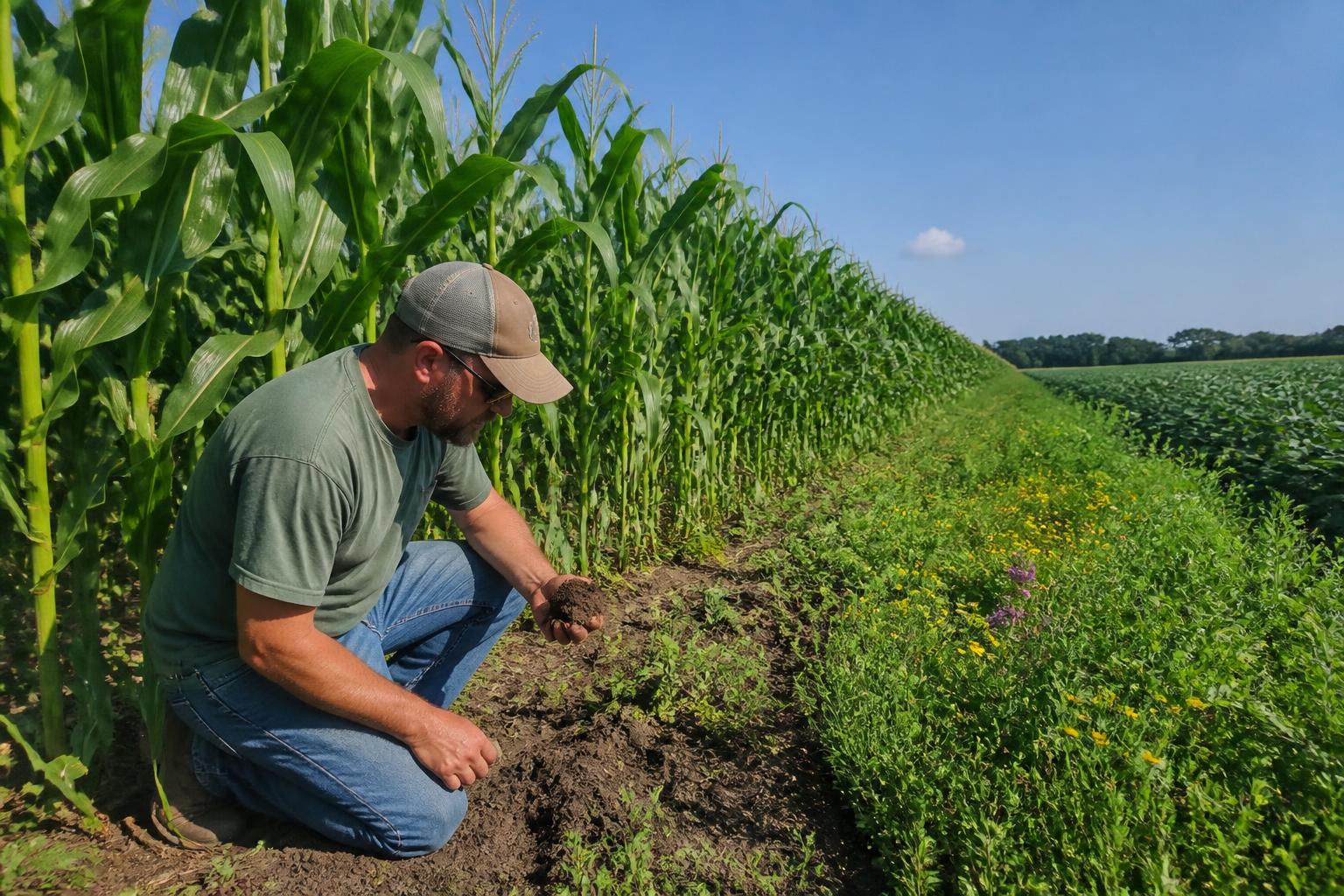
Evaluating Frost and Crusting Damage in the Field
Soil crusting and early-season frost can severely impact emergence, leaving uneven plant populations across Minnesota fields. When a crust forms over the soil surface, young seedlings struggle to break through, often leading to bent coleoptiles in corn or broken hypocotyls in soybeans. These physical barriers, combined with low temperatures, can significantly reduce the final plant stand.
Growers are utilizing localized agronomic support to make critical management decisions. For instance, counties like Olmsted County are benefiting from a return of dedicated local University of Minnesota Extension educators to assist with in-field assessments. Determining whether a stand remains viable requires counting productive plants per acre and assessing whether the remaining population can still deliver a profitable harvest without requiring a late replant.
Nutrient Delivery and Weed Management Under Stress
Once a stand is deemed viable, the focus shifts to maximizing the efficiency of mid-summer inputs. Corn crops heavily rely on nitrogen to support rapid vegetative growth and subsequent pollination. If early-season crusting or cold soils restricted initial root development, side-dressing nitrogen or applying targeted foliar nutrients can help plants recover.
In addition, thin or uneven stands are highly susceptible to weed pressure due to a delayed canopy closure. Effectively managing summer inputs and crop protection is vital for suppressing late-season weeds that compete for moisture and nutrients. Farmers must balance herbicide applications carefully to avoid further stressing plants that are already recovering from early-season weather events.
Long-Term Soil Protection and Risk Mitigation
Addressing soil crusting and early-season erosion is not just a short-term issue; it highlights the need for sustainable land management. Implementing conservation tillage or maintaining cover crops can improve soil structure over time, reducing the likelihood of severe crusting in future seasons. Aligning these practices with broader Minnesota soil health and risk mitigation strategies can safeguard both land productivity and asset value over the long run.
What it means for the market
For the broader agricultural market in Minnesota, early-season stand challenges are driving localized demand for post-emergence crop protection products and custom application services. Retailers and crop scouts should expect sustained demand for agronomic consulting as growers work to optimize variable stands. While uneven emergence may create yield variability in some areas, proactive management and timely nutrient applications can help stabilize regional production, ensuring steady volume for local grain elevators and logistics networks heading into the fall.
Comments
No comments yet - be the first to share your take.