
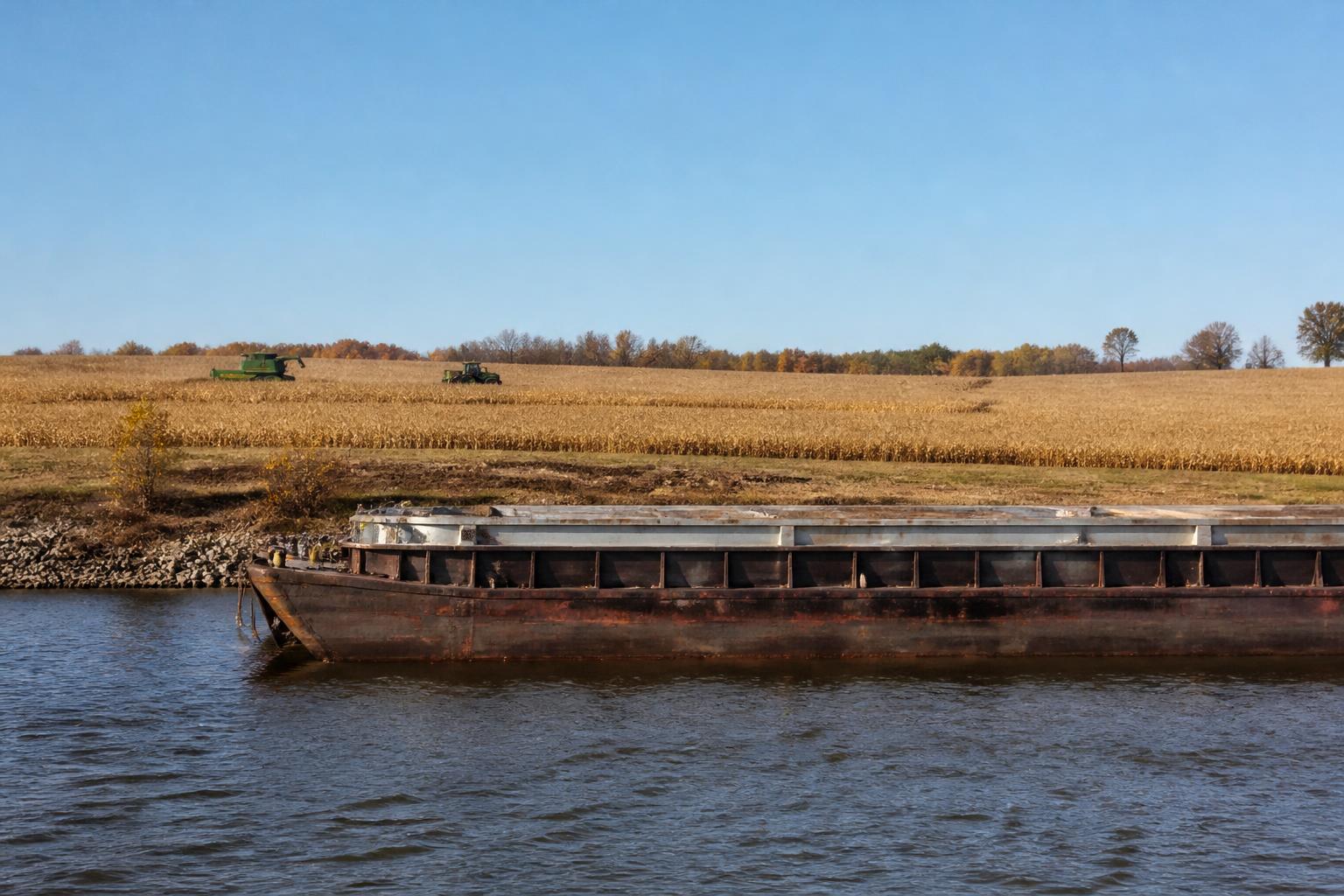
Logistical Hurdles in Mississippi Grain Transit
As harvest operations wrap up across Mississippi, local grain handlers and producers are increasingly attentive to the broader logistical environment, particularly the availability of river transport. The reliance on river barges to move bulk commodities remains a critical factor for the state’s agricultural competitiveness. Recent industry discussions have highlighted that an aging barge fleet may be contributing to tighter capacity, impacting the efficiency of grain movement down the Mississippi River corridor.
Navigating Infrastructure Realities
For Mississippi elevators and shippers, the current state of river infrastructure often dictates the speed at which grain reaches export terminals near the Gulf Coast. When barge availability is restricted, the resulting delays can pressure local basis levels and complicate storage management for producers who are looking to move their fall harvest quickly. Persistent constraints within the national barge fleet serve as a reminder of the fragility of these long-distance supply chains during high-volume periods.
Strategies for Producers and Handlers
Given the potential for seasonal congestion, many agribusinesses are evaluating their logistics planning to hedge against transit delays. This involves closer coordination between terminal operators and carriers to optimize loading schedules. In parts of the Mississippi Delta, managing on-farm storage effectively has become even more vital as farmers look to mitigate the risks associated with potential shipping bottlenecks.
What it means for the market
The convergence of a steady harvest and limited barge capacity typically creates a premium on reliable logistics. For those in the Mississippi agricultural sector, keeping a close watch on river conditions and regional transport demand will be essential for navigating the coming months. Market participants should expect that infrastructure constraints may continue to influence local grain pricing strategies as the industry looks toward long-term maintenance and replacement needs for the inland waterway fleet.
Comments
No comments yet - be the first to share your take.