
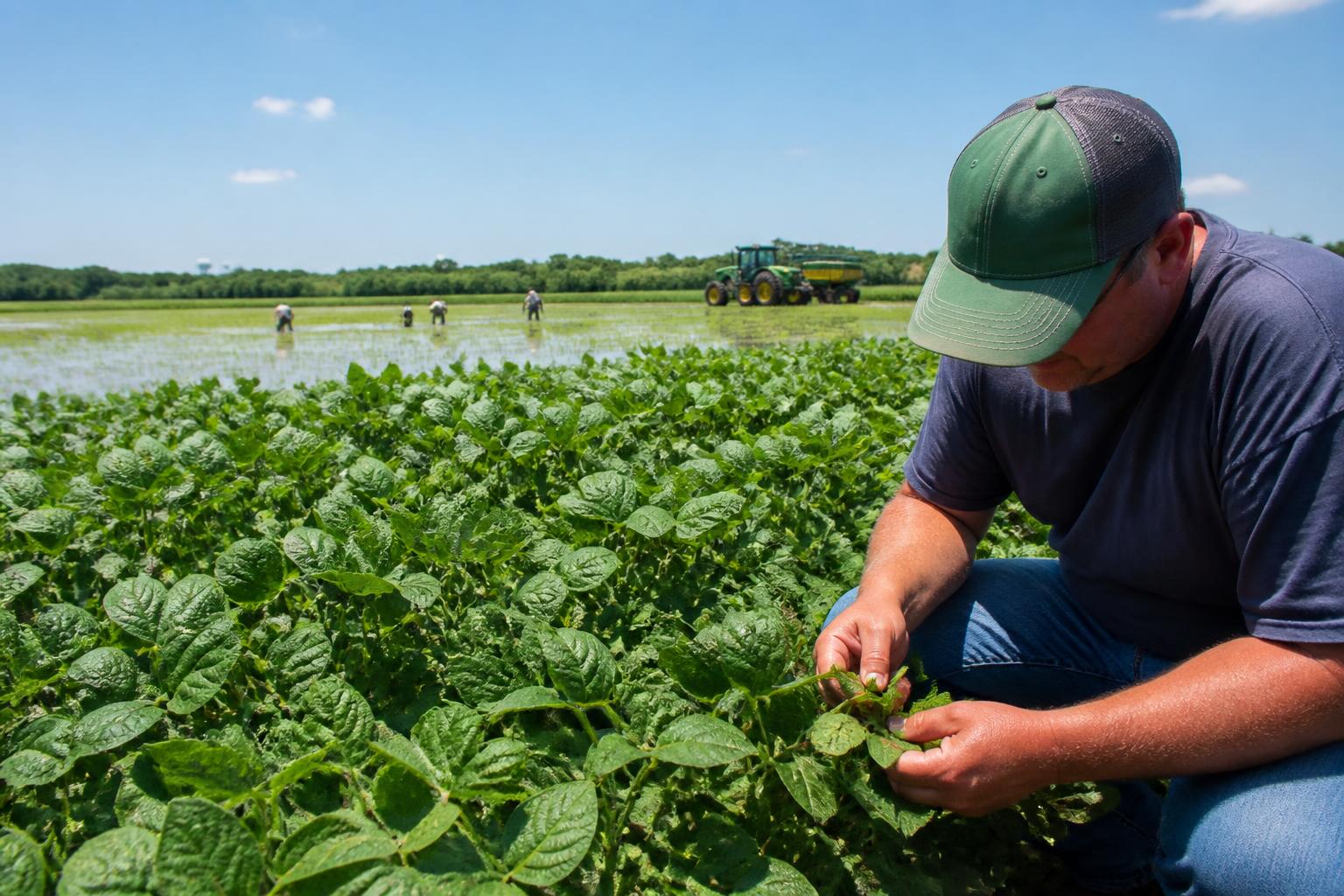
As summer settles over the Mississippi Delta, grain growers and logistics operators are facing a familiar mix of agronomic challenges and transportation constraints. From managing early-season crop conditions to preparing for the seasonal logistics rush, operations across the state are focusing heavily on efficiency. In a region where river access and road transport dictate profitability, staying ahead of regional logistics and crop-management trends is essential for protecting margins.
With major highway corridors and local routes busy with agricultural traffic, Mississippi grain handlers must coordinate closely with transportation networks. Balancing local road regulations with the need to move grain to terminal elevators remains a top priority as summer progresses.
Delta Logistics and Weight Restrictions on Local Roads
Transporting grain safely and legally is a major focus for Mississippi growers during the peak hauling seasons. State authorities actively monitor truck weights, and grain haulers face costly fines if they exceed established weight limits on state roads and bridges. Keeping trucks within legal limits requires precise on-farm weighing and coordinated communication with local elevators.
At the same time, regional logistics depend heavily on the Mississippi River. Falling river levels during critical periods can disrupt barge traffic, forcing more volume onto roads or complicating the export pipeline. Understanding how to manage these transport bottlenecks is crucial for local farms, particularly when navigating river logistics and export corridors during fluctuating water conditions.
Agronomic Innovation: Corn, Rice, and Alternative Grains
On the production side, Mississippi farmers continue to adapt their crop rotations and management strategies to overcome local challenges. While some growers are finding success with intensive management strategies like planting corn-after-corn, others are exploring alternative crops. For instance, herbicide-tolerant grain sorghum is emerging as a promising option for growers looking to manage weed pressures more effectively while maintaining diverse crop rotations.
Water management is another area of active innovation. Mississippi rice growers are increasingly utilizing advanced water-saving techniques to boost yields and conserve groundwater resources. These local efforts help stabilize production even as the broader U.S. rice sector faces ongoing regional challenges and shifting acreage. Additionally, managing heavy input requirements remains a key focus, with some operations exploring alternative nutrient sources like chicken manure to optimize soil fertility.
Key Takeaways for Mississippi Growers
- Monitor Load Weights: Ensure all grain trucks comply with Mississippi state weight limits to avoid steep fines during transit.
- Adapt Rotations Carefully: Implementing corn-after-corn or integrating herbicide-tolerant grain sorghum requires highly structured management to succeed in Mid-South soils.
- Optimize Water and Inputs: Water-saving practices in rice fields and alternative nutrient plans can help insulate operations from high utility and input costs.
What it means for the market
For Mississippi grain markets, the summer months emphasize the critical link between field-level efficiency and logistical execution. Growers who manage to keep transport costs down by avoiding weight violations, while simultaneously utilizing water-saving and herbicide-tolerant crop technologies, will be best positioned to weather seasonal river volatility. Ensuring reliable flow from the field to the river terminal remains the ultimate key to capturing maximum value in the local market.
Comments
No comments yet - be the first to share your take.