
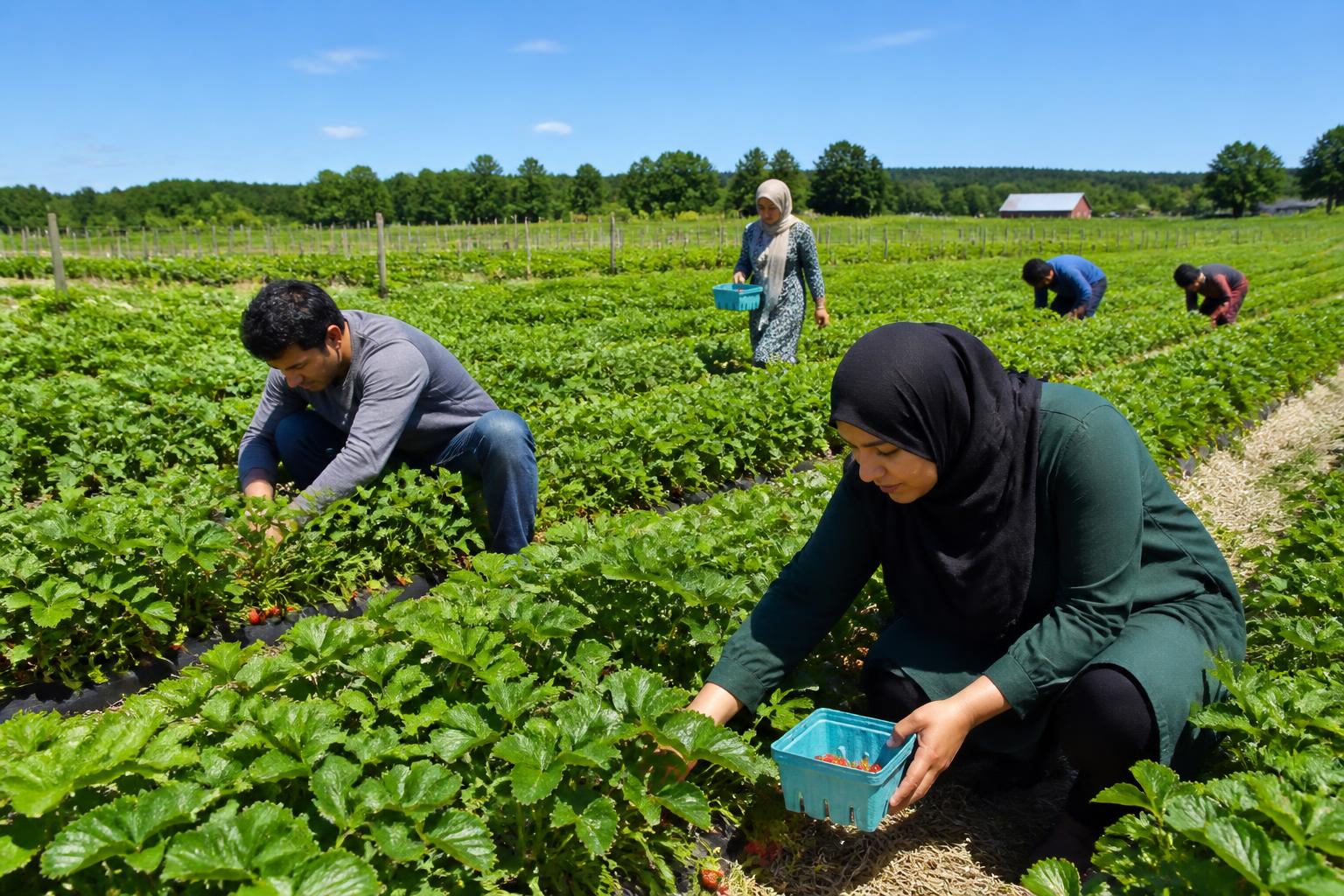
Niche Crops and Community-Driven Demands
In many parts of New Hampshire, agricultural diversity is growing. A notable driver of this shift is the rising number of refugee farmers who have turned to agriculture both for income and to produce traditional food crops. These growers often introduce unique specialty crops and localized cropping methods to the region.
For local grain and feed suppliers, this demographic trend highlights a growing demand for niche soil amendments, organic crop protection, and specialized cover crop seeds tailored to intensive, small-scale cultivation. Feed dealers who adapt their inventories to support diverse, small-scale livestock and poultry operations are finding new, loyal customer bases within these emerging farming communities.
Sustainable Practices in New England's Feed Market
Sustainable agriculture remains at the heart of New England's farming philosophy. Research and publications from regional academic institutions, such as the University of New Hampshire (UNH), emphasize the importance of maintaining soil health and adopting conservation-minded crop rotations. This focus on sustainability directly impacts regional feed production and marketing.
Growers looking to capitalize on these shifts are closely watching New Hampshire grain and feed trends, which emphasize low-impact soil management and localized distribution networks. By integrating cover crops and sustainable grain rotations, local operators can reduce input costs while meeting the consumer demand for environmentally conscious dairy, poultry, and beef feed.
Direct-to-Market Pathways and Food Bank Networks
Securing stable market channels is critical for New Hampshire's small-scale producers. Programs such as "Farm to Food Bank" initiatives, alongside community-supported agriculture (CSA) models, provide essential lifelines by redirecting surplus local production to regional food networks.
For grain and feed producers, these integrated distribution networks offer a blueprint for regional supply chain resilience. Collaborative marketing allows local grain elevators, feed dealers, and smallholders to pool resources, reducing logistics friction along major state transit corridors and ensuring that locally grown commodities remain within the regional food system.
What it means for the market
For New Hampshire grain and feed stakeholders, the summer market presents a prime opportunity to cater to diverse, sustainability-focused growers. Aligning product offerings with organic standards, specialty cover crops, and localized supply chains will allow agribusinesses to capture high-value niche markets. Maintaining close ties with community farming programs and regional food networks will ensure steady demand and stable margins through the remaining summer months.
Comments
No comments yet - be the first to share your take.