
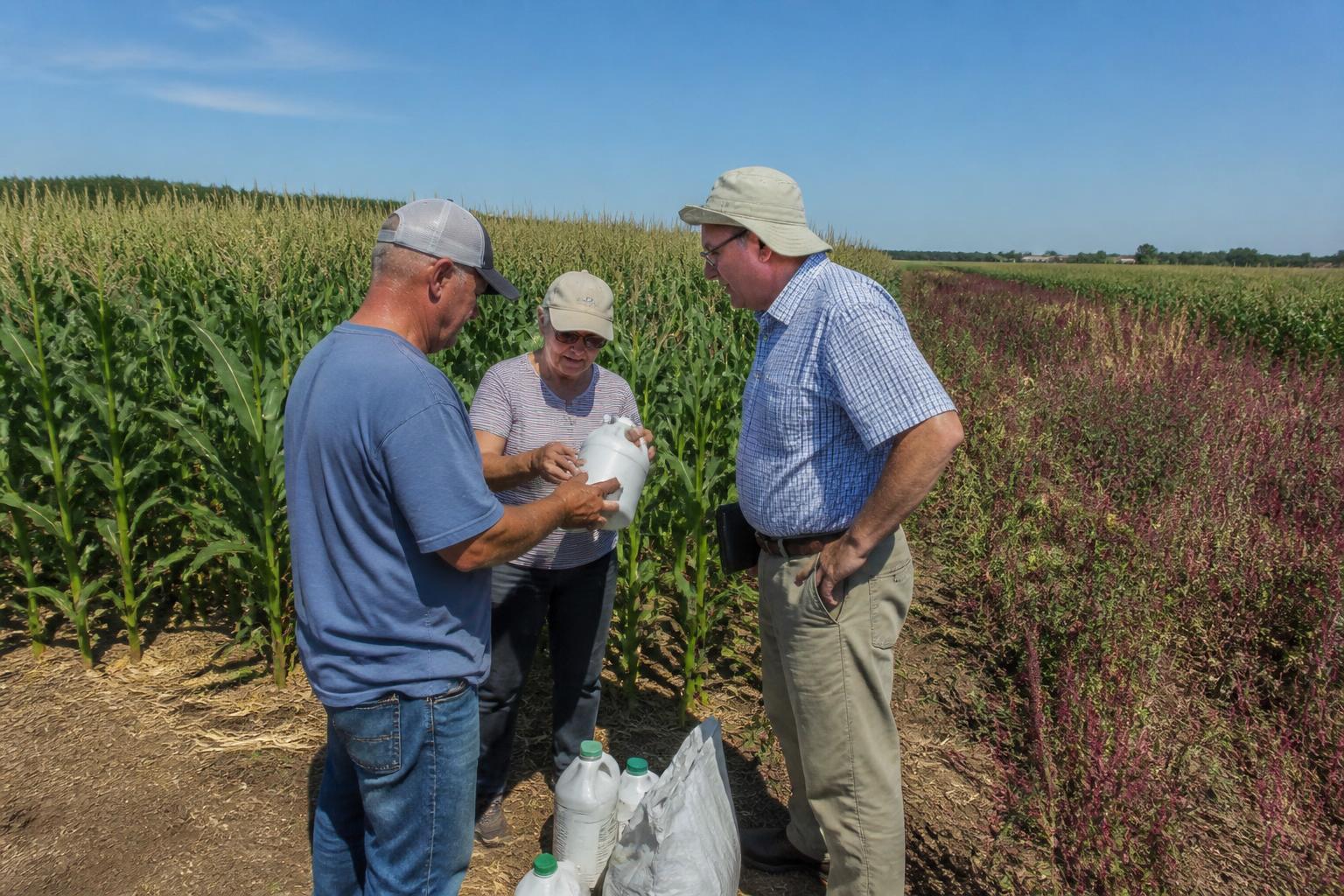
As Nebraska growers navigate the peak summer heat of late June, a stubborn threat is taking root in the state's southern fields. Agronomists have officially confirmed the presence of glyphosate-resistant Palmer amaranth in south-central Nebraska. This confirmation forces producers to quickly re-evaluate their chemical programs as they work to protect summer yield potential against one of the most aggressive weed species in the Midwest.
Managing tough weeds requires a shift toward more diversified, multi-action control strategies. With chemical resistance spreading, relying on single-chemistry programs is no longer a viable option for corn and soybean growers who want to keep their fields clean and productive through the harvest season.
The Rising Threat of Resistant Palmer Amaranth
Palmer amaranth is notorious for its rapid growth rate, high seed production, and ability to outcompete row crops for sunlight, water, and nutrients. The confirmation of glyphosate-resistant populations in south-central Nebraska means that standard over-the-top applications may no longer control escapes. If left unchecked, these weeds can quickly take over field edges and spread throughout entire operations.
To mitigate this risk, local crop consultants are urging growers to adopt integrated weed management practices. Utilizing multiple modes of action in a single tank mix is essential. Many growers are finding that investing in precision spraying and educational outreach is a practical way to manage these escalating input costs while ensuring precise application.
Adapting Summer Management Strategies
In the mid-summer heat, timing is everything. Post-emergence herbicide applications are most effective when Palmer amaranth plants are small, typically under four inches tall. Once the weed exceeds this height, chemical control options become significantly less effective, regardless of the active ingredients used.
Additionally, keeping fields clean requires a combination of pre-emergent residuals and targeted post-emergent passes. Because summer disease and pest pressures are already keeping growers on high alert across Nebraska, integrating proactive weed management into existing field scouting routines is a critical step to keeping overall operational stress low.
Retail Storefronts Support Local Agronomic Needs
As farmers look for quick access to alternative chemistries, parts, and expert advice, the role of local agribusinesses is evolving. Unique retail storefront models are emerging in Nebraska to provide farmers with direct, physical access to the products and tools they need. Rather than waiting on long-distance shipping, these local retail spaces allow operators to purchase essential supplies and consult face-to-face with experts who understand the specific pest and weed pressures of the local county.
Key Takeaways for Nebraska Growers
- Verify Resistance: Glyphosate-resistant Palmer amaranth is officially confirmed in south-central Nebraska; do not assume standard chemical passes will achieve full control.
- Diversify Chemistry: Use multiple effective modes of action and incorporate residual herbicides to suppress late-emerging flushes.
- Target Early: Apply post-emergent controls when weeds are small to maximize efficacy and prevent seed-bank replenishment.
- Leverage Local Retail: Utilize regional storefronts and local agronomists for immediate access to alternative chemicals and custom application advice.
What it means for the market
The confirmation of resistant Palmer amaranth in south-central Nebraska is expected to drive up production costs as growers substitute affordable glyphosate with more expensive, premium chemical tank mixes. Agribusinesses and chemical retailers in the region may see a sharp increase in demand for alternative active ingredients and residual herbicides. Meanwhile, grain elevators and processors will watch late-season weed control closely, as severe pressure can hamper harvesting efficiency and potentially degrade final grain quality at delivery.
Comments
No comments yet - be the first to share your take.