
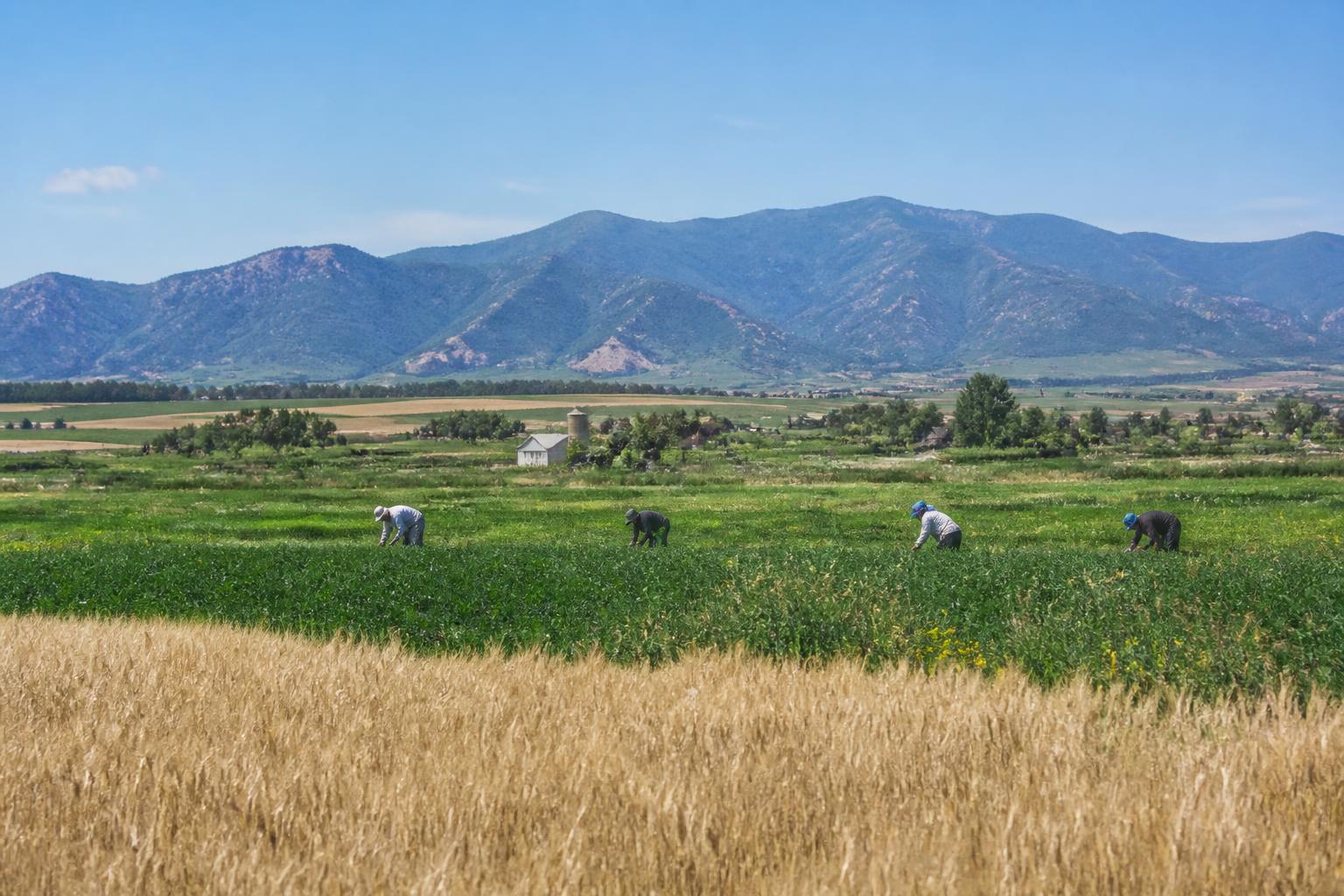
As the hot summer months settle over Utah, growers are facing the challenging task of managing weeds and pests under strict environmental scrutiny. In regions like the Cache Valley, local geological evaluations emphasize the high sensitivity and vulnerability of local water resources to pesticide runoff. Protecting these vital resources while maintaining crop yields requires Utah agribusinesses to adopt highly targeted, conservation-minded crop protection strategies.
Additionally, with urban development rapidly encroaching on historic farmland around the Great Salt Lake and along the Wasatch Front, farmers must operate with heightened awareness of their suburban neighbors. This reality is forcing a shift toward integrated pest management practices that reduce the risk of chemical drift and runoff in coexisting spaces.
Addressing Persistent Weeds with Biological Controls
To combat difficult invaders like Canada thistle without relying solely on conventional chemical applications, Utah farmers are exploring alternative methods. Recent agricultural research highlights how specific fungal pathogens can act as a natural, highly effective control mechanism against Canada thistle. Utilizing these biological tools allows growers to suppress invasive weeds while minimizing the risk of synthetic chemical accumulation in sensitive soils.
This shift is particularly important in fields close to municipal boundaries or in areas where water-use optimization is highly prioritized. Implementing biological controls works hand-in-hand with managing summer weeds and heat stress in arid fields, allowing plants to survive harsh summer conditions without the added stress of heavy herbicide applications.
Conservation Practices and Water Optimization
From Spanish Fork to the northern valleys, Utah agriculture is increasingly defined by resource conservation. As state programs offer incentives for water optimization to support the Great Salt Lake and the Colorado River basin, crop protection must align with these efforts. Reducing overall chemical inputs helps ensure that the limited water flowing back into natural systems remains free of harmful residues.
Producers are also turning to traditional conservation methods and drought-tolerant crops to buffer against volatile weather patterns, such as past late-season freezes and summer droughts. Adopting innovative crop protection and input efficiency strategies ensures that even when water is scarce, crops remain healthy enough to resist opportunistic pests and diseases.
Key Takeaways for Utah Growers
- Understand Local Vulnerability: Assess soil and groundwater sensitivity, particularly in areas like Cache Valley, before applying pre-emergent or systemic pesticides.
- Leverage Biological Tools: Consider integrating fungal control agents to target weeds like Canada thistle, reducing dependency on synthetic chemicals.
- Coexist with Urban Growth: Adopt low-drift nozzles and precise application timing to prevent off-target movement in fields surrounded by expanding residential developments.
What it means for the market
The market for crop protection inputs in Utah is shifting toward high-efficiency, low-environmental-impact products. As state policy continues to focus heavily on water preservation and the protection of local ecosystems, chemical suppliers and agronomists who offer targeted biologicals, precision application equipment, and low-drift formulations will find a highly receptive customer base among Beehive State producers.
Comments
No comments yet - be the first to share your take.