
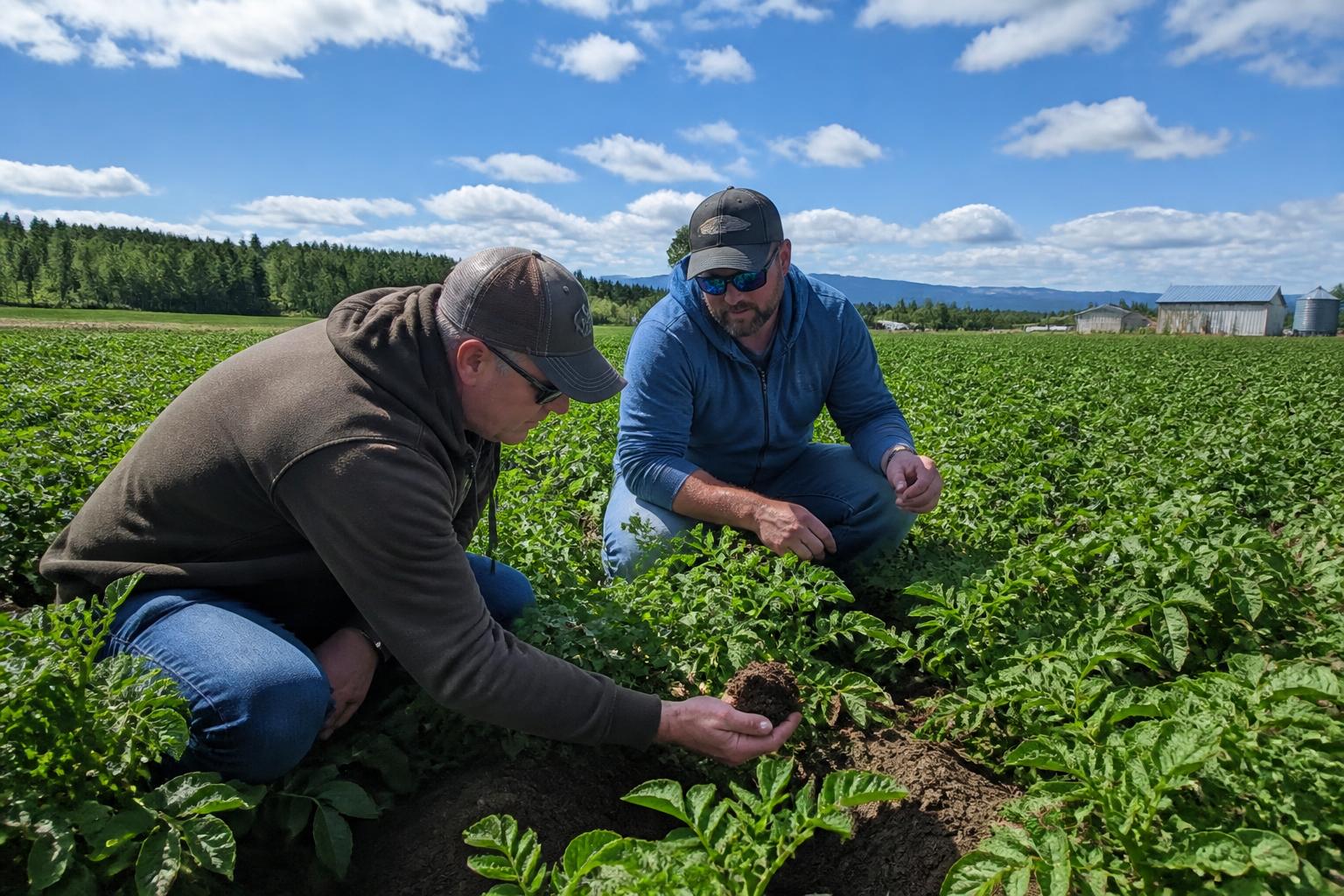
As June brings nearly twenty-four hours of daylight to Alaska's agricultural valleys, farmers in Delta Junction and the Matanuska Valley are operating at an accelerated pace. The sub-Arctic growing season is famously brief but incredibly intense, forcing growers to compress a full year's worth of crop management, weed control, and soil conservation into a window of just a few weeks.
With crops growing rapidly under the constant daylight, managing the delicate balance between high-speed production and long-term soil health has become a primary focus for the state's agricultural community.
Soil Conservation Challenges in Delta Junction
Delta Junction, widely recognized for its local grain and forage production, presents unique environmental and soil health challenges. The region's soils can be highly susceptible to wind erosion and moisture loss, especially during dry spells in the early summer. To combat this, local producers are increasingly exploring soil health practices such as conservation tillage, residue management, and cover cropping to protect the fragile topsoil.
Maintaining soil organic matter is critical in these northern latitudes, where soil temperatures remain cool and biological activity is concentrated in a short period. Protecting the soil surface not only prevents erosion but also helps retain precious moisture required to bring grain crops to maturity before the early autumn frosts arrive.
Managing Crop Protection on a Compressed Timeline
Because weeds and pests also thrive under the continuous summer sun, the timing of crop protection applications is critical. A delay of even a few days can allow weed pressure to outpace crop development, reducing yields in crucial barley and forage fields. Securing the necessary inputs on time is a recurring hurdle for northern growers, which is why summer crop protection and input logistics demand careful, advanced planning to prevent mid-season shortages.
The logistics of importing crop protection tools to Alaska remain complex. Agricultural chemical distributors and local co-ops must coordinate shipments months in advance. For many remote operations, success hinges on navigating Alaska's unique transport corridors, where reliance on a single highway or rail line means any transit disruption can directly impact field management timelines.
Legacy of the Matanuska Valley
Further south, the Matanuska Valley-originally settled as a federal farming colony in the 1930s-continues to serve as a vital hub for Alaska's vegetable and dairy production. While the region is famous for producing giant, award-winning vegetables under the midnight sun, modern commercial growers in the valley are focused on the practical realities of soil structure and nutrient management.
Applying precise crop protection measures and organic soil amendments has helped these historic fields remain productive. By focusing on soil health, local growers are working to ensure that the Matanuska Valley remains a resilient source of fresh food for the state's main population centers.
Key Takeaways for Alaska Growers
- Prioritize Soil Cover: Wind erosion remains a primary threat in Delta Junction; keeping residue on the fields helps preserve topsoil.
- Anticipate Logistical Bottlenecks: Input delivery delays can jeopardize weed control windows; early coordination with local distributors is essential.
- Leverage Conservation Programs: State and federal soil health initiatives offer support for growers transitioning to conservation tillage.
What it means for the market
For agricultural input suppliers, custom applicators, and logistics providers, Alaska's intense summer window emphasizes the value of regional warehouse capacity and reliable shipping networks. As growers in Delta Junction and Palmer place a greater emphasis on soil conservation and targeted pest management, demand for northern-adapted biologicals, soil health amendments, and efficient crop protection delivery systems will continue to shape the local agricultural economy.
Comments
No comments yet - be the first to share your take.