
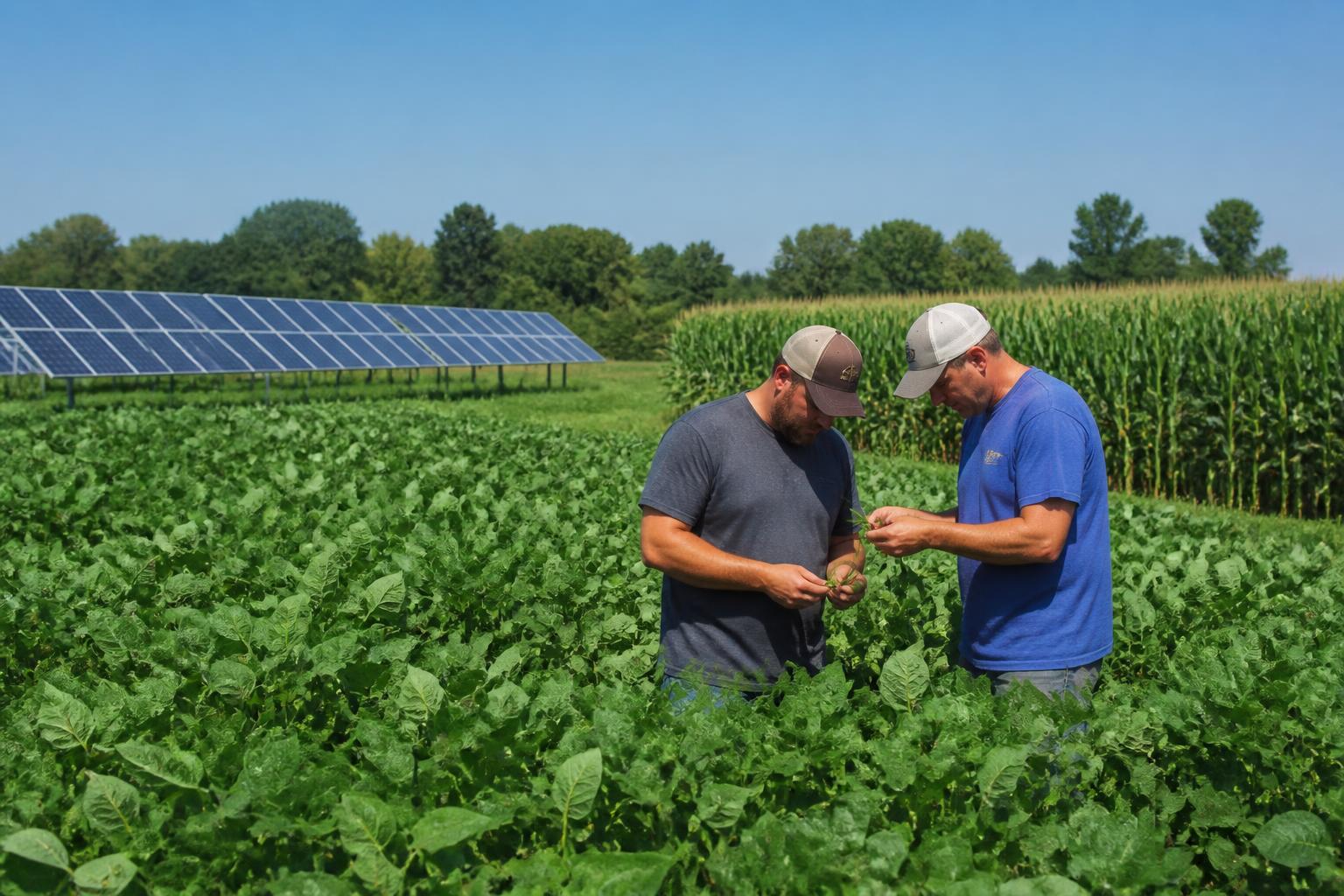
As summer temperatures peak across West Virginia, agricultural protection and ecosystem monitoring are taking center stage. Local agribusinesses, foresters, and crop producers are increasingly focused on biosecurity and biological health to protect regional yields. In a major boost to the state's agricultural research infrastructure, West Virginia University (WVU) colleges are collaborating on a new $3.4 million USDA grant aimed at strengthening regional resource protection and research capabilities.
At the same time, ongoing ecological field monitoring is revealing fresh insights into the state's soil biology. With pest and beneficial organism activity rising during the warm summer months, these research initiatives are helping local producers better understand the complex biological systems supporting West Virginia's pastures and cropland.
Rare Species Detections and Soil Health Insights
Understanding what lives in the soil is fundamental to effective crop protection. Recently, WVU researchers participating in a National Geographic project successfully detected rare millipede species that are seldom documented in West Virginia. While such critters might seem distant from commercial agriculture, soil macroinvertebrates play a critical role in nutrient cycling and organic matter decomposition.
By mapping these native populations, researchers can better gauge overall ecosystem health. In many Appalachian valley farms, healthy soil biodiversity acts as a natural buffer against soil-borne pathogens and aggressive crop pests. Accurate documentation of native species helps biologists and agronomists distinguish between beneficial organisms and potential threats to local high-tunnel vegetables, forage crops, and orchards.
Collaborative USDA Funding Drives Protection Programs
The joint effort across WVU colleges supported by the $3.4 million USDA grant represents a significant investment in agricultural defense. This funding is expected to enhance research programs that address farm efficiency, biosecurity, and resource management across West Virginia's varied microclimates.
For local producers, academic collaborations of this scale often translate into practical, on-the-ground management strategies. Improved monitoring techniques and data collection on pests, soil health, and water quality allow extension agents to provide more precise recommendations. This is particularly valuable during the summer growing season, when heat-induced plant stress can make crops more vulnerable to opportunistic diseases.
Navigating Summer Pest and Biosecurity Pressures
Managing biological pressures in West Virginia requires a coordinated approach, especially in intensive poultry and livestock zones like the Eastern Panhandle. Farm operators must balance active pest mitigation with strict biosecurity rules. Ensuring that transport vehicles, feed trucks, and field machinery do not spread soil-borne pathogens or invasive weed seeds remains a top operational priority this summer.
These protective measures are deeply connected to nutrient management. Producers are currently balancing poultry litter biosecurity and environmental stewardship to safeguard local watersheds from run-off while maintaining soil fertility. Furthermore, navigating local shipping challenges and biosecurity rules is essential for grain handlers and livestock operations moving feed ingredients across state lines during seasonal dry spells.
Key Takeaways for West Virginia Growers
- Increased Research Capital: The $3.4 million USDA grant will help fund collaborative studies aimed at improving resource management and crop defense.
- Focus on Biodiversity: Tracking rare soil-dwelling organisms assists researchers in identifying indicators of healthy, pest-resistant soil profiles.
- Summer Biosecurity: Farmers should maintain clean equipment and follow strict sanitation protocols to prevent the movement of pests between isolated valley fields.
What it means for the market
For West Virginia's agribusinesses, investment in agricultural protection and environmental research safeguards long-term land productivity. As climate and biological pressures evolve, the data generated by USDA-funded research will help crop and livestock producers mitigate risk, prevent costly pest outbreaks, and maintain compliance with regional conservation standards. Continued vigilance in field biosecurity this summer will be key to protecting yields ahead of the fall harvest season.
Comments
No comments yet - be the first to share your take.