
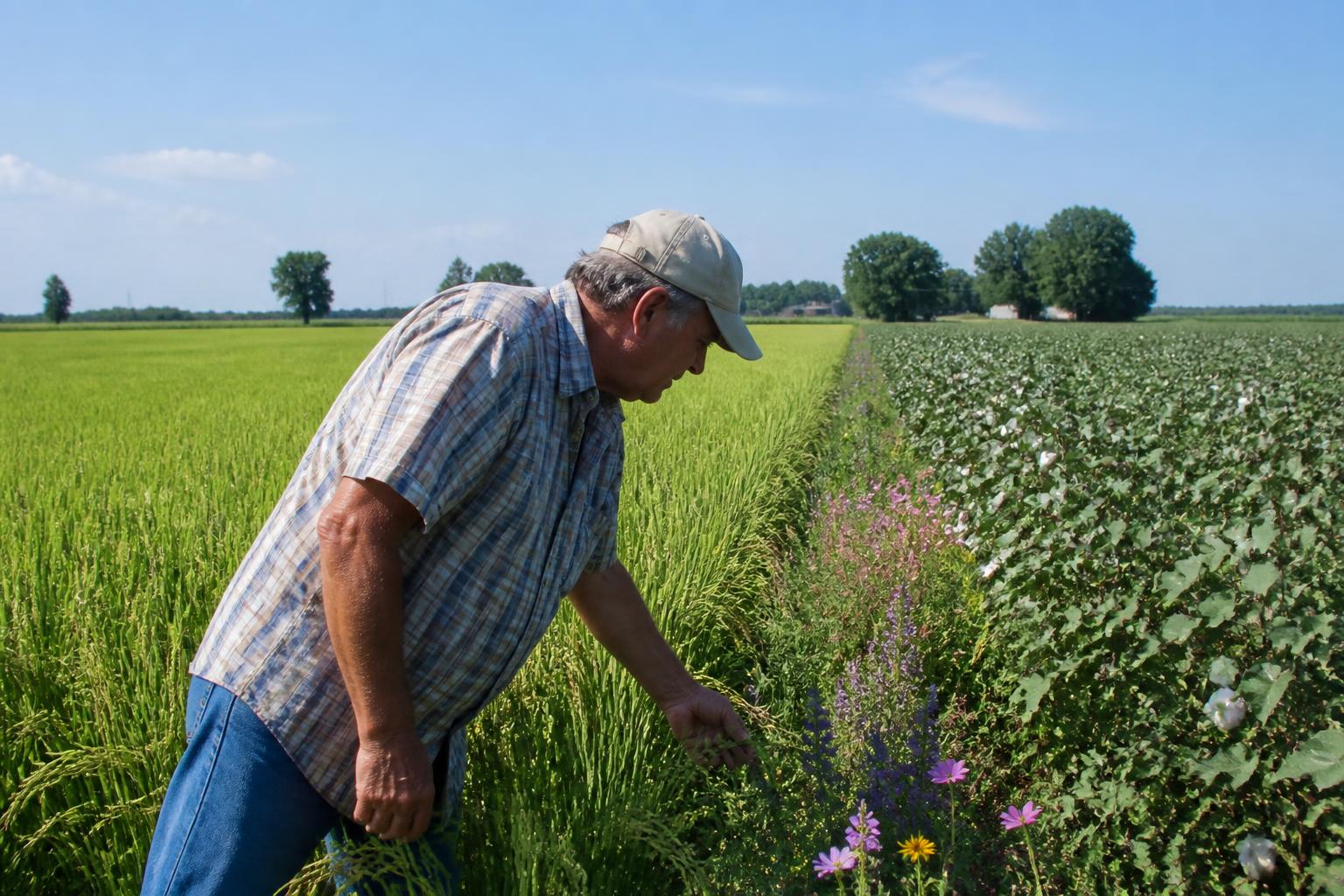
Delta growers in Arkansas are navigating a highly complex summer management window as crop protection demands collide with unprecedented economic pressures. With rising operational costs and structural adjustments across regional agricultural infrastructure, local crop protection strategies must balance strict budget limitations with necessary agronomic control. For growers throughout the state, protecting yields from weeds and disease this season requires precise timing and optimized input choices.
Escalating Weed Pressures in Rice and Soybeans
Controlling weeds remains one of the costliest hurdles for Arkansas crop management. Agronomists have noted that weed control challenges in Arkansas rice fields continue to mount, requiring diverse chemical applications to combat resistant species. In soybean systems, historical struggles with herbicide drift and volatility, particularly involving dicamba formulations like Engenia on Xtend crops, have taught growers the critical importance of exact application windows, proper nozzle selection, and wind speed monitoring.
To prevent costly drift incidents and maximize chemical efficacy, growers are focusing heavily on mixing procedures and compatibility. As local farmers look to streamline field passes, managing crop protection logistics and tank-mix compatibility has become a primary objective to avoid costly nozzle plugging and uneven applications.
Economic Strain Forces Input Optimization
The agronomic challenge of weed control is compounded by a difficult economic environment for regional agribusinesses. High operational costs have triggered warnings of a farm crisis across the state. Senator John Boozman has highlighted the ongoing woes facing producers, while major agricultural cooperatives like Riceland Foods have signaled potential plans to permanently close several grain drying facilities and implement job cuts due to volume and cost pressures.
These infrastructure adjustments put additional pressure on farmers to protect every bushel while cutting unnecessary costs, especially at a time when many are already dealing with a severe profitability squeeze in the Arkansas Delta due to high rents and low grain prices. Consequently, input buyers are highly selective, scrutinizing the return on investment for every fungicide, insecticide, and herbicide application.
Innovative Agronomics and Monitoring Tools
Faced with thin margins, Arkansas producers are turning to precision technology and updated management programs. The University of Arkansas System Division of Agriculture has rolled out updates to its DD50 rice management program, improving accessibility and accuracy to help growers target precise timing for nitrogen applications and crop protection decisions.
Beyond weed control, physiological crop stress is also on the radar. In wet rice soils, growers are monitoring for hydrogen sulfide toxicity, a physiological disorder that can weaken root systems and leave plants vulnerable to secondary pathogenetic damage. Meanwhile, innovative conservation practices, such as the minimum-tillage systems used by the Cain family in White County, are helping some growers retain soil moisture and reduce early-season weed germination, illustrating how cultural practices can support chemical crop protection.
Key Takeaways for Arkansas Growers
- Targeted Timing: Use updated tools like the DD50 program to lock in precise application windows and avoid wasted chemicals.
- Drift Mitigation: Keep a strict eye on wind patterns and temperature inversions when applying volatile herbicides to prevent off-target damage.
- Soil Health Monitoring: Watch low-lying rice fields for signs of hydrogen sulfide toxicity to prevent root rot and disease susceptibility.
- Input Budgeting: Prioritize applications that directly impact yield-limiting factors to keep operating credit intact.
What it means for the market
For chemical manufacturers, retailers, and Arkansas growers, the summer market demands a lean, highly efficient approach to crop protection. High operational overhead and potential closures of regional handling infrastructure mean that grain logistics and input management must be tighter than ever. Growers who succeed this season will be those who combine precise chemical applications with cultural management tools to preserve yields without over-extending their operating lines.
Comments
No comments yet - be the first to share your take.