
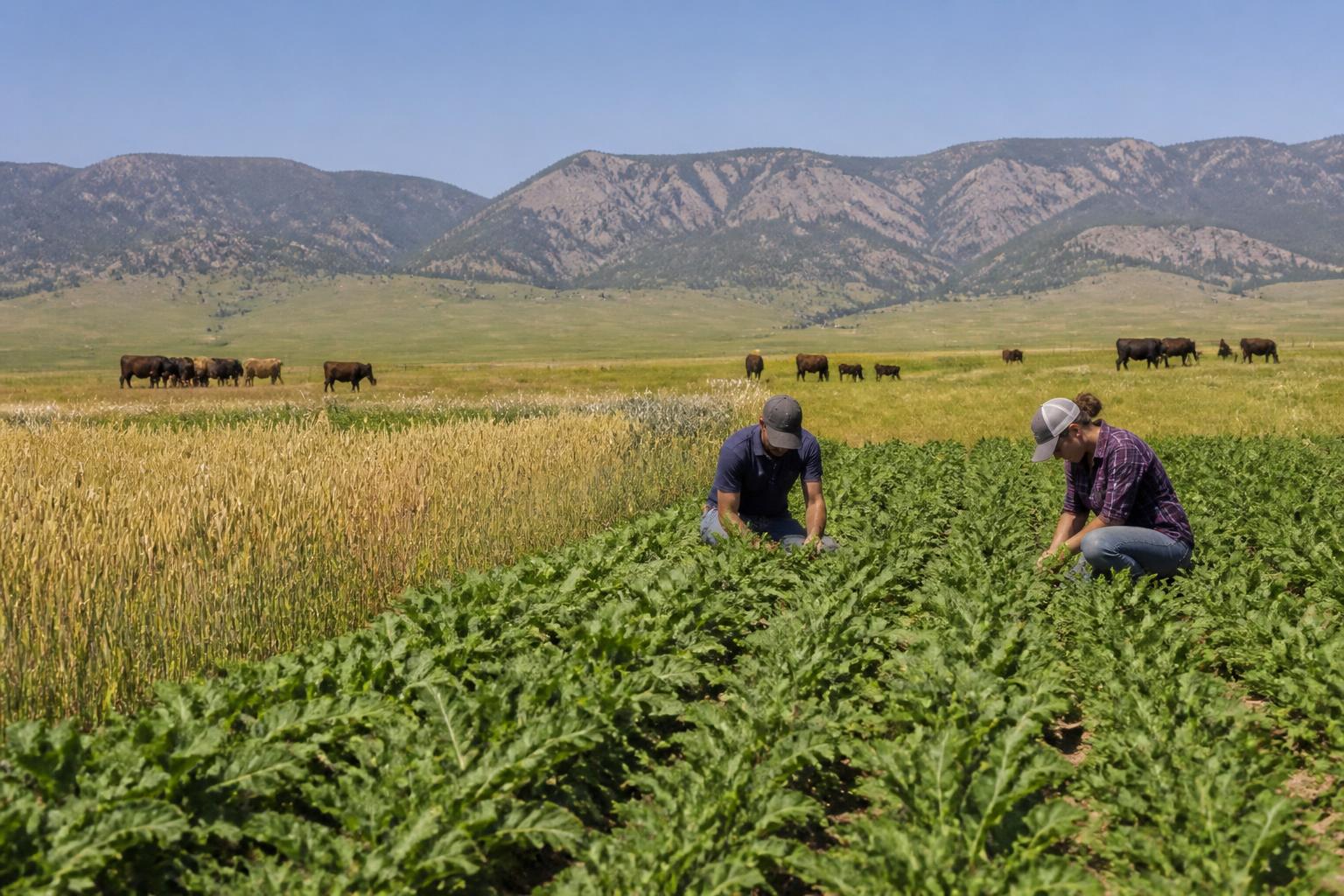
As summer heat intensifies across the mountain West, Wyoming agricultural producers and landowners are prioritizing long-term resource protection. Facing combined pressures from rising temperatures, wildfire risks, and dry conditions, local operators are actively integrating land conservation agreements and experimenting with alternative crops to safeguard their livelihoods. These proactive efforts underscore a statewide shift toward resilient land-management practices that protect both soil health and livestock operations.
Protecting Working Ranches: The 17,757-Acre Conservation Partnership
In a major milestone for rangeland preservation, the Wyoming Stock Growers Land Trust has partnered with the Pathfinder Sand Creek Ranch to protect 17,757 acres of agricultural land. This massive conservation easement ensures that the working ranch remains intact, preventing subdivision and non-agricultural development while preserving critical wildlife habitats. Such initiatives are vital for balancing livestock interests with habitat protection across Wyoming's vast open spaces.
The conservation agreement comes at a time when the Wyoming cattle industry is gathering for its annual convention to discuss herd management, regional market trends, and land stewardship. Preserving large contiguous tracts of rangeland allows local cattle operations to maintain historical grazing patterns even as summer dry spells restrict forage availability on unprotected or fragmented lands.
Drought-Tolerant Forages and Ancient Grains Under Trial
On the cropping side, research and extension efforts are pointing toward diversification as a key defense against dry conditions. University of Wyoming research has recently confirmed the viability of a new forage crop specifically suited for the semi-arid climate of southeastern Wyoming. Farmers are being encouraged to explore these drought-resilient forage options to secure dependable feed sources during dry summer cycles.
In addition to new forages, a recent study has highlighted that ancient grains grow remarkably well under Wyoming's challenging climate conditions. Because these grains typically require less water and fewer synthetic inputs than traditional small grains, they present a viable alternative for producers looking to optimize water use efficiency. State research stations and crop extension teams are organizing field days to showcase these drought-tolerant varieties, providing local growers with hands-on insight into low-water cropping alternatives.
Navigating Weather Threats and Market Realities
While long-term planning moves forward, immediate summer weather threats like high temperatures and expanding wildfire risks require constant vigilance. Agricultural advocates are urging farmers and ranchers across the state to adopt comprehensive conservation measures to protect topsoil and conserve precious irrigation water. Adopting these climate-resilient cropping strategies can help mitigate the impacts of seasonal dry spells on regional crop yields.
Meanwhile, traditional specialty crop growers are addressing other market pressures. Wyoming sugar beet growers have recently pushed back against speculations that popular weight-loss medications are responsible for fluctuations in sugar prices, emphasizing that supply-and-demand fundamentals, trade policies, and regional weather patterns remain the primary drivers of market pricing.
Key Takeaways for Wyoming Producers
- Land Conservation: The protection of over 17,000 acres at Pathfinder Sand Creek Ranch highlights the growing role of agricultural easements in securing long-term grazing resources.
- Crop Resiliency: New University of Wyoming research on southeastern forage options and ancient grains provides actionable alternatives for high-heat, low-water conditions.
- Active Stewardship: Implementing conservation measures early in the summer season helps protect fragile soils from heat stress and wind erosion.
What it means for the market
For Wyoming's agricultural markets, the dual focus on land preservation and crop adaptation indicates a stabilizing trend against climate volatility. Buyers of regional commodities can expect a slow but steady increase in the availability of alternative, water-efficient grains and niche forage varieties. For livestock operators, participating in conservation trusts not only offers financial flexibility but also secures crucial grazing acreage, ensuring a more predictable supply of pasture-finished beef in the regional supply chain.
Comments
No comments yet - be the first to share your take.