
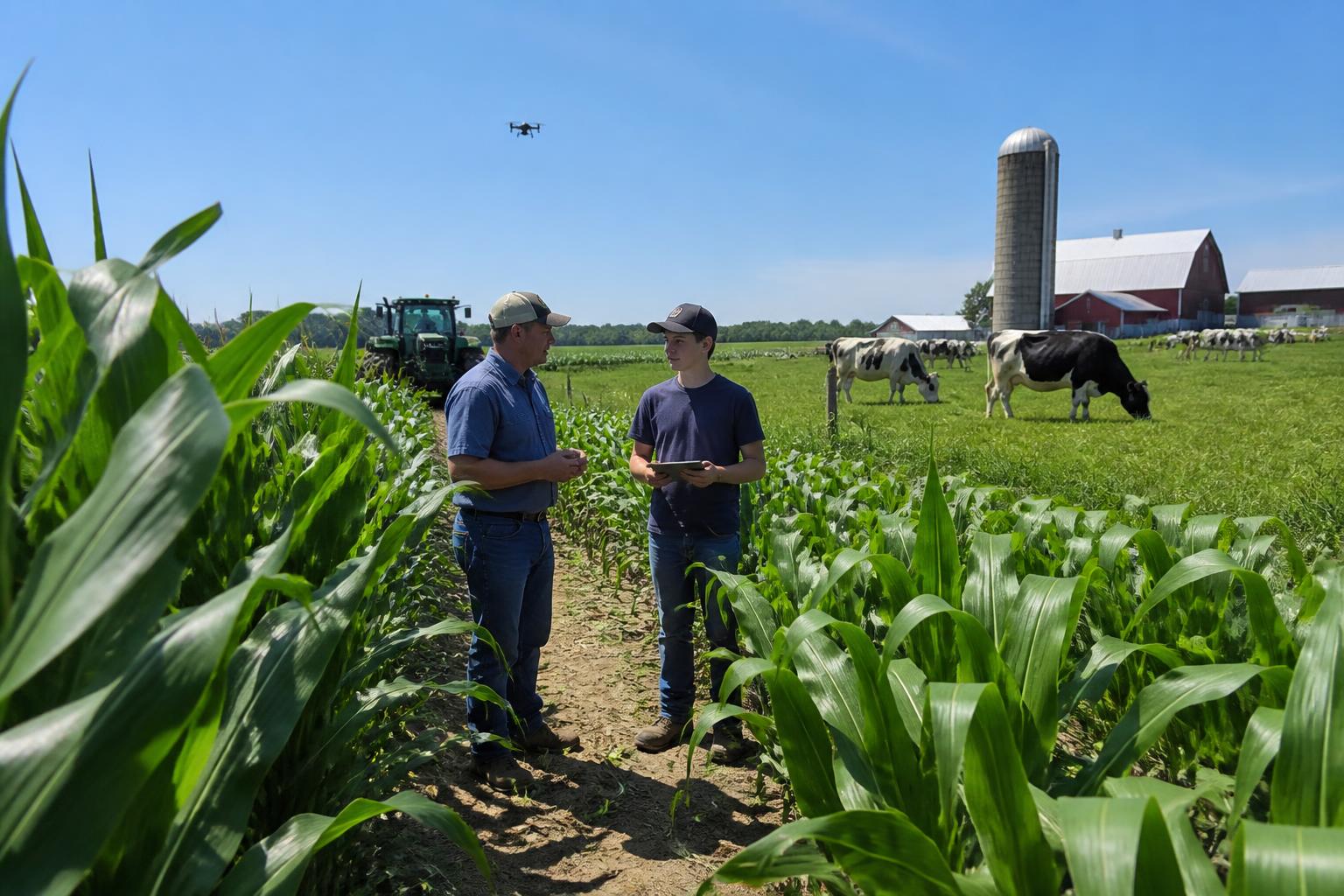
Wisconsin grain growers are navigating a complex summer landscape, marked by tight crop margins and persistent questions surrounding international trade policy. With a USDA forecast pointing to a significant 25 percent drop in net farm income, operations across the state are sharpening their focus on production efficiency, local basis opportunities, and disciplined risk management.
Navigating the Projected Income Drop and Trade Friction
The projected 25 percent decline in U.S. farm income has placed intense pressure on the bottom lines of grain operations from the southern counties up through the central sands. For local growers, this macro-level squeeze is compounded by ongoing discussions around tariffs and international trade agreements. Wisconsin agricultural producers remain highly sensitive to trade policies, as past market disruptions have proven how quickly export shifts can affect local cash prices at the elevator.
Because trade policy directly influences demand for major commodities like corn and soybeans, many growers are closely monitoring policy proposals that could impact access to key Asian and North American markets. To protect margins against sudden price swings, grain handlers and producers are looking to lock in local demand while carefully tracking regional basis movements.
Harvest Logistics and Crop Management Lessons
As summer crops progress through their critical vegetative and reproductive stages, growers are reflecting on past operational challenges to optimize their upcoming harvest logistics. For instance, academic and extension studies on the drying progress of corn left standing in the field over the winter have highlighted how unpredictable late-season weather can complicate moisture management and grain quality. Relying on field-drying can be highly risky, reinforcing the value of early-season preparation, bin maintenance, and securing reliable fuel sources for on-farm drying systems.
In addition to on-farm management, understanding the broader dynamics of the Wisconsin grain market is essential for mapping out profitable delivery routes. Access to Great Lakes shipping terminals, regional rail corridors, and major highway routes allows shippers to pivot when local processing demand shifts, helping to offset some of the transport bottlenecks that typically occur later in the year.
Diversification and Next-Generation Resilience
To insulate themselves from extreme commodity price cycles, some Wisconsin farms are leaning into traditional operational diversity. Mixing grain crops with specialty enterprises or livestock has historically helped fourth-generation family farms withstand down-cycles in any single market sector. This focus on long-term sustainability and business adaptability is increasingly championed by young agricultural leaders across the state, such as Tyler Baudhuin, who was recently recognized as the Wisconsin Outstanding Young Farmer.
Key Takeaways for Wisconsin Operators
- Plan for Tight Margins: Budget around the USDA's forecasted 25 percent decline in overall farm income by auditing input costs and drying expenses early.
- Monitor Trade and Tariff Risk: Stay informed on international trade discussions, as global export volumes heavily dictate local elevator bids.
- Optimize Dry-Down and Storage: Avoid relying solely on field-drying by ensuring on-farm grain drying systems and aeration bins are fully operational ahead of harvest.
What it means for the market
For the remainder of the summer season, the Wisconsin grain market is expected to remain highly sensitive to local crop condition reports and regional logistics availability. With profit margins running thin, growers who utilize diverse marketing tools, secure timely transport, and closely monitor both local basis and international policy developments will be best positioned to protect their operational viability heading into the fall harvest.
Comments
No comments yet - be the first to share your take.