
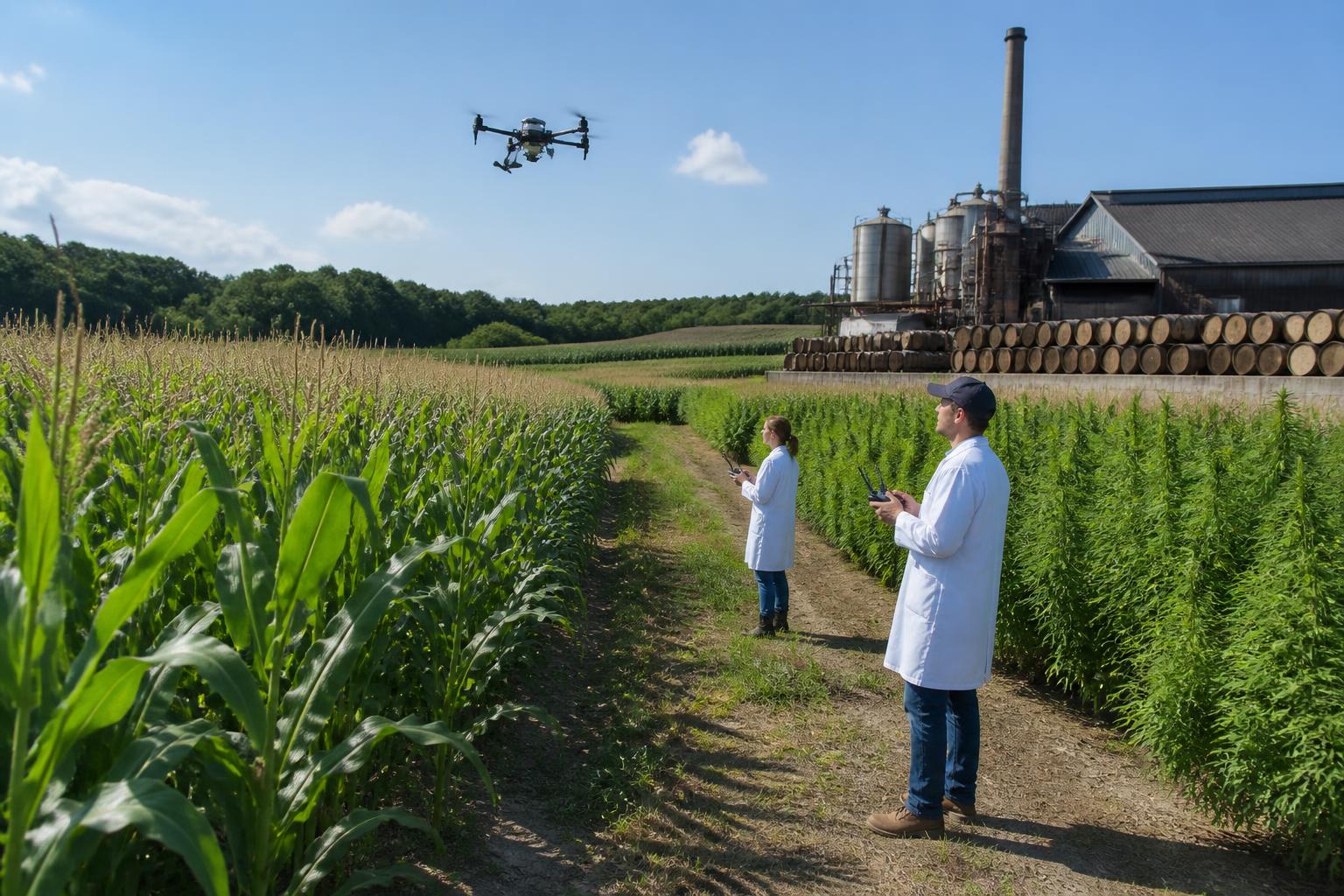
As the summer heat intensifies across the Bluegrass State this June, Kentucky grain producers are navigating a complex landscape of shifting crop demands, emerging agrotechnology, and logistical expansions. From the fertile fields of Western Kentucky to the major shipping corridors along the Ohio River, local agriculture is adapting to support both traditional markets and new industrial opportunities.
This season, the intersection of grain production and Kentucky's famous distilling industry is taking center stage. Growers are exploring alternative crops like rye while managing traditional corn acres with advanced precision tools, all while transportation companies expand services to meet these evolving bulk handling needs.
Rye and Stillage: The Distilling Connection
The relationship between Kentucky farmers and the state's spirits sector is evolving. While corn remains the foundational grain for bourbon, there is growing interest in Kentucky-grown rye, which could increasingly support the regional craft distilling market. Historically, much of the rye used in distilling has been sourced from outside the region, but local trials and soil health initiatives by the University of Kentucky suggest that domestic rye can serve as both a viable cash crop and an effective winter cover crop.
However, expanding local grain processing also highlights systemic challenges. Distillers face ongoing hurdles with stillage disposal, the liquid byproduct of the fermentation process. Finding sustainable, cost-effective ways to manage or repurpose stillage is a key priority for the industry, as traditional disposal methods face capacity and environmental constraints. For growers planning their marketing strategies, finding the right channels to sell grain in Kentucky remains a critical seasonal step to align crop outputs with local distiller and processor demands.
Drones and Feedstock: Precision in the Corn Field
On the technology front, corn management is becoming increasingly sophisticated. Researchers at the University of Kentucky are leading precision agriculture studies utilizing drones to monitor and protect corn fields. These aerial tools allow growers to spot pest pressures, crop stress, and nutrient deficiencies early in the summer growing cycle, optimizing chemical applications and protecting potential yields.
Beyond the grain itself, the logistics of crop residues are also under the microscope. Recent techno-economic assessments of chopped feedstock logistics suggest that harvesting corn stover could offer an additional revenue stream. However, establishing an efficient supply chain for bulky crop residues requires careful management of chopping, transport, and storage costs to make it economically viable for the average producer.
Logistical Expansions for Dry Bulk
Moving these commodities from the field to the processor requires robust logistics networks. To address this demand, transportation providers are stepping up their regional presence. For instance, Keller Trucking has expanded into hopper solutions with a new dedicated agricultural division, focusing on dry bulk markets. This expansion provides much-needed transport capacity for regional grain elevators, feed mills, and distillers who rely on timely bulk deliveries during the busy harvest seasons.
What it means for the market
For Kentucky agribusinesses, the summer of 2026 highlights a clear trend toward integration and efficiency. High-tech monitoring via drones helps protect yield potential, while transport expansions ensure that grains and co-products move efficiently. Growers who diversify into specialty grains like rye or tap into residue logistics may find valuable niches, provided they align closely with local processors and navigate the ongoing logistical bottlenecks of stillage and dry bulk transport.
Comments
No comments yet - be the first to share your take.