
As mid-summer crop development moves into full swing across Indiana, significant infrastructural and international developments are reshaping the state's grain landscape. Local producers are managing high-clearance crop inputs and weed control challenges while processing facilities and logistics hubs prepare for a higher-capacity future. From the Ohio River corridors to agricultural tech advancements, Indiana's grain supply chain is positioning itself for long-term competitiveness.
Expanding Port Logistics and Processing Footprints
Logistical efficiency is receiving a major boost in southern Indiana. Consolidated Grain and Barge (CGB) has initiated a $47 million expansion at the Port of Indiana-Mount Vernon, the state's busiest port. This massive project is set to triple the facility's grain handling capacity, offering a major outlet for growers targeting export channels down the Ohio and Mississippi rivers. Navigating these river corridors efficiently is crucial as Indiana ag transport infrastructure and tech evolve to support heavier freight volumes and quicker turnaround times.
On the domestic processing front, POET has broken ground on a significant expansion of its ethanol capabilities within the state. This development secures a steady, high-volume domestic market for Indiana corn. Additionally, international demand remains robust, highlighted by Taiwan signing formal Letters of Intent with Indiana representatives to purchase U.S. corn and soybeans, cementing long-term trade relations with Hoosier grain handlers.
Calculating the True Cost of Production
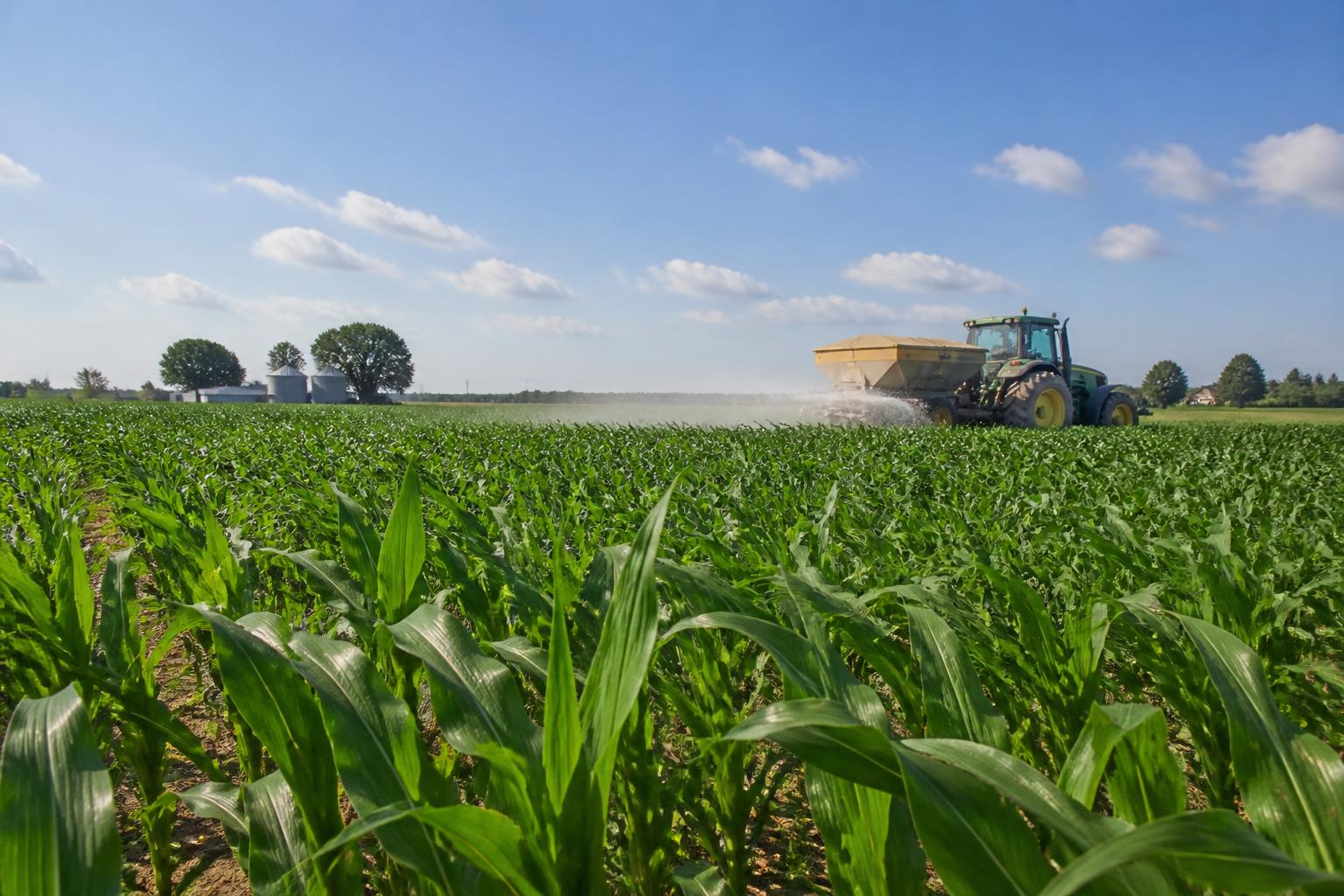
While demand pathways are expanding, Indiana growers are operating under tight margins, driven by global fertilizer market volatility and localized input management demands. Late-season nitrogen applications using high-clearance fertilizer spreaders are becoming increasingly common across corn-growing regions, requiring precise cost management. Managing herbicide resistance in key weed varieties across Indiana fields further adds to chemical program overhead.
To assist in these tight-margin calculations, Purdue University's College of Agriculture has released a new digital tool designed to help farmers calculate their true cost of production. This tool allows growers to evaluate their input costs, fuel, land, and machinery variables to find accurate, field-level breakeven points before the fall harvest begins. Governor Mike Braun has also pledged continued advocacy for Hoosier farmers, emphasizing the integration of life sciences and agricultural investments to foster state-level stability.
Key Takeaways for Indiana Growers
- River Logistics Upgrade: The $47 million CGB expansion at Mount Vernon will significantly increase river-based export flow, benefiting regional basis.
- Domestic & Export Demand: New ethanol expansions and formal purchasing commitments from Taiwan bolster demand for Indiana-grown corn and soybeans.
- Cost Management Resources: Utilizing Purdue's new cost of production calculator can help farmers refine their summer marketing plans and input budgets.
What it means for the market
For the Indiana grain market, these logistical and processing expansions mean a more resilient physical pipeline that can absorb harvest pressure. Increased regional demand from expanding ethanol plants and high-capacity river terminals may help narrow local basis levels during periods of seasonal supply surges. To stay ahead of local bidding trends, commercial elevators and farmers should monitor localized basis shifts and identify optimal marketing windows by checking the latest grain buyers, sellers and prices in Indiana.
Comments
No comments yet - be the first to share your take.