
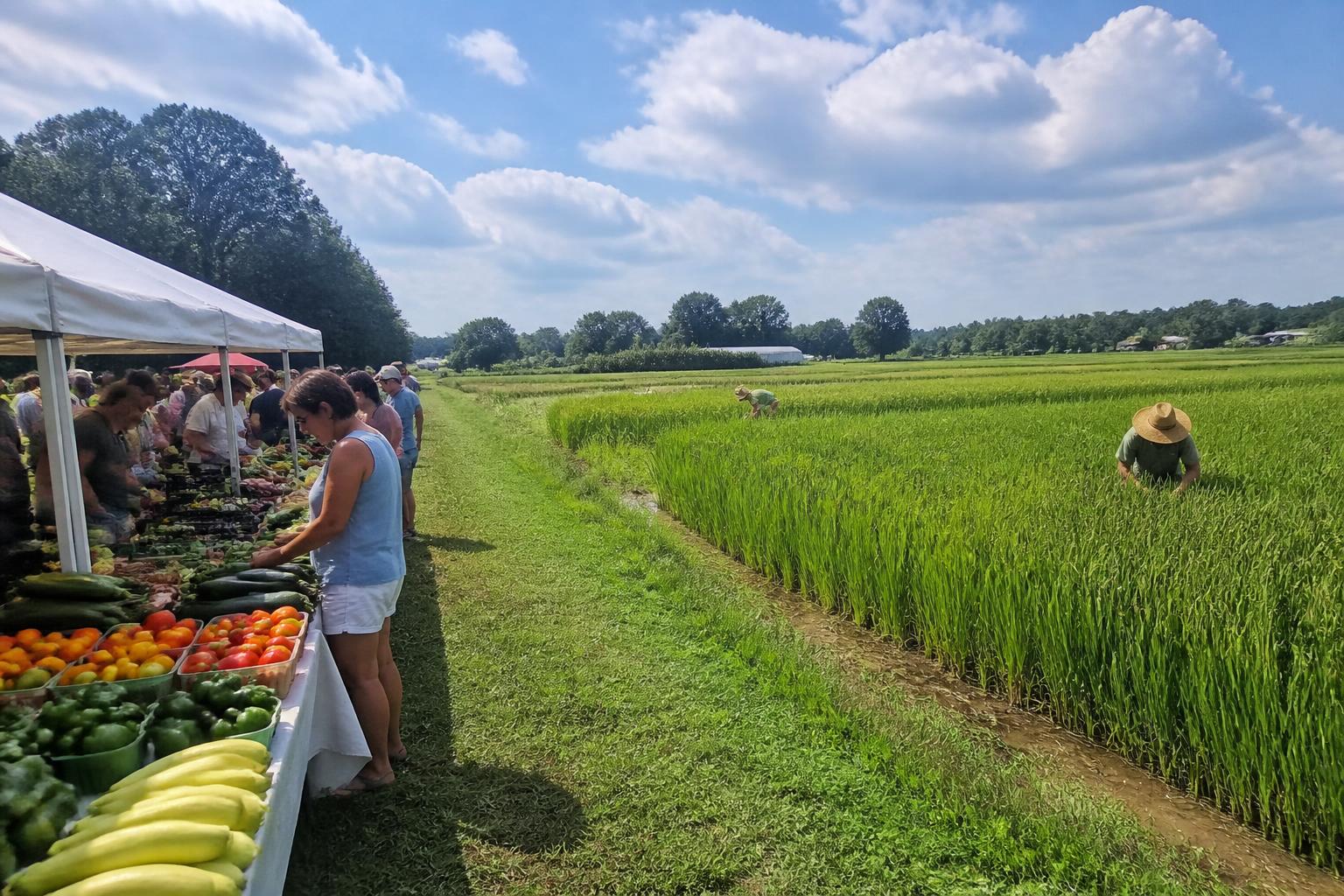
South Carolina's agricultural sector is entering the peak of the summer season with high-volume produce movement, critical crop breeding developments, and significant political movement. From the busy stalls of the Greenville State Farmers Market to the research fields at Clemson University, South Carolina producers are balancing immediate seasonal marketing needs with long-term policy and operational decisions.
As field operations proceed under the hot July sun, South Carolina growers are also closely monitoring political shifts and structural adjustments. The combination of state-level leadership races, federal legislative delays, and cutting-edge regional agronomy is shaping a complex, dynamic environment for local agribusinesses.
State Leadership Campaigns and Federal Legislative Hurdles
On the political front, the race for South Carolina Agriculture Commissioner has gained rapid momentum. Candidate Cody Simpson, who has received endorsements from Donald Trump and Governor Henry McMaster, recently set a fundraising record by raising significant campaign funds in just 49 days. This high-profile race highlights the growing national and local focus on state-level agricultural leadership and policy direction.
Simultaneously, the slow progress of the federal Farm Bill mirrors ongoing national transport and infrastructure debates. For South Carolina farmers, this legislative stall creates uncertainty around safety nets and logistics support. State agribusinesses are navigating these challenges by closely monitoring farm-level market pressures and maritime activity at the Port of Charleston, which remains a vital gateway for regional trade.
Breeding Specialty Crops and Advancing Agronomy
In the fields, collaborative research is paving the way for improved crop resilience. A regional southern small grains breeder network is working behind the scenes to develop robust grain varieties adapted to the specific climate challenges of the Southeast. Furthermore, specialty production continues to hold cultural and economic value in the state, highlighted by the continued cultivation of historical Carolina Gold rice in the coastal plains.
Clemson University researchers are also working to redefine agricultural practices through innovative biological and field-level technologies. By focusing on sustainable yield improvements, these academic and breeding initiatives aim to help farmers lower input costs while maintaining productivity despite unpredictable weather patterns.
Peak Produce and Summer Logistics Flow
Local marketing is in full swing as the Greenville State Farmers Market experiences high demand for in-season summer produce. To keep fresh peaches, sweet corn, and tomatoes moving from coastal and upstate fields to retail shelves, transportation efficiency remains paramount.
Ensuring that logistics networks operate smoothly is a constant priority, especially when navigating summer freight flow and infrastructure recovery across major highway corridors. Farm operators are also actively managing summer pest pressures to protect crop quality and secure the premium pricing required to offset high transport and energy costs.
Key Takeaways for South Carolina Producers
- Political Focus: Strong early fundraising in the Agriculture Commissioner race signals robust interest in shaping South Carolina's future agricultural policies.
- Agronomic Innovation: Small grain breeding networks and Clemson research programs are offering long-term solutions for pest and weather resilience.
- Active Seasonal Demand: Strong local markets for summer produce highlight the ongoing need for efficient, short-haul freight capacity to prevent crop spoilage.
What it means for the market
For South Carolina's agricultural community, the summer of 2026 demands equal focus on the field and the statehouse. While immediate revenue depends on successfully harvesting and transporting seasonal specialty crops, long-term profitability will be heavily influenced by the outcome of state leadership races and regional crop research. Agribusinesses should maintain tight control over logistics planning and keep a close eye on regional breeding advancements to stay competitive in an evolving marketplace.
Comments
No comments yet - be the first to share your take.