
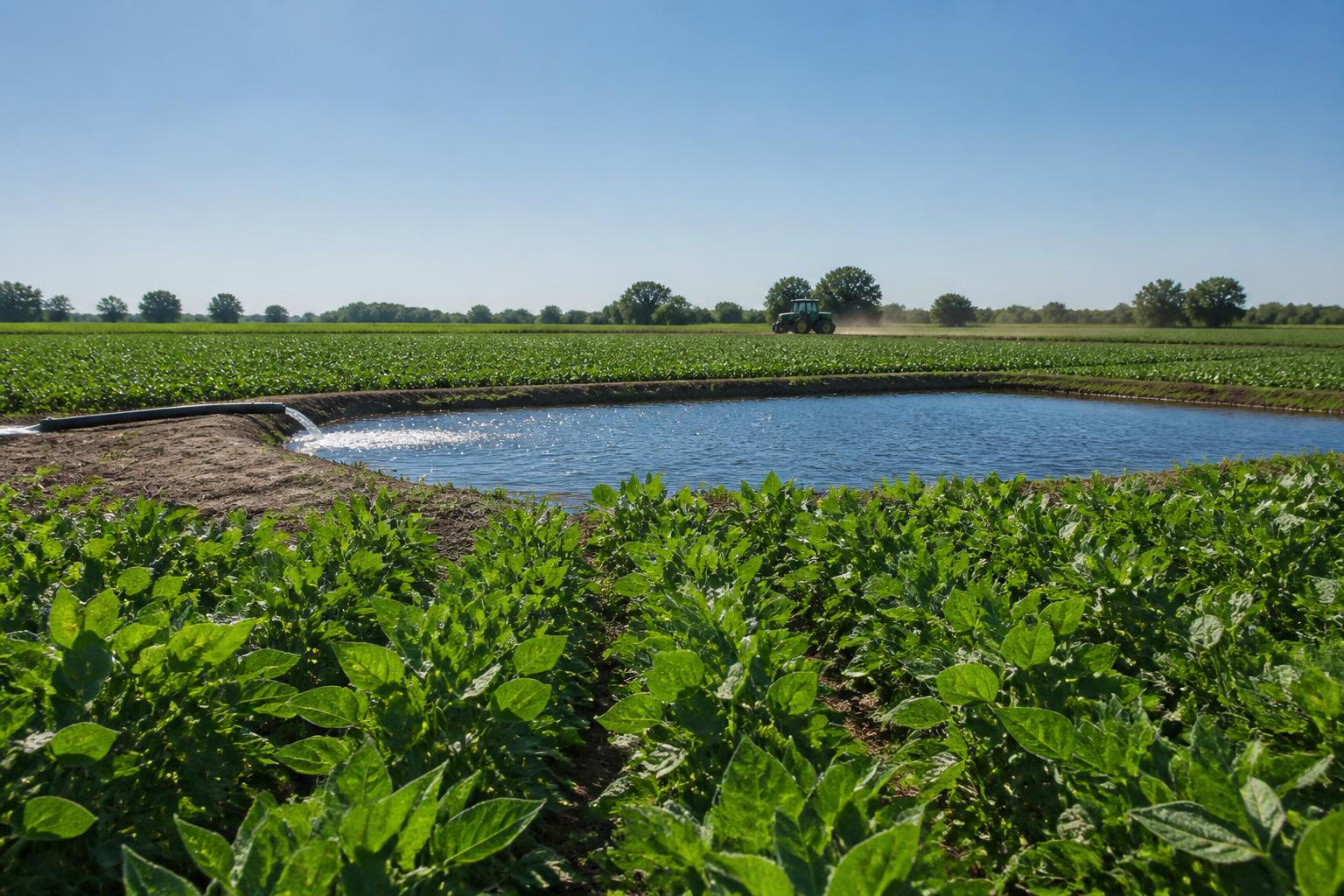
Strengthening Crop Defense Through Deficit Irrigation
Deficit irrigation is gaining attention as a highly efficient crop protection strategy. Instead of attempting to keep soils fully saturated throughout the entire growing season, this technique involves deliberately applying less water than the crop's maximum demand, focusing irrigation primarily on the plant's most moisture-sensitive growth phases. This method allows farmers to conserve water during less critical stages without causing significant yield loss.
An essential component of this strategy is the use of on-farm holding ponds. By capturing and storing surface runoff during wetter periods, farmers can create a reliable reserve. Utilizing these holding ponds for deficit irrigation helps growers maintain consistent crop protection and save on deep-well pumping costs. For local producers navigating dry spells, integrating innovative water management strategies into their daily operations can reduce water stress on crops and protect profit margins.
Legislative Support and the Farm Bill
Long-term agricultural protection also depends on robust policy frameworks that support conservation programs and risk management. In federal legislative efforts, Representative David Rouzer has been active in advancing key North Carolina agricultural priorities, particularly as the House Agriculture Committee worked to pass the Farm Bill.
These policy initiatives are designed to strengthen safety nets for farmers, simplify access to conservation programs, and protect producers from volatile weather and market fluctuations. Securing resources for water-holding infrastructure, crop insurance, and soil health programs helps ensure that North Carolina farms remain resilient against seasonal climate challenges.
Key Takeaways for Summer Resource Management
- Targeted Application: Deficit irrigation allows growers to conserve water by focusing irrigation during critical crop development windows.
- On-Farm Storage: Holding ponds capture excess runoff, offering a practical water source when local water tables or river levels decline.
- Policy Protections: Ongoing Farm Bill negotiations led by regional representatives like David Rouzer aim to secure critical risk management and infrastructure support for local farms.
What it means for the market
In the current summer market, proactive water management is direct risk management. By implementing on-farm storage solutions and precise deficit irrigation, North Carolina growers can better manage localized dry spells, stabilizing local crop yields and grain supplies. Concurrently, progress on the federal Farm Bill provides a foundation for long-term operational stability, giving lenders, equipment dealers, and grain handlers more confidence in the financial resilience of the local agricultural economy.
Comments
No comments yet - be the first to share your take.