
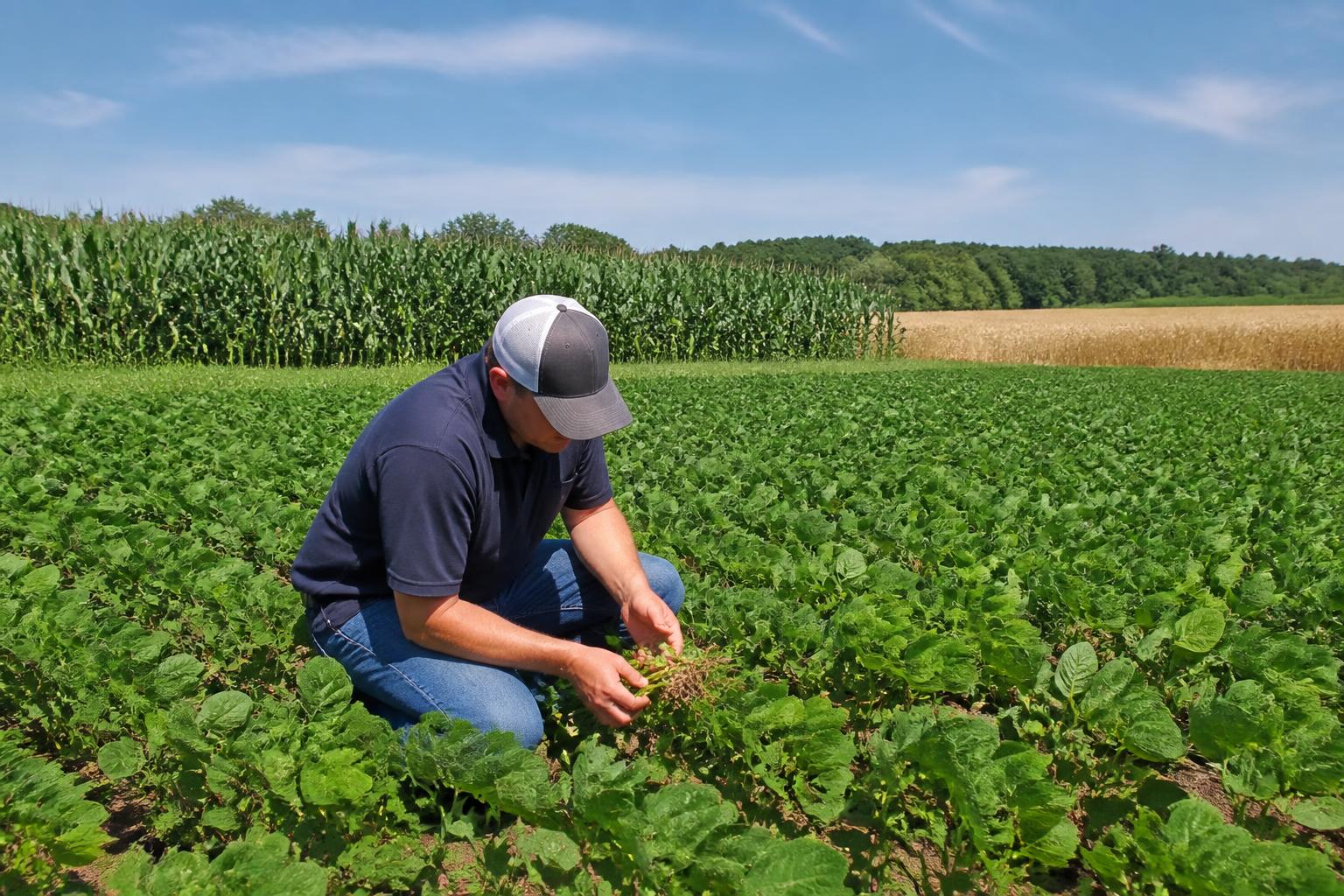
To navigate these seasonal challenges, agribusinesses and farmers are leveraging advanced decision-making resources and emerging research to protect their bottom line. Making timely choices on fungicide applications and pest management is essential to securing high-quality grain for the upcoming fall harvest.
Fungicide Decision-Making Tools Support Strong Wheat and Corn Prospects
With Michigan's wheat harvest approaching and corn entering key reproductive stages, maintaining crop health is a top priority. Because the state's fields are currently outperforming national averages, protecting this yield potential from late-season diseases like tar spot or Fusarium head blight is critical. To aid in these high-stakes choices, the Crop Protection Network offers specialized fungicide decision-making tools and resources to help growers assess disease risk and determine the financial viability of spraying.
These resources allow producers to evaluate local weather trends, crop growth stages, and historical disease pressure before running custom applications. Utilizing such data-driven platforms helps farmers avoid unnecessary input costs while ensuring that fields with high yield potential receive treatment at the optimal physiological moment. This scientific approach is particularly important as growers weigh critical summer protection decisions in a volatile input market.
Targeting Soybean Cyst Nematode Through Food Supply Suppression
Beyond fungal threats, below-ground pests continue to challenge Michigan soybean fields. The soybean cyst nematode (SCN) remains one of the most destructive pathogens in the Midwest, quietly draining yield potential from the roots up. In a promising development for long-term crop protection, scientists are targeting SCN by working on methods to cut off the pest's food supply.
This innovative research focuses on interrupting the biological processes that allow nematodes to feed and reproduce on host plant roots. By disrupting this nutrient pathway, researchers hope to provide growers with new management tools that complement traditional crop rotation and resistant seed varieties. While still in development, these biological breakthroughs highlight the shifting paradigm of integrated pest management toward highly targeted, sustainable solutions.
Key Takeaways for Michigan Producers
- Monitor local disease pressure: Utilize Crop Protection Network resources to evaluate fungicide application timing for corn and wheat.
- Protect high-yielding acres: With Michigan crops performing better than the national average, protecting existing yield potential yields a higher return on investment.
- Anticipate long-term pest solutions: Keep an eye on emerging research targeting soybean cyst nematode food pathways to enhance future rotation strategies.
What it means for the market
For Michigan grain handlers, input suppliers, and carriers, the strong condition of local crops suggests robust regional volumes moving through local elevators and Great Lakes ports later this year. However, realizing this potential depends heavily on effective mid-summer crop protection. Input buyers should coordinate closely with suppliers to secure necessary fungicides and adjuvants, while growers must balance the cost of applications against the high-yielding outlook of their fields to maximize profitability heading into the fall.
Comments
No comments yet - be the first to share your take.