
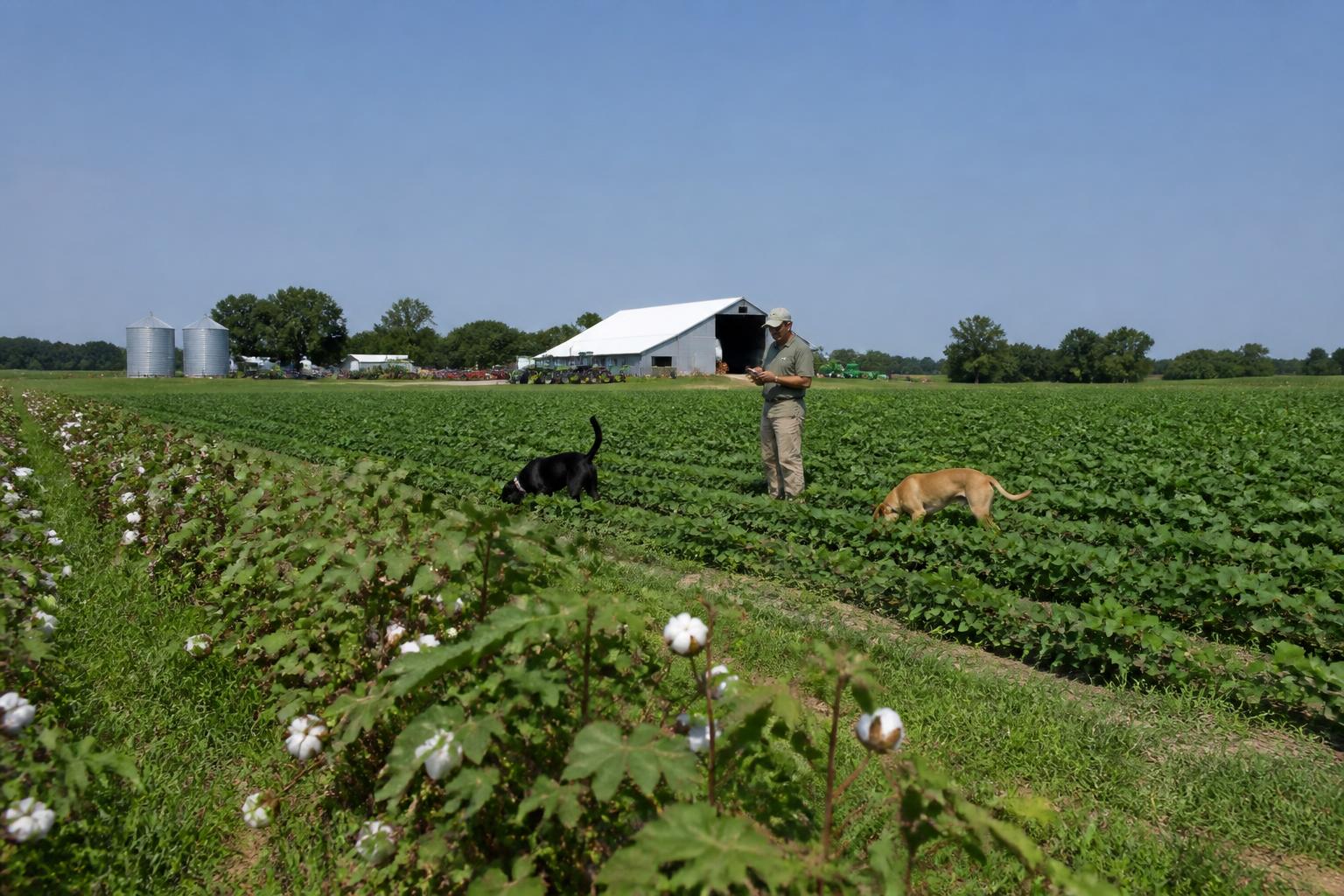
Mid-summer in Tennessee is a pivotal time for field health and operational planning. As crops progress across regions like Robertson County and West Tennessee, producers are balancing the need for vigilant pest management with the realities of navigating a volatile input market. While local resilience is evident in ongoing efforts to improve operational efficiency and manage mid-season stress, farmers continue to monitor potential supply chain ripple effects that can shift the cost of essential crop protection products.
Tackling Emerging Pressures
Management teams are staying sharp regarding seasonal threats. In several parts of the state, maintaining high-yielding stands often requires early detection of both traditional and emerging pests. The use of specialized tools, such as detection dogs for monitoring invasive threats, highlights a shift toward more proactive, tech-integrated scouting. Ensuring these protection measures remain cost-effective is vital, especially as broader market volatility continues to keep producers on their toes regarding grain pricing and input ROI.
Logistics and Resource Management
Beyond the field, the ability to move inputs and transport harvests efficiently remains a primary concern for local elevators and carriers. While infrastructure investment and ongoing grant support are helping to bolster agricultural businesses, high fuel costs remain a headwind. For those managing grain storage or logistics, optimizing delivery schedules and anticipating the demands of the upcoming harvest season is essential to maintaining healthy profit margins amidst shifting global demand trends.
What it means for the market
For Tennessee agribusinesses, the combination of mid-summer field management and market-facing caution suggests that prioritizing efficiency is more critical than ever. As farmers evaluate their protection programs, they may find that data-driven scouting and strategic procurement can help offset the pressures of sustained fuel and input costs. Keeping a close watch on regional logistics and local market trends will remain the best way to navigate the remainder of the season and prepare for a successful harvest.
Comments
No comments yet - be the first to share your take.