
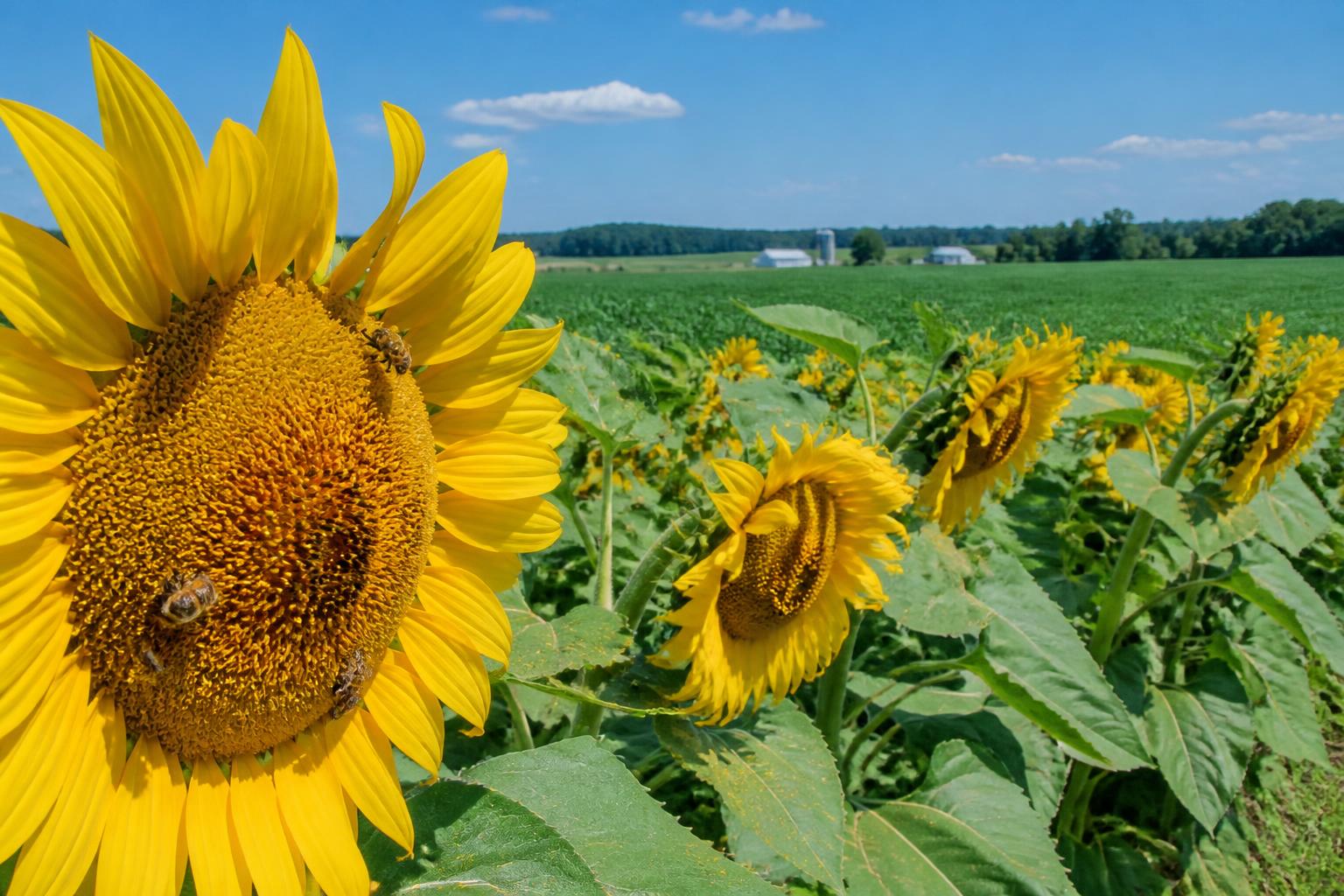
North Dakota sunflower growers are seeing a shift in potential crop management strategies as new field-scale trials get underway. Researchers at North Dakota State University have initiated state-funded testing to evaluate the use of bee vectoring technology within local sunflower production, aiming to determine if this application method can improve protection outcomes during the growing season.
As producers continue to manage input costs and search for efficiency, navigating economic headwinds remains a priority for many. This trial represents a move toward targeted, biological-based intervention, which may eventually offer an alternative to traditional broad-spectrum applications if the technology proves effective under local environmental conditions.
Exploring Precision Protection in Oilseeds
The introduction of bee vectoring, where bees are utilized to deliver biological agents directly to flowers, represents a novel approach to standard integrated pest management programs in the region. By focusing on site-specific delivery, the technology aims to reduce waste and potentially enhance the efficacy of protective applications. Given the unique climate challenges in the Northern Plains, finding methods to optimize crop resilience is a constant objective for agribusinesses.
The focus on sunflowers follows broader efforts across the state to adopt technology that addresses specific crop stressors. While the trial is in its early stages, many in the industry are monitoring the results to see if the technology can be scaled for regional operations. For producers currently focused on monitoring crop development and early harvest indicators, this research provides a look at the future of potential yield protection.
What it means for the market
For North Dakota agribusinesses, these trials signal a continued push toward specialized crop inputs and precision management. If successful, such technologies could eventually refine the cost-to-benefit ratio for sunflower growers, moving away from expensive, widespread chemical applications toward more efficient, nature-based solutions. Growers and agronomists should stay informed as data from these university-led studies becomes available to assess the long-term viability of these practices on their own acres.
Comments
No comments yet - be the first to share your take.