
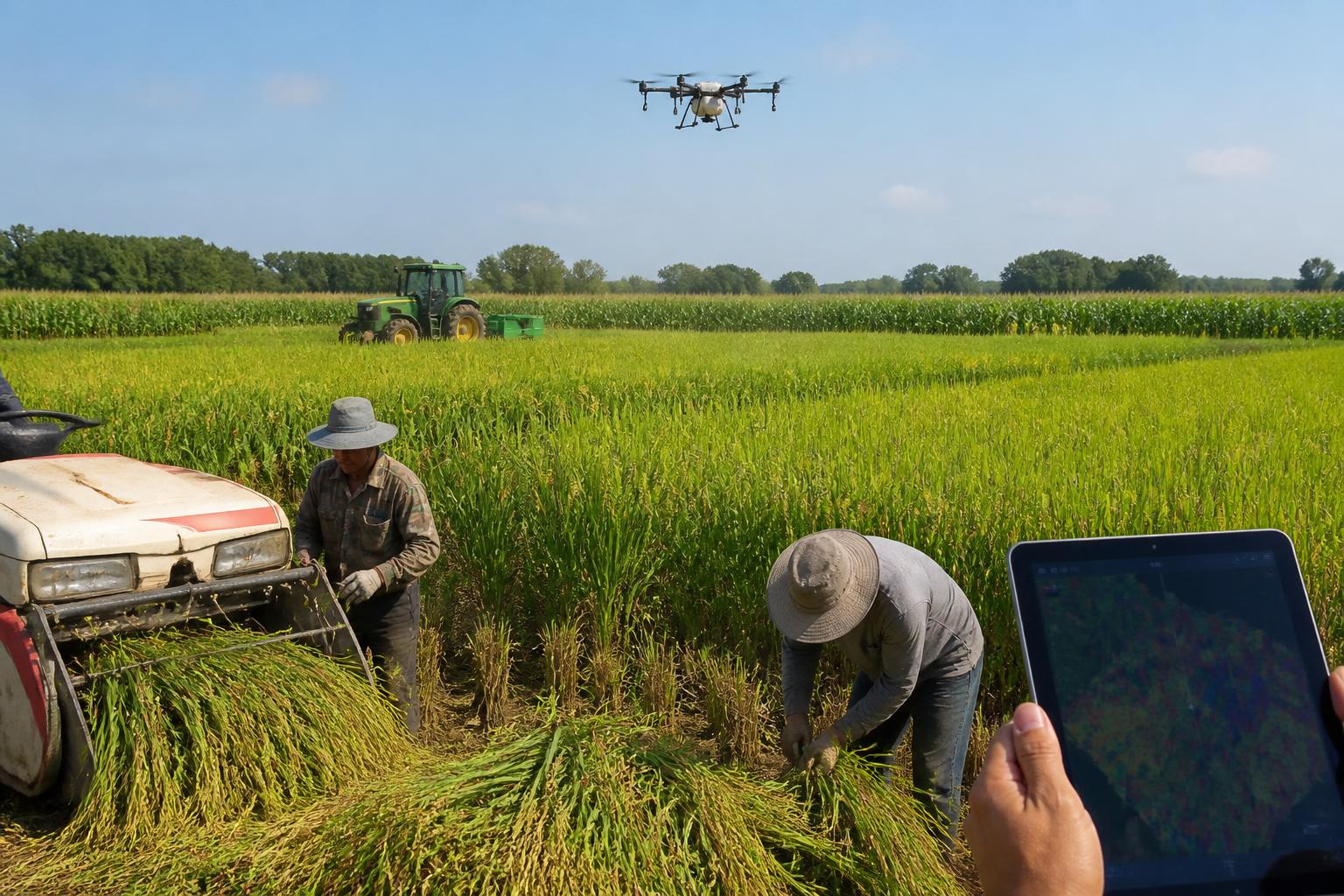
As the summer harvest cycle gains momentum across Arkansas, producers are managing a complex season defined by significant financial pressure and evolving operational strategies. With reports indicating that statewide farm income may face an 8 percent decline in the coming year, agricultural stakeholders are increasingly focusing on cost-containment measures and enhanced production efficiency to mitigate broader market volatility.
The current climate has underscored the importance of focusing on input efficiency as a core survival tactic. With the availability of certain traditional chemical tools changing, many producers are turning toward advanced precision agriculture, such as satellite imagery and drone-based application, to manage resources more effectively. This shift allows growers to treat fields with greater granularity, potentially reducing waste while navigating strict regulatory environments that have limited options for crop protection this year.
Logistics and Regional Market Dynamics
For those managing the movement of commodities, local logistics remain a critical point of interest. The transition of rice and corn from the field to local grain elevators is occurring against a backdrop of ongoing consolidation within the industry, such as recent infrastructure acquisitions in regions like Gillett. Growers should remain attentive to regional storage capacity as harvest volume peaks, particularly as regional constraints during summer harvest can often impact the pace of delivery and overall throughput for the season.
Advocacy and Long-Term Stability
Beyond daily operations, industry leaders are actively engaging with federal counterparts to address the cumulative impact of input costs and market fluctuations on family farms. These efforts often aim to secure more robust financial aid programs, reflecting a wider regional concern about the sustainability of current profit margins. Understanding these financial headwinds is essential for farm managers as they evaluate their capital needs for the next planting season.
What it means for the market
The Arkansas market is entering a phase of forced optimization. With narrowing margins, expect to see continued interest in precision technology and a heightened reliance on localized supply chains for inputs. While the immediate focus remains on bringing the harvest in efficiently, the long-term outlook will rely heavily on how effectively producers can leverage emerging tools to lower their cost per acre in a high-expense environment.
Comments
No comments yet - be the first to share your take.