
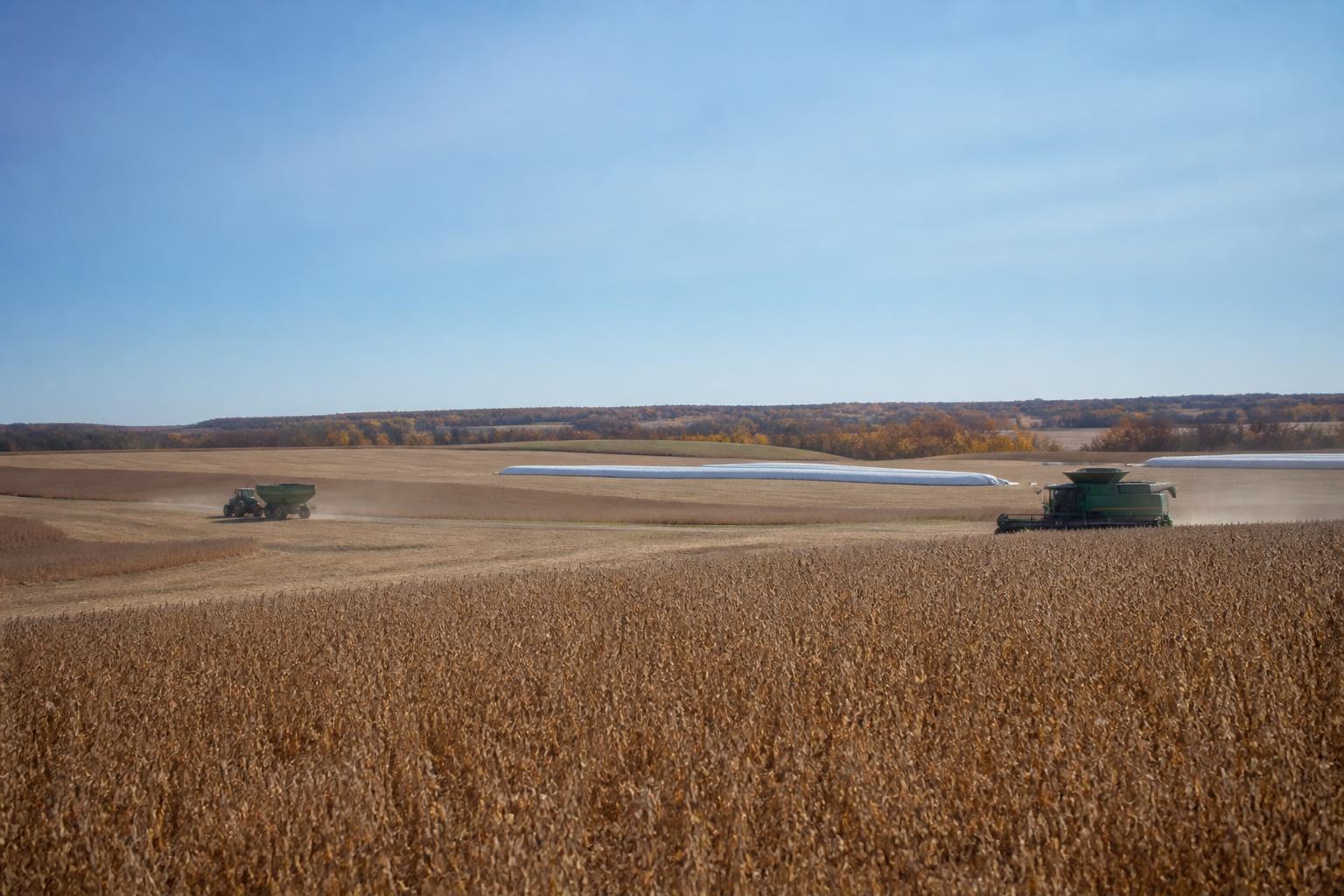
As harvest activity picks up across North Dakota, the agricultural sector faces a complex intersection of market volatility and logistical hurdles. Producers are currently evaluating their options as they move into the fall cycle, often navigating a challenging fiscal environment where traditional math regarding profit margins is becoming increasingly difficult to balance. With harvest underway, the focus has shifted toward efficient grain movement and the strategic use of available storage capacity.
For many across the region, the reliance on temporary infrastructure has become a necessary reality. In response to potential capacity constraints and storm-related damage, some operations are utilizing alternatives like extended plastic storage bags to manage incoming grain. These measures provide stopgap solutions for producers working to maintain their independence from immediate market delivery pressures while waiting for more favorable pricing trends.
Input Market Outlook
Agribusinesses are preparing for the upcoming season with an eye on supply chain reliability. As farmers weigh the costs of production, maintaining access to essential crop inputs remains a priority. The current climate highlights the importance of proactive planning in the North Dakota input market, where early coordination between suppliers and end-users can mitigate seasonal bottlenecks. This is especially critical given the broader economic uncertainty facing many grain operations this year.
Infrastructure and Regulatory Considerations
Logistics, particularly rail efficiency, continues to serve as a pivotal factor for North Dakota's competitiveness. Stakeholders are keeping a close watch on infrastructure investments that could impact transport costs and speed to market. Furthermore, regional discussions regarding energy policy, such as the potential for year-round E15, may play a long-term role in supporting the local corn sector by potentially lowering fuel expenses for producers and transportation providers alike.
For those managing the fluctuating yields observed this season, the ability to pivot between different storage and transportation methods will be vital for protecting overall farm revenue. Keeping close communication with local cooperatives and logistics partners remains the best defense against market-driven disruption.
What it means for the market
Producers should prioritize flexible storage strategies and early input procurement this fall. As the industry faces narrow margins, minimizing additional transportation or handling surcharges through careful planning and utilizing available on-farm storage solutions can help protect the bottom line against current market headwinds.
Comments
No comments yet - be the first to share your take.