
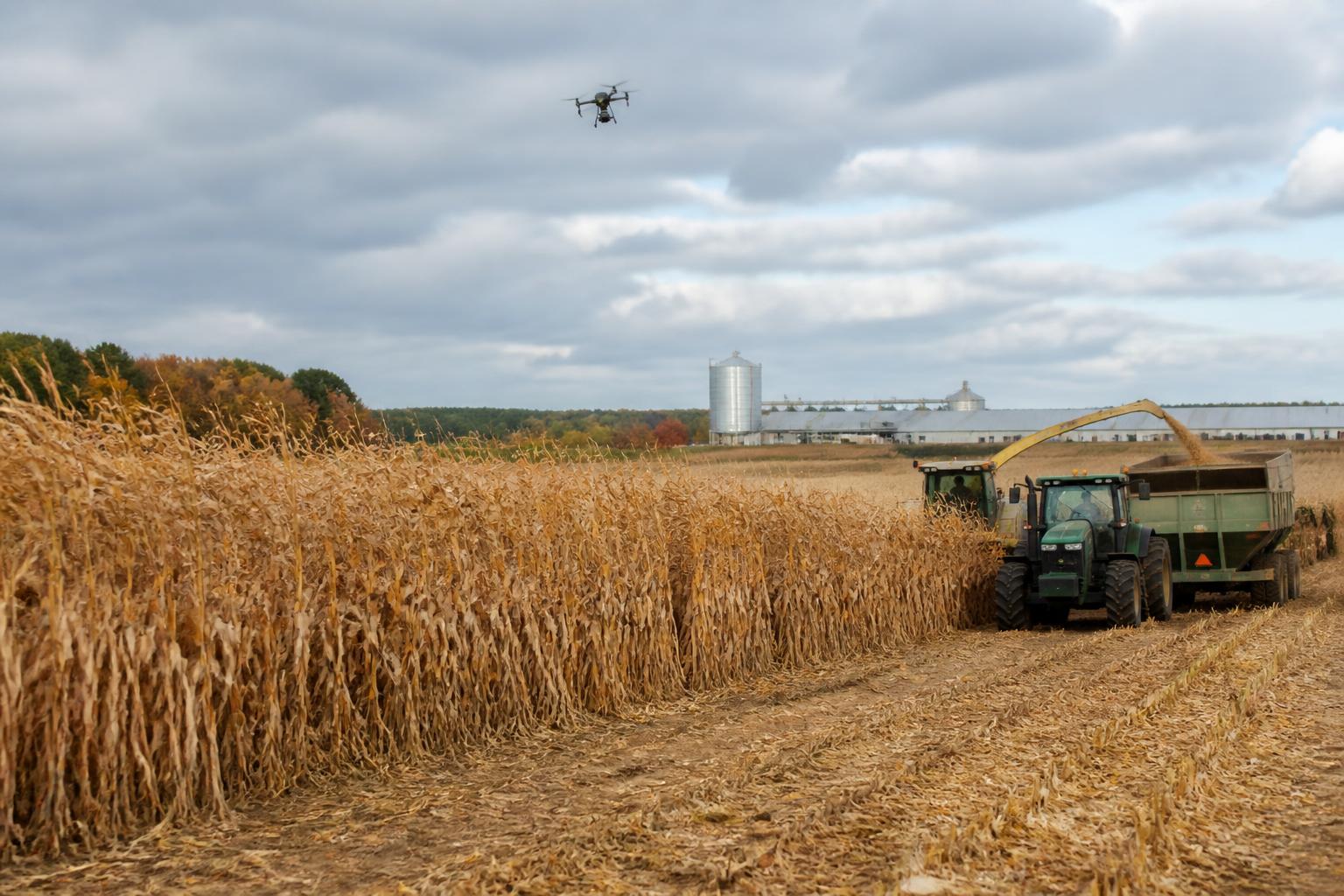
As Michigan fields turn toward the height of the fall harvest, agricultural producers across the state are focusing on the critical logistics required to move this season's crop efficiently. From the grain-heavy regions in the thumb area to the diversified produce farms near the Great Lakes, coordinating timely transport is essential to keeping operations moving despite typical seasonal bottlenecks.
Effective logistics management during the fall harvest remains a high-stakes balancing act for grain handlers and commercial haulers. With harvest-time traffic often creating congestion on secondary roads and key highway corridors, proactive planning is often the best defense against unforeseen delays. Operators are encouraged to communicate closely with their transport partners to align delivery schedules with available storage capacity and drying capabilities.
Optimizing Equipment and Infrastructure
The integration of modern technology continues to reshape how Michigan agriculture handles these peaks. Whether it is utilizing precision ag tools for field monitoring or adopting new cold storage efficiencies in the regional supply chain, infrastructure investments are becoming central to profitability. As storage facilities and food processors across the state review their annual management practices, there is a consistent emphasis on maintaining throughput at key processing hubs.
Market Considerations and Input Costs
While logistics and field operations remain at the forefront, the broader economic landscape continues to influence decision-making. Producers are keeping a close watch on equipment costs and the shifting regulatory environment regarding agricultural inputs. Understanding how international trade policies or domestic policy adjustments impact machinery and operational overhead is critical for long-term farm sustainability as the sector looks toward the end-of-year fiscal cycle.
What it means for the market
For Michigan producers and agribusinesses, the coming weeks are about execution. Efficiency in transport, clear communication with handlers, and a cautious approach to capital expenditures during this high-activity window will be key factors in managing the bottom line throughout the remainder of the fall season.
Comments
No comments yet - be the first to share your take.