
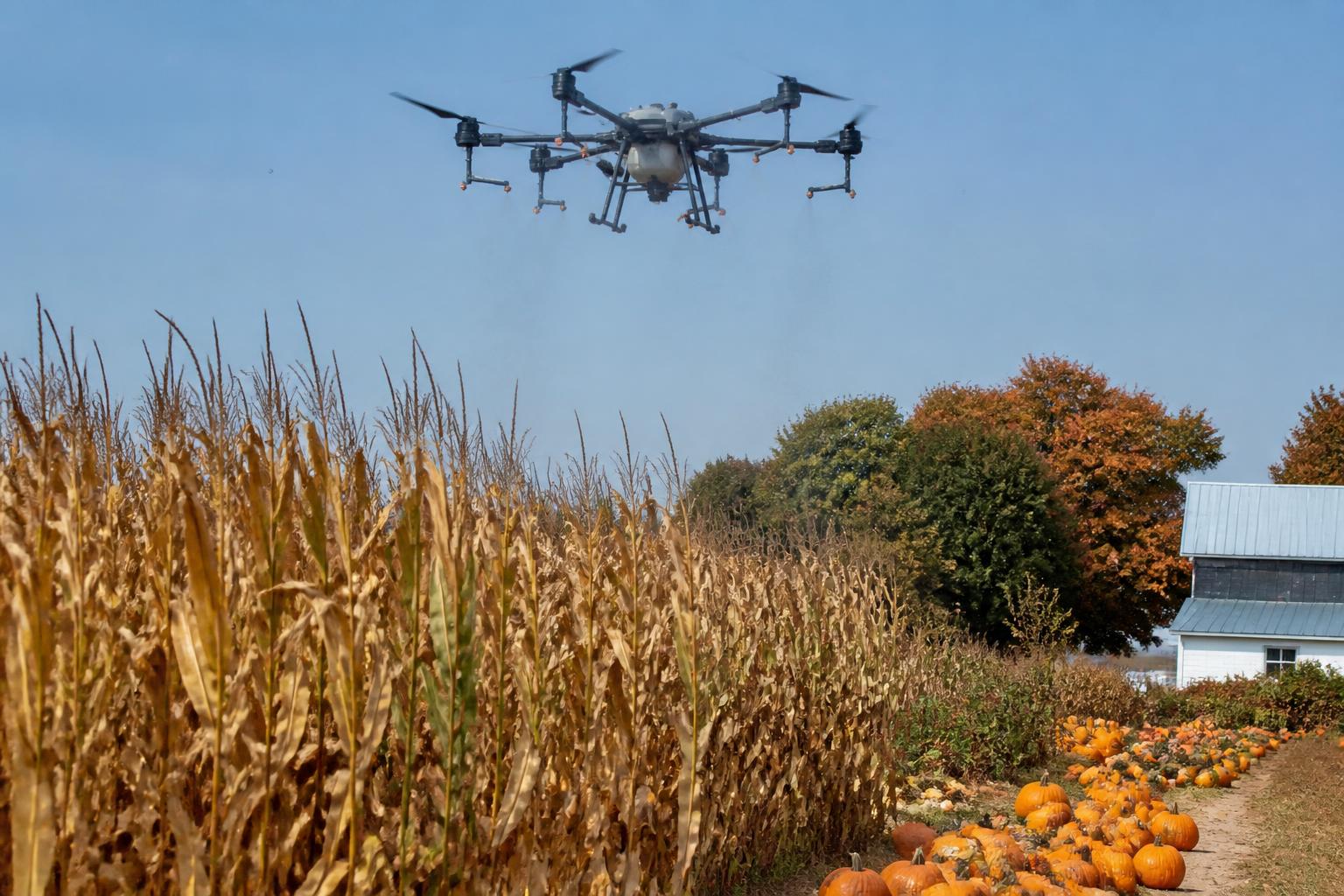
New Hampshire producers are increasingly evaluating the role of automation in their seasonal management strategies. As we move deeper into the fall, the focus shifts toward maintaining land health and optimizing input applications. For farms operating across the diverse landscape of the Granite State, integrating advanced aerial systems may provide a localized solution to challenges ranging from moisture management to protective chemical applications.
The Shift Toward Aerial Autonomy
Recent developments in agricultural aviation, including the deployment of high-capacity spray drones, are beginning to draw interest from regional agribusinesses. Unlike traditional ground-based machinery, which may face limitations on uneven terrain or after periods of heavy rainfall, autonomous aerial systems can often provide more flexibility. This is particularly relevant for producers managing specialized or segmented acreage where traditional equipment may have difficulty navigating efficiently.
Optimizing Resource Allocation
Beyond the logistical advantages, the adoption of precision aerial technology is closely linked to ongoing efforts in regional resilience. By utilizing drones to target specific areas rather than applying inputs across an entire field, growers may reduce operational overhead while potentially minimizing runoff. This approach aligns with broader industry trends focusing on stewardship and the long-term viability of New Hampshire's working lands.
As these tools become more accessible, local operations are assessing how such technology fits into their broader, multi-year farm management plans. Effective implementation often requires careful consideration of local topography, as well as the technical training necessary to operate autonomous systems safely and effectively within state-regulated guidelines.
What it means for the market
For New Hampshire agribusinesses and equipment suppliers, the rise of drone technology signifies a pivot toward high-tech service models. Producers should monitor the cost-benefit of service-based drone applications versus ownership, as this decision will likely influence short-term operational budgets and long-term capital expenditure plans for the coming season.
Comments
No comments yet - be the first to share your take.