
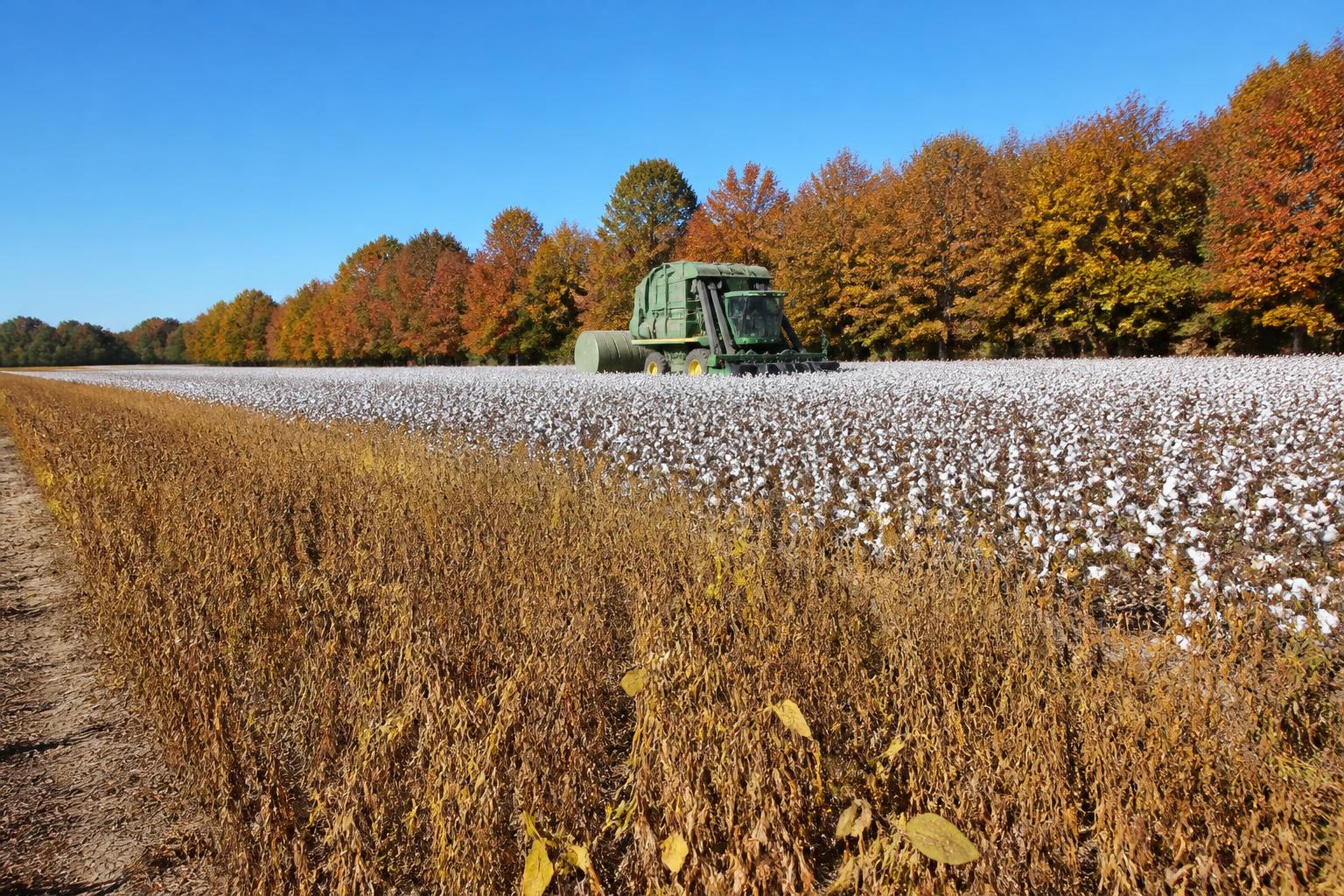
Strong Crop Performance Amid Fall Activity
As Tennessee farmers push through the mid-October harvest schedule, recent field assessments provide a positive outlook for the state's major commodities. With soybeans currently showing 68% in good to excellent condition and cotton closely following at 58% in similar standing, producers are seeing the fruits of a challenging growing season as they manage the logistics of moving this year's yields to elevators and storage facilities.
Maintaining these quality levels during the final stages of the season is a critical priority for local operations. As detailed in our coverage of Tennessee producers maintaining crop quality, the focus now shifts toward timely harvesting and efficient transport to avoid potential weather-related disruptions that often arise as autumn progresses across the state.
Adapting to Evolving Weather Patterns
Looking beyond the immediate harvest, there is growing interest among the Tennessee agricultural community in long-term resilience. Industry observers have noted that shifting weather patterns are prompting producers to consider crop varieties that can better withstand variable conditions. While current harvests are performing well, this trend toward adaptability is becoming a staple of strategic planning for the next planting cycle.
Key Takeaways for Producers
- Soybean crop conditions remain robust, currently tracking at 68% good to excellent.
- Cotton yields are demonstrating consistency with 58% rated as good to excellent.
- Producers are encouraged to monitor soil moisture and field conditions closely as they wrap up harvest operations across Tennessee's primary agricultural regions.
What it means for the market
For grain handlers and agribusinesses, the high percentage of quality crop ratings signals a potential for steady volume moving through regional logistical chains in the coming weeks. While current harvest pressure remains high, the focus on crop resilience suggests that stakeholders are increasingly preparing for changing environmental variables, which may influence future input demand and seed selection strategies. For now, the primary goal remains securing high-quality yields in anticipation of winter storage and market delivery.
Comments
No comments yet - be the first to share your take.