
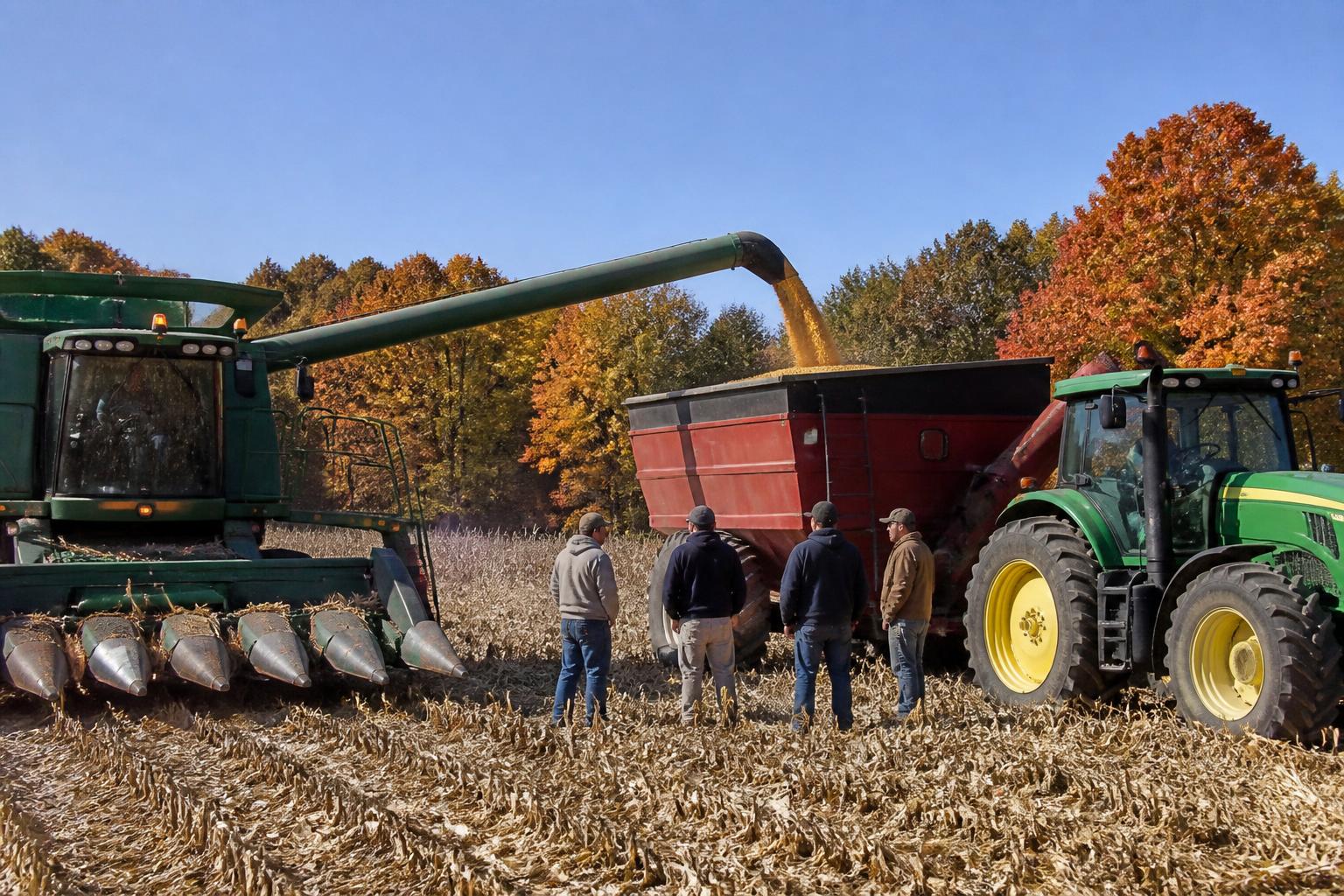
As the fall harvest accelerates across Ohio, the logistical demands on local farmers and custom harvesters are reaching their peak. With variable conditions often present across the state, from the productive soils of the western counties to the rolling landscapes of the east, maintaining operational flow is critical for preventing bottlenecks at grain elevators and storage facilities.
For many multi-generational operations, the shift toward professionalized custom harvesting has become a standard approach to managing the risks associated with volatile weather and equipment downtime. By outsourcing the heavy lifting, growers can often focus on immediate post-harvest management and field preparation, even as fuel and maintenance costs continue to demand rigorous oversight.
Managing Equipment Logistics
Efficient movement of machinery between fields is a hallmark of successful seasonal logistics in Ohio. As harvest activity intensifies, transporters must navigate secondary roads with increased caution, often dealing with weight-restricted bridges or narrow rural corridors. Experienced operators frequently plan their routes well in advance, accounting for slow-moving vehicle traffic and the specific needs of modern, larger combine headers.
For those looking to optimize their operational margins this fall, investing in real-time tracking and maintenance logs can help avoid the costly delays associated with unexpected mechanical failure in the field. Coordinating fuel deliveries and grain hauling schedules effectively remains a top priority to keep the cycle from field to bin as seamless as possible.
The Role of Data in Field Economics
Beyond the mechanical aspects of harvest, many producers are increasingly turning to advanced analytics to guide their decision-making process. Understanding the farm-level economics of different cropping systems—such as those currently being studied by university research initiatives—can offer long-term clarity in an environment where input costs and global trade pressures continue to influence local profitability.
By integrating yield data with regional market insights, growers can make more informed choices about where to store grain versus selling at harvest, potentially mitigating the impact of seasonal volatility.
What it means for the market
For Ohio agribusinesses and carriers, the remainder of September and October represents a high-stakes period. Success depends on the ability to remain flexible amidst potential weather delays and equipment bottlenecks. Those who prioritize reliable logistics and data-backed planning are better positioned to navigate the complexities of the current harvest cycle, ensuring that grain moves efficiently from the field to the point of sale despite the inevitable challenges of a busy fall.
Comments
No comments yet - be the first to share your take.