
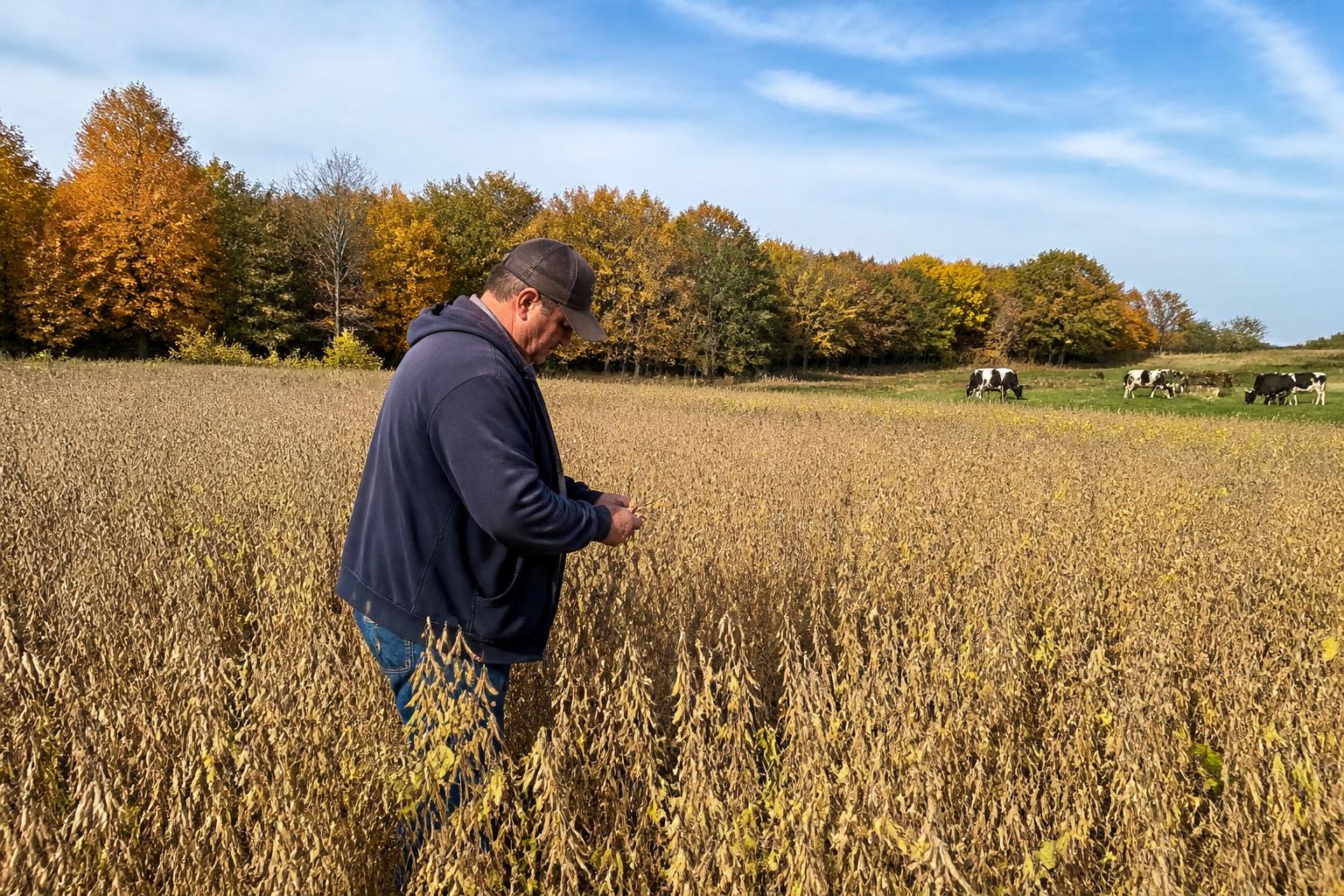
As the Indiana harvest progresses through late October, producers across the state are balancing the push for efficient field operations with the realities of crop health. Reports from across 17 counties indicate that Red Crown Rot has presented a notable challenge this season, complicating management decisions for many soybean growers. As harvest activity accelerates, managing field variability is not only a matter of yield protection but a core component of overall farm-to-elevator logistics.
Managing Field Risks and Quality
The presence of disease, combined with pockets of uneven emergence, means that scouting and variable-rate harvesting remain essential. For operators, the focus has shifted to identifying fields that require priority attention to prevent further quality degradation. When dealing with localized disease pressure, ensuring that grain moisture levels are closely monitored during transport can prevent further issues at the point of delivery.
Logistical Considerations for the Busy Season
With the pace of harvest picking up, Indiana's regional transit corridors are seeing increased heavy vehicle traffic. Maintaining reliable communication with local trucking and logistics providers is vital as elevators reach capacity or shift shift drying schedules. Producers who have proactive plans for grain movement often find it easier to manage the ebb and flow of regional basis fluctuations during these peak weeks.
Planning for Post-Harvest Success
While the immediate focus is on the field, discussions regarding inputs and next year's crop protection strategies are already beginning to surface. Recent industry shifts, including updates to business structures among major crop protection and seed providers, underscore the importance of staying informed on long-term supply chain changes. Engaging with local cooperatives and advisory services can help farmers secure their input needs while current market data is still being processed and integrated by the broader industry.
What it means for the market
The convergence of disease management, logistical efficiency, and shifting input landscapes suggests a season where careful planning provides a distinct advantage. Farmers who prioritize high-quality grain management and maintain flexible transport relationships will likely be better positioned to navigate the final stages of the harvest window as local elevators manage the influx of incoming crops.
Comments
No comments yet - be the first to share your take.