
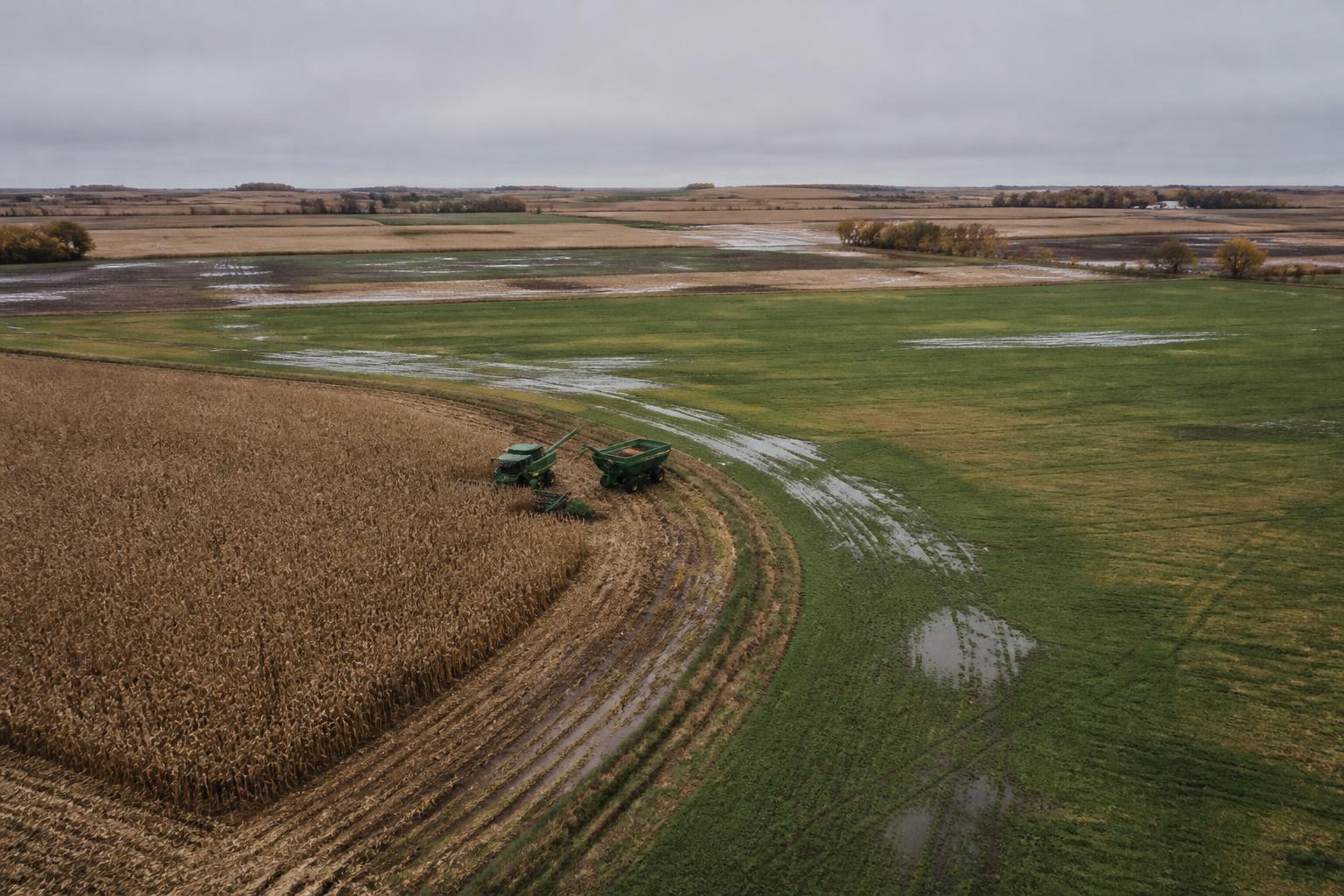
Producers across South Dakota are currently navigating a challenging period in the fall harvest cycle as recent rainfall events have forced a pause in field operations. For many, particularly in the southeastern regions, moisture has temporarily sidelined combines, creating a backlog in work that requires careful management as the window for optimal conditions narrows.
As these delays persist, the pressure on logistics and facility management increases. Many farmers are finding that managing risk and variability in the South Dakota harvest is complicated by limited on-farm storage capacity. With a high-yielding crop, the inability to move grain directly to elevators—compounded by the need to hold stock until market prices improve—leaves many operations seeking creative solutions for temporary storage.
Regulatory Flexibilities and Crop Insurance
In response to these regional weather-related interruptions, state and federal authorities have highlighted the availability of extensions for crop insurance harvest deadlines. Producers who have been unable to finish their harvesting tasks due to saturated fields or other unforeseen conditions are encouraged to consult with their insurance providers regarding potential deadline adjustments. This administrative support can provide a necessary buffer for those struggling to complete the harvest without jeopardizing their coverage.
Logistics and Market Outlook
While local storage is currently tight, farmers are keeping a close watch on broader market movements. There remains ongoing interest in export demand, as reports suggest that commitments for U.S. soybean purchases are tracking according to expectations. This external demand acts as a crucial support mechanism for producers who are holding inventory while navigating current late-season hurdles in South Dakota corn and soybean operations.
As operations resume once fields dry out, logistics managers should prepare for a surge in grain movement. Coordinated efforts between producers and elevator facilities will be essential to mitigate the bottlenecks that often follow extended weather delays.
What it means for the market
The immediate outlook for South Dakota remains focused on completion of the harvest. If weather conditions remain stable, the rapid resumption of activity is expected to put significant pressure on local transportation networks and storage infrastructure. Producers should prioritize communication with their grain buyers and insurance agents to maintain flexibility as they work to secure their remaining yield in an increasingly complex late-season market.
Comments
No comments yet - be the first to share your take.