
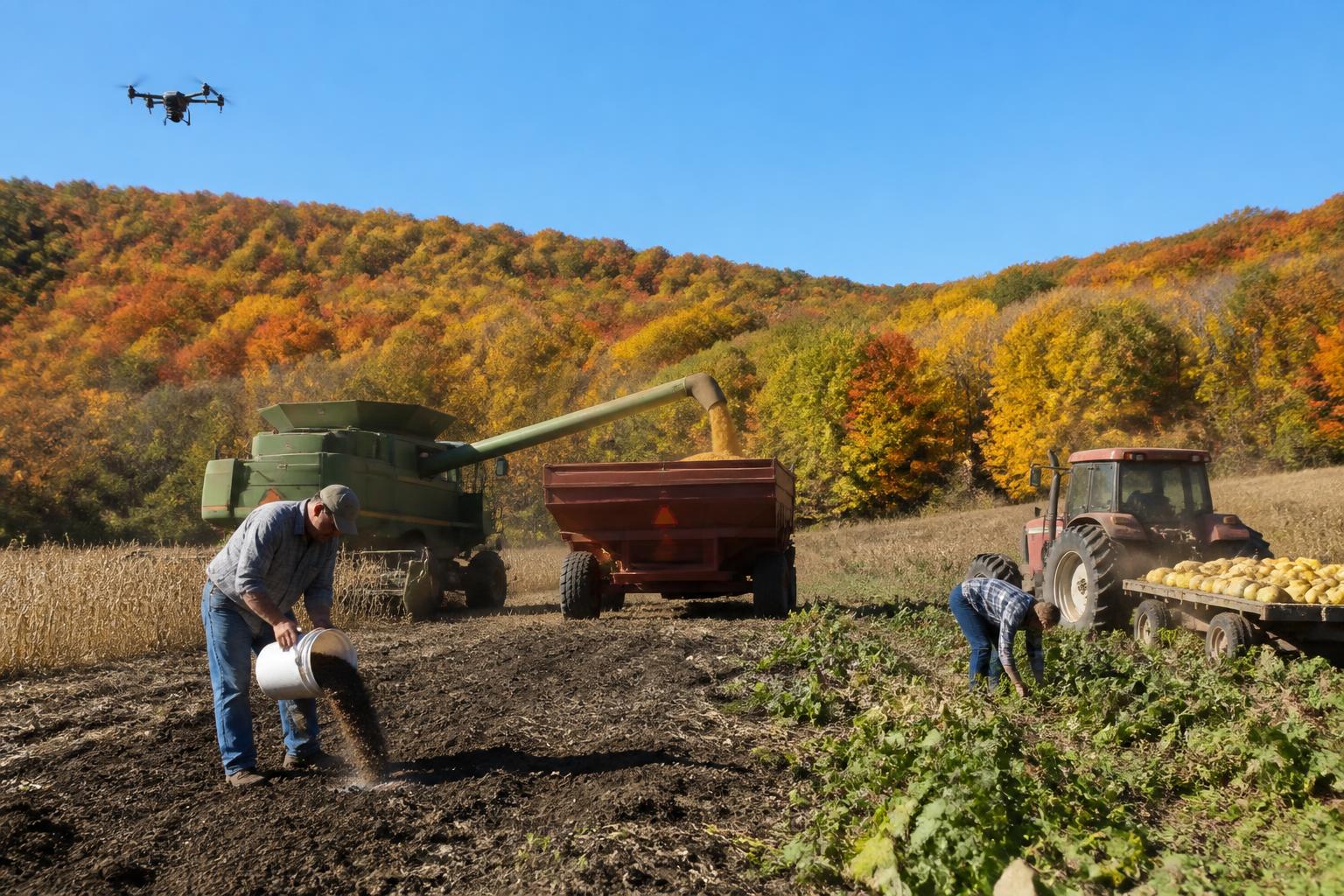
As the fall season transitions toward winter in Connecticut, farmers and agribusiness owners are recalibrating their strategies to account for ongoing market fluctuations. Recent grain market activity has shown mixed results, forcing local producers to keep a close eye on price signals as they wrap up the final stages of the harvest season. For those operating throughout the state, from the Litchfield Hills to the river valleys, adjusting to these shifting conditions is essential to maintaining profitability before the end of the year.
Input management has become an increasingly significant focus for many regional farms. With geopolitical tensions exerting upward pressure on fertilizer prices, producers are exploring alternative sourcing and management techniques to mitigate rising costs. Navigating these expenses often requires a careful assessment of late-October market shifts and long-term supply chain resilience. Efficient resource allocation is becoming a cornerstone of successful farm management in the current economic landscape.
Adapting to Operational Challenges
The intersection of technology and field management continues to evolve, providing new ways for farmers to monitor crops and soil health. While broader industry trends lean toward automation and advanced monitoring, regional logistics in Connecticut often require tailored approaches to infrastructure and input storage. Understanding how these broader volatile late-harvest trends influence local logistics can help operators minimize downtime and maximize the value of their stored inventory during the quiet winter months.
What it means for the market
For Connecticut agribusinesses, the primary takeaway is the necessity of hedging against supply volatility. While external factors drive fertilizer costs and global grain prices, local operators can improve their position by focusing on tighter inventory management and cost-efficiency. Staying informed on regional price trends and leveraging existing infrastructure will remain critical as the industry prepares for the upcoming off-season planning cycle.
Comments
No comments yet - be the first to share your take.