
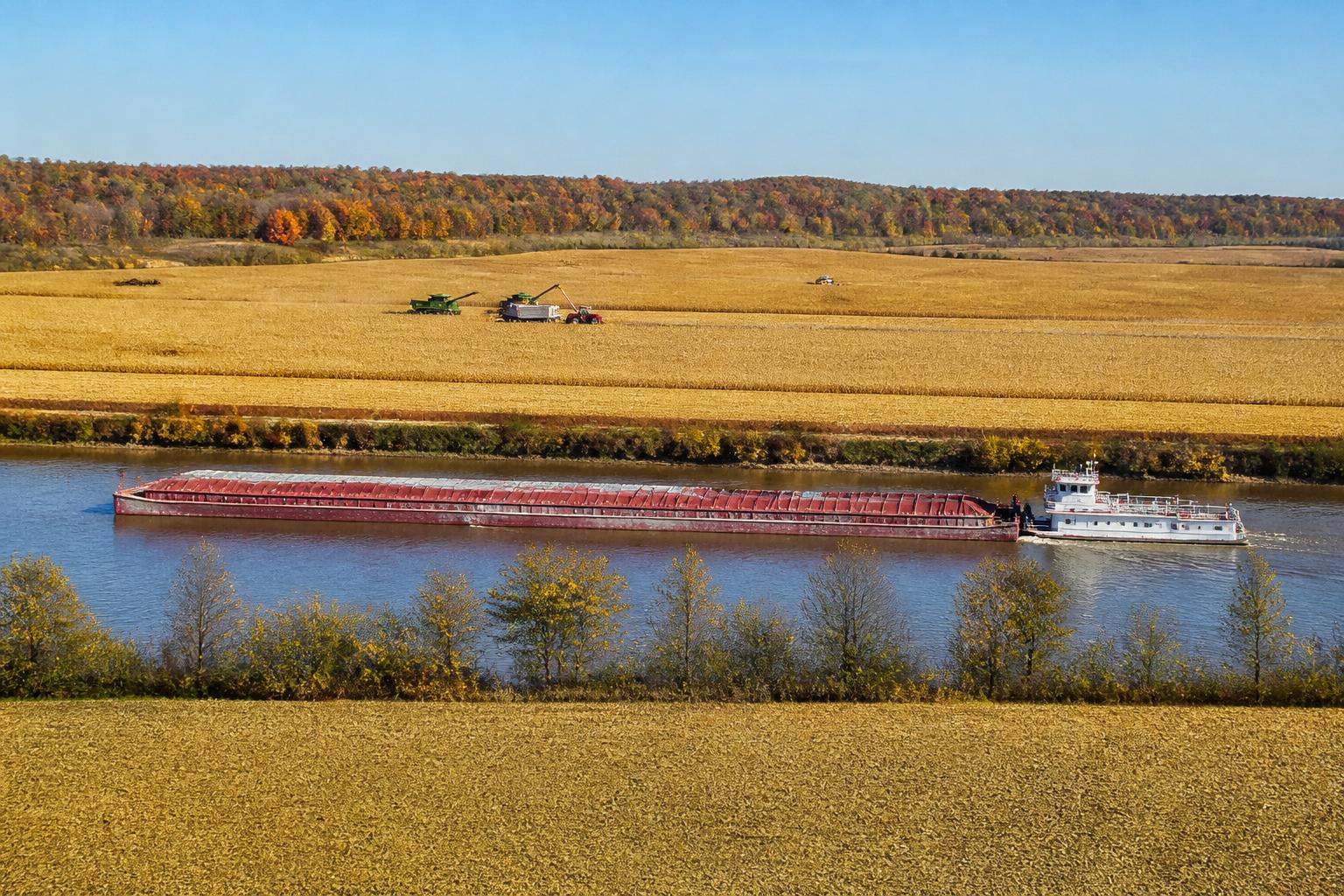
As the fall harvest window progresses, national grain logistics are showing signs of increased efficiency. Recent USDA data covering the week ending October 30, 2026, highlights a broad softening in freight indexes across major transport modes. For grain handlers and producers, this reduction in costs for truck, rail, and barge shipments provides a welcome window for moving late-season commodities to primary markets and export terminals.
Barge and Rail Performance
Barge activity remains robust along critical arteries, with the Olmsted locks on the Ohio River continuing to lead in total volume throughput. This sustained activity is essential for maintaining consistent flow as grain moves toward Gulf Coast export positions. Meanwhile, rail car order fulfillment has seen notable adjustments, reflecting the sector's attempts to keep pace with seasonal demand during this peak harvest month.
Understanding the current bottlenecks and efficiency trends is vital for those managing inventory, particularly as we look at how grain transit trends are shifting across the national rail network. While freight rates for domestic inland transit have moved lower, those involved in international shipping should note that Pacific vessel freight rates have moved in the opposite direction, potentially impacting export margins for West Coast grain movements.
Managing Seasonal Logistics
For agribusinesses and elevators, the softening of local freight costs is an opportunity to re-evaluate storage and transport timelines. Managing transit effectively often involves balancing regional infrastructure constraints with available market rates. In regions where barge capacity is tight, regional operators often look to diversify their transport strategy to avoid localized delays, especially as moisture levels in grain become a critical factor in safe transit. For more on protecting quality, producers can review our guidance on logistics and grain quality management in various regional climates.
What it means for the market
The overall decline in freight indexes suggests that the initial pressure of the primary harvest surge may be easing. For grain handlers, this creates a favorable environment to clear storage space and move product to market at a lower cost per bushel. However, operators should stay alert to regional volatility, particularly if weather patterns disrupt river levels or if rail availability tightens toward the end of the year.
Comments
No comments yet - be the first to share your take.