
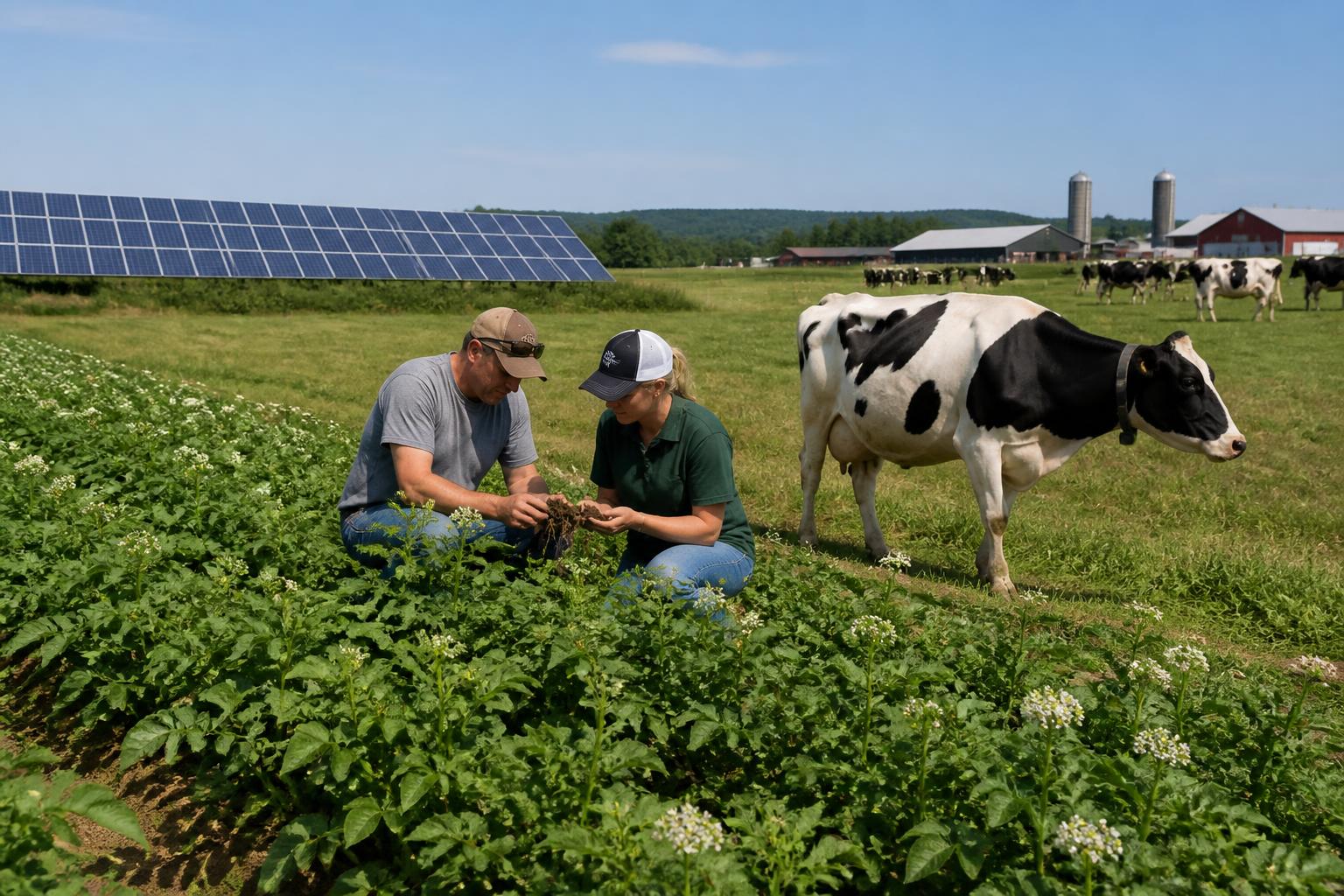
Soil Health as a Shield: Carbon and Amendments
Large food companies are actively looking to lock carbon in the soil as a strategic pathway to meet ambitious emissions goals. For Maine growers, this corporate shift highlights the growing economic value of proactive soil protection. Sustainable practices that build soil organic matter are no longer just environmental goals; they are increasingly tied to market access and premium pricing programs.
To capitalize on these opportunities, agronomic fundamentals remain essential. Experts point out that investing in field drainage tile and lime is one of the most effective ways to boost farm income and safeguard crop productivity. Properly limed and drained soils optimize nutrient uptake, strengthen root systems, and protect crops against the sudden heavy rainfall events that can saturate Northeast fields during the summer months.
Technological Adoption and Policy Friction
Improving operational resilience in Maine is not without its regulatory and logistical challenges. For instance, the state has recently faced internal debate after proposing to raise solar farming fees, bringing the tension between renewable energy development and the preservation of prime agricultural land into sharp focus for local farming communities.
At the same time, logistics and management technologies are helping farms stay efficient. From AI-powered supply chain solutions like Maine Pointe's TVO Control Tower to automated technologies on local dairy farms, automation is streamlining how inputs and outputs are tracked. Maine producers are also leveraging advanced crop protection and weather intelligence to target pesticide and fertilizer applications precisely when and where they are needed, reducing waste and minimizing environmental runoff.
Diversifying Resource Protection
Protecting Maine's agricultural economy also involves strengthening regional supply loops. Innovative companies like Maine Standard Biofuels are demonstrating the value of a circular economy by recycling used cooking oil into energy and cleaning products. These localized resource systems help insulate northeastern farms from distant supply chain shocks.
Additionally, advancements in gene editing and biological crop inputs are providing farmers with faster crop development times and enhanced resistance to summer diseases. Combined with broader community investments - such as the $7.4 million federal funding championed by Representative Chellie Pingree to fight hunger and boost local food access - Maine's agricultural network is reinforcing both its agronomic and socioeconomic foundations.
Key Takeaways for Maine Producers
- Prioritize Soil Basics: Focus on lime applications and tiling to optimize soil structure, which supports both carbon sequestration and water management.
- Monitor Land Use Policies: Keep an eye on local developments regarding solar farm fees and agricultural land protection.
- Explore Carbon Programs: Evaluate emerging corporate initiatives that incentivize carbon-locking soil practices for potential financial benefits.
What it means for the market
The combination of corporate carbon programs, advanced biological inputs, and regional resource recycling points to a highly protective and defensive stance for Maine agriculture this summer. Growers who successfully pair traditional soil amendments like lime with modern digital logistics and crop protection tools will be the best positioned to protect their crop quality, manage input costs, and secure steady market channels through the rest of the year.
Comments
No comments yet - be the first to share your take.