
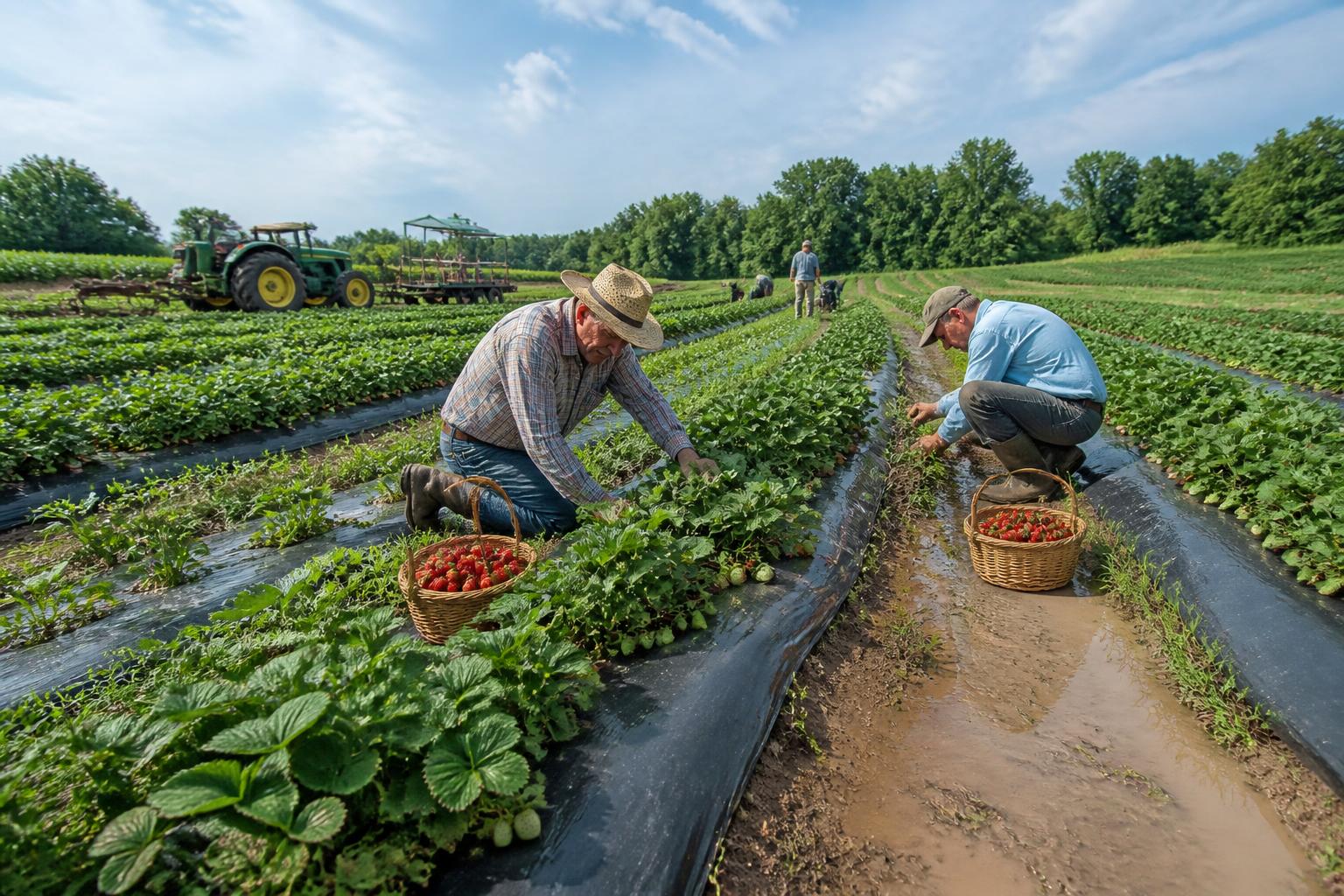
Summer in Alabama has brought a mix of high humidity and intense weather patterns, creating a demanding environment for crop protection. Recent heavy rains have saturated soils across the state, causing noticeable damage to Alabama strawberries and other vulnerable specialty crops. For growers from the Tennessee Valley down to the Gulf Coast, managing disease pressure and excess moisture has become the top priority for protecting summer yields.
As field conditions fluctuate, agribusinesses and farmers are pivoting to resilient management strategies. New federal funding combined with localized crop protection techniques are helping Alabama operations navigate these seasonal challenges while preparing for the critical mid-summer stretch.
Heavy Summer Rains Put Specialty Crops at Risk
Excessive moisture during June has disrupted traditional harvesting and disease-prevention schedules. Alabama strawberry growers and specialty crop producers are reporting crop losses due to rot and waterlogging caused by the recent downpours. These wet conditions accelerate fungal pathogens, requiring immediate and precise crop protection interventions.
To help mitigate these recurring vulnerabilities, the USDA recently granted $519,000 for specialty crop projects in Alabama. This funding is aimed at enhancing local production, improving crop resistance, and researching better management practices for high-value crops. Alabama growers are increasingly looking toward modern techniques, integrating solutions like protected cultivation and biologicals to shield delicate fruits from extreme weather and moisture-induced diseases.
Defoliation and Nutrient Decisions in Row Crops
For row crop producers, particularly those managing cotton and peanuts, the wet summer weather complicates field entry and crop development. Managing late-planted cotton requires careful observation of plant maturity and strict timing of defoliation to protect lint quality. Heavy rains can dilute chemical applications, forcing growers to be more aggressive and precise with their timing and crop protection formulations.
Additionally, fertility choices are intersecting with crop protection. Many Alabama cotton farmers are analyzing poultry litter options, comparing broiler versus layer litter to optimize nutrient delivery without over-fertilizing, which can attract late-season pests. Staying ahead of these challenges means monitoring weed flushes triggered by the rain and adopting proactive strategies for summer crop protection in Alabama to keep fields clean during wet cycles.
Global Partnerships and Modern Application Tech
While local producers focus on field-level protection, Alabama agricultural innovators are expanding their footprint. Sylacauga-based Pursell, in partnership with Sollio Agriculture, is working to build an innovative fertilizer coating plant in Canada, demonstrating the global reach of Alabama-engineered crop and nutrient technologies. Back home, wet fields are driving demand for precision application methods, such as utilizing agricultural drones and modern technologies, to spray wet fields without causing soil compaction or leaving tire ruts in the soggy ground.
On the policy front, national shifts in pesticide regulation remain a key focus for local growers. Recent political developments show a stronger national embrace of traditional pesticide use, which could ease some regulatory hurdles for producers seeking dependable chemical tools to combat stubborn summer pests.
Key Takeaways for Alabama Producers
- Monsoon-like June Rains: Wet weather has damaged Alabama strawberries and other specialty crops, emphasizing the need for rapid fungicidal protection and improved drainage.
- Specialty Crop Support: The USDA's $519,000 grant will support local projects aimed at boosting the resilience of Alabama specialty crops.
- Precision Timing: Late cotton and wet field conditions demand high precision in defoliation and weed management to avoid yield loss.
- Innovative Application: Wet soils make drone spraying and advanced coating technologies increasingly attractive options for summer management.
What it means for the market
For Alabama agribusinesses and farmers, the current wet summer emphasizes that crop protection is not a one-size-fits-all program. The combination of USDA specialty crop funding and advanced localized technology will likely drive a stronger market for biologicals, precision spraying services, and robust drainage infrastructure. While weather-induced damage to strawberries and early crops may tighten local supply in the short term, proactive management in the row crop sector will be vital to securing high-quality yields ahead of the autumn harvest.
Comments
No comments yet - be the first to share your take.