
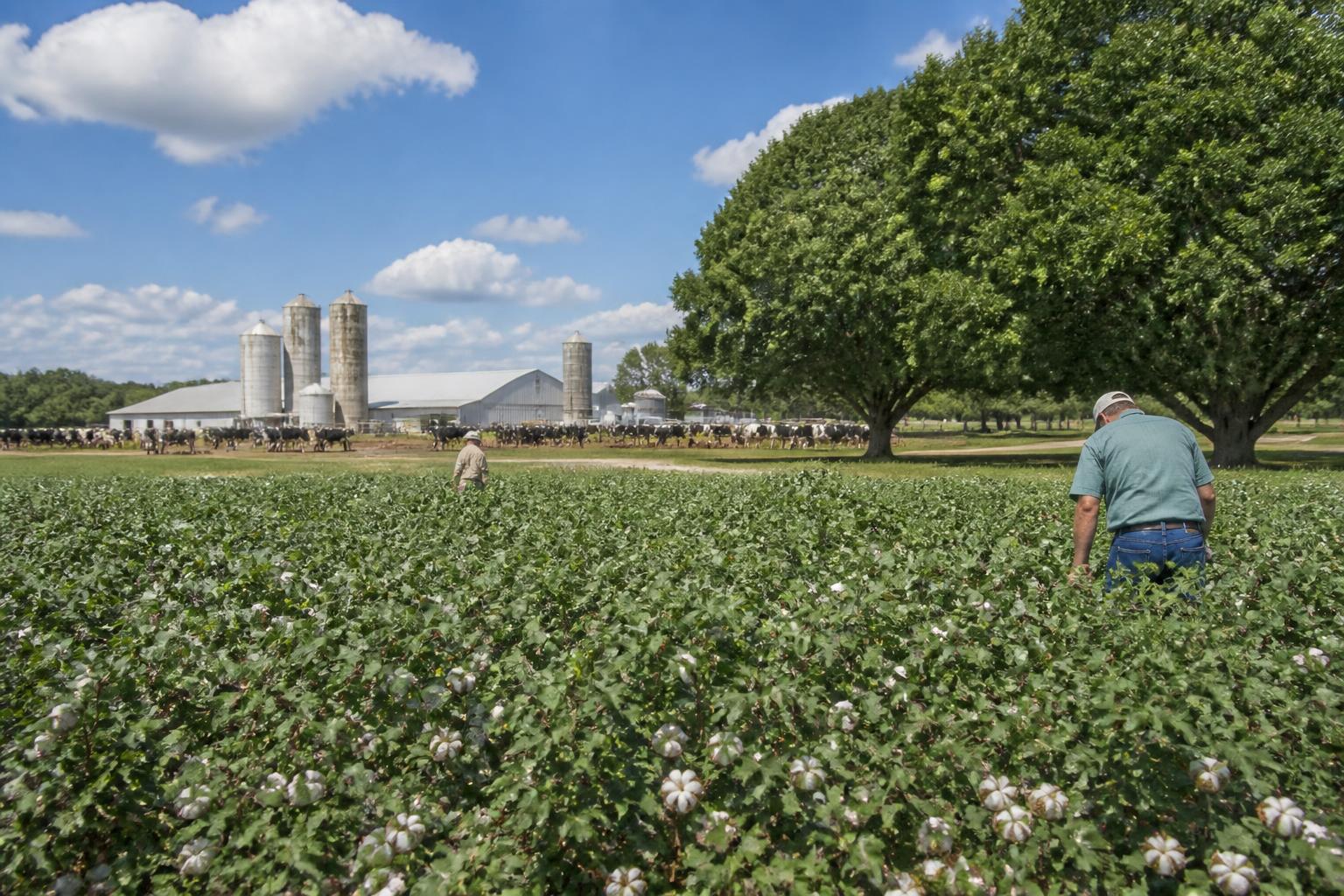
As summer temperatures peak across Georgia, agricultural producers are facing a multi-front battle to protect their crops and vital pollinator populations. A highly variable wet-dry-wet weather pattern in South Georgia has intensified local crop management challenges, elevating disease risks and requiring growers to remain highly vigilant with their protection strategies.
From the fields of the Coastal Plain to local orchards, managing these environmental and biological pressures is essential for safeguarding yield potential. Agricultural businesses are adapting by coordinating treatment plans, securing inputs early, and supporting statewide biosecurity efforts.
Combating Foliar Diseases in Georgia Cotton
This summer's alternating wet and dry spells have created a prime environment for crop pathogens. Cotton growers in South Georgia are particularly focused on disease prevention, as three major foliar diseases are anticipated to impact regional fields this season. These fungal and bacterial pressures can rapidly degrade leaf canopies, reducing photosynthetic capacity and ultimately hurting boll development.
To minimize damage, specialists recommend systematic field scouting and precisely timed fungicide or antibacterial applications. Integrating these protective applications into broader crop management routines is critical. For instance, combining chemical protection with robust plant nutrition, such as managing mid-summer nutrient volatility, can help Georgia crops maintain the structural integrity needed to withstand disease stress during erratic weather cycles.
Statewide Mobilization Against the Yellow-Legged Hornet
Beyond crop-specific diseases, Georgia's agricultural infrastructure faces an ecological threat from the invasive yellow-legged hornet. This predator targeted at honeybees poses a direct risk to the state's pollination-dependent sectors. Because bees are essential for pollinating various regional crops, protecting hives is a high-priority biosecurity objective for the Georgia Department of Agriculture.
To combat this spread, state officials are actively hiring personnel to locate, trap, and eradicate these invasive pests. Farmers and local residents are being encouraged to monitor their properties and report sightings. Preserving healthy honeybee populations is not just an ecological concern; it is a critical component of maintaining steady yields across Georgia's diverse fruit and vegetable farms.
Securing Protection Inputs and Managing Logistics
Effective crop and pollinator protection depends on the timely delivery of specialized chemical and trapping supplies. With high seasonal demand across the Southeast, logistics planning has become a major differentiator for successful operations. Congested transport corridors can delay the arrival of emergency chemical applications, making foresight in shipping essential.
Agribusinesses are urged to coordinate closely with regional carriers, particularly when navigating summer freight demands to ensure that crop protection assets are positioned well ahead of critical application windows. This proactive logistics planning ensures that when sudden weather shifts trigger disease outbreaks, growers have immediate access to the defenses they need.
What it means for the market
For Georgia's agricultural market, the current focus on crop protection highlights the tight connection between environmental conditions and input demand. Managing cotton diseases and invasive hornets requires both timely chemical applications and organized logistics. Growers who successfully execute these protection strategies will be better positioned to preserve crop quality and secure favorable returns at harvest, while those caught off guard face increased risk of yield loss in a highly competitive summer market.
Comments
No comments yet - be the first to share your take.