
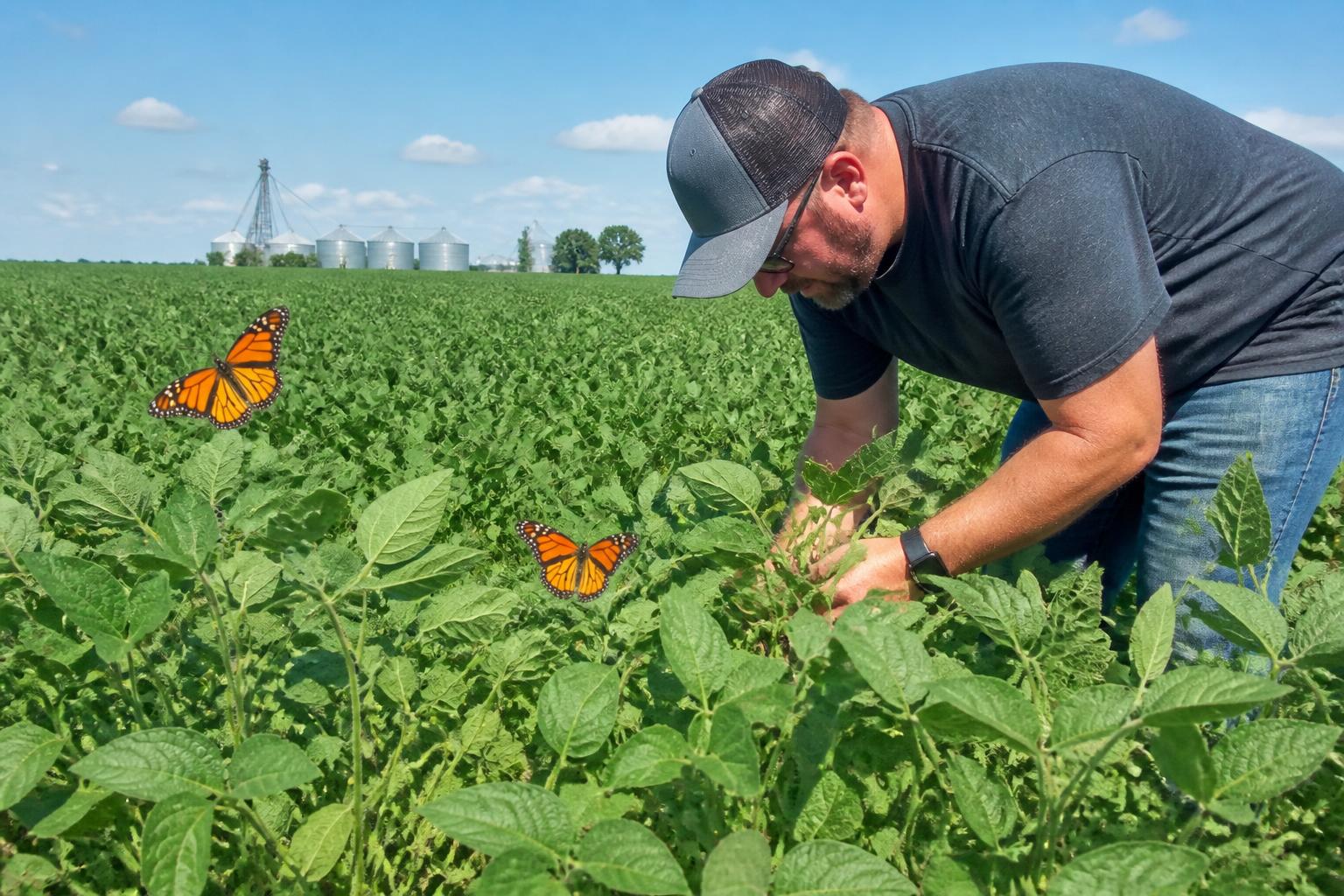
As Illinois enters the heart of the summer season, growers across the state are facing a delicate balancing act. High input costs and shifting economic forecasts are forcing farm operators to scrutinize every pass of the sprayer. At the same time, regional environmental initiatives are gaining traction, requiring a more conscious approach to chemical applications and habitat preservation in the Prairie State.
With the release of projected crop budgets showing tight margins for upcoming seasons, managing chemical applications efficiently is no longer just about yield preservation-it is a financial necessity. Farmers are searching for ways to maintain weed and pest control without overextending their operating capital during a demanding summer season.
Statewide Conservation Efforts Put Focus on Application Drift
A major focus this summer is the newly launched statewide plan to boost the monarch butterfly population in Illinois. Environmental groups and state agricultural leaders are urging voluntary coordination to rebuild crucial habitats. Because monarch caterpillars rely heavily on milkweed, the integration of chemical weed control with non-crop habitat preservation has become a primary topic among local landowners.
Sustainable land and water management practices, long championed by organizations like The Nature Conservancy, are increasingly crossing over into mainstream farming decisions. Implementing these goals requires careful management to prevent drift into designated pollinator zones. To keep up with these practices, many Illinois operators are focusing on drift reduction strategies, which is why maximizing application safety has become a vital component of local spray programs this season.
Input Cost Pressures Shape Long-Term Spray Decisions
According to current projections for crop budgets, persistent fertilizer and input pricing pressures are heavily influencing farm management strategies. For many producers in counties like Champaign, LaSalle, and McLean, these financial realities mean that every drop of herbicide, fungicide, or insecticide must count. The margin for error is slimmer than in previous seasons, forcing a closer look at application timing and product selection.
This economic pressure comes at a time when regulatory adjustments and operational overhead are already challenging farm margins. Producers are navigating these hurdles by utilizing highly targeted programs, keeping a close eye on how regulatory wins and budget shocks shaping summer management impact their bottom line. By optimizing tank mixes and timing applications to peak weed vulnerability, growers hope to bypass the need for costly secondary rescue treatments.
Precision Tools and Crop Diversification
To manage both budget constraints and conservation goals, Illinois growers are turning to advanced field mapping and spot-spraying technologies. Precision application allows operators to apply products only where weed pressure exceeds economic thresholds, sparing beneficial insects and reducing overall chemical volume. Successfully navigating early summer weed pressures with precision tech is proving to be a game-changer for maintaining clean fields while protecting adjacent pollinator habitats.
Additionally, crop diversification is introducing new protection dynamics in the state. Crops like edamame are gaining attention across Illinois, providing alternative marketing channels but also requiring specialized knowledge regarding crop-tolerant herbicides and specific insect pests. Managing these specialty crops alongside traditional corn and soybean rotations demands heightened awareness of herbicide carryover and drift sensitivity.
Key Takeaways for Illinois Operators
- Monarch Conservation: The new statewide butterfly recovery plan highlights the importance of keeping applications targeted and protecting non-crop milkweed habitats.
- Budget Constraints: Rising input costs and tight projected margins require highly precise chemical application to avoid wasteful over-spraying.
- Diversification Challenges: The growth of alternative crops like edamame introduces new crop protection parameters and drift sensitivities that neighbors must communicate about.
What it means for the market
For the agricultural market in Illinois, the intersection of conservation initiatives and economic strain is accelerating the adoption of precision application technology. Input suppliers and custom applicators who can offer targeted, drift-reducing solutions will likely see sustained demand, while commodity growers will continue to prioritize cost-efficiency. Navigating these overlapping demands will define operational success as the summer growing season progresses.
Comments
No comments yet - be the first to share your take.