
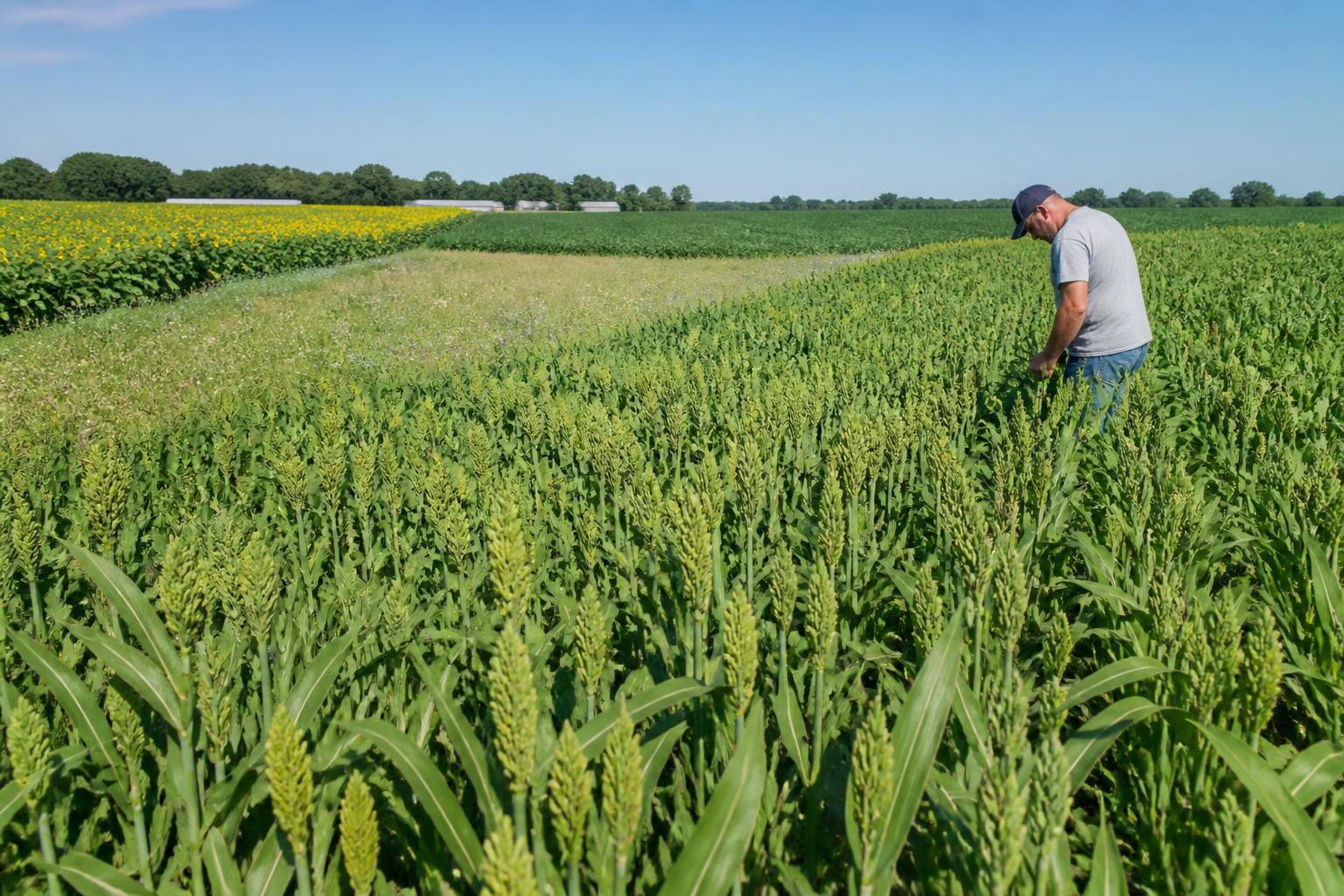
As the heat of late June intensifies across the Southwest, New Mexico grain growers are navigating a complex landscape of persistent drought, rising international trade tensions, and record-high operating expenses. With water availability remaining a critical constraint in arid regions, many producers are re-evaluating their planting portfolios and shifting toward highly resilient crops to protect their bottom lines.
For growers operating in key eastern counties like Curry, Roosevelt, and Quay, securing margins requires a careful balance of water management, input conservation, and strategic marketing. At the same time, regional transport networks and global supply chains continue to dictate the local value of feed grains and oilseeds.
The Sorghum Pivot in an Arid Climate
Faced with growing climate volatility and depleting aquifer levels, New Mexico farmers are increasingly turning to sorghum as a primary dryland option. Often referred to as an ancient grain made new, sorghum offers exceptional drought tolerance, requiring significantly less water than corn while maintaining reliable yields under intense summer heat. This hardiness makes it a critical tool for local growers looking to manage risk in water-stressed districts.
As international feed demands shift, sorghum also offers flexible marketing pathways. Local growers looking to optimize their sales strategies can explore competitive bids and find optimal options to sell grain in New Mexico, leveraging both regional feedlot demand and export terminals. The crop's low water requirement helps insulate farmers from the severe crop failures that have recently threatened agricultural systems across the border in Mexico.
Soaring Input Costs and Fertilizer Headwinds
While agronomic shifts help manage water risk, New Mexico producers are still vulnerable to soaring operational expenses. According to the USDA, national farm production costs are projected to hit record highs by 2027. This long-term trend is actively squeezing margins this summer, particularly regarding crop protection and plant nutrition. Local operations are feeling the pressure of these overhead trends, driving a greater focus on targeted summer crop protection and rising input costs.
The fertilizer market remains highly volatile due to a heavy reliance on foreign suppliers and ongoing geopolitical disruptions. Recent tensions, such as security threats in the Strait of Hormuz, have stoked further uncertainty across global fertilizer distribution networks. For New Mexico grain handlers, these international shipping bottlenecks translate directly to higher landed costs for essential inputs, forcing a more conservative approach to soil management and nutrient application.
Trade Pressures and Infrastructure Realities
Beyond the field, broader geopolitical developments are casting a shadow over regional grain marketing. Agricultural trade discussions under the USMCA are returning to the limelight, particularly as partners like Canada consider retaliatory tariffs on various U.S. agricultural products. Any disruptions to cross-border trade flow can quickly depress regional basis levels, making efficient local logistics more critical than ever.
Efficient shipping remains a lifeline for the state's grain elevators. High-volume corridors like Interstate 40 and US-54 are essential for moving sorghum and wheat to distant markets, though local shippers must constantly adapt to changing regulatory and weight parameters. Keeping tabs on regional transport infrastructure priorities is crucial for avoiding costly delays during the seasonal transit rush.
Additionally, smaller-scale producers in the state are facing unique headwinds. Some local growers report that the reduction or expiration of certain federal support programs has disproportionately impacted small-scale operations. In response, some diversified growers in northern areas, such as San Juan County, are bypassing traditional wholesale channels entirely to focus on direct-to-consumer opportunities and local farmers' markets to capture higher retail premiums.
Key Takeaways for New Mexico Grain Producers
- Water-Smart Cropping: Sorghum remains a top-tier alternative to water-intensive corn under persistent summer heat.
- Input Budgeting: With production costs expected to rise through 2027, early input procurement and precise application are essential.
- Supply Chain Vigilance: Keep an eye on global shipping bottlenecks and USMCA trade negotiations that influence local grain basis.
What it means for the market
For the remainder of the summer, the New Mexico grain market will be defined by defensive management. High input costs and global fertilizer volatility mean that maximizing yield at all costs is no longer the most profitable strategy. Instead, local operations must prioritize efficiency, utilizing drought-resilient crops like sorghum and optimizing logistics along key transport corridors to protect thin operating margins.
Comments
No comments yet - be the first to share your take.