
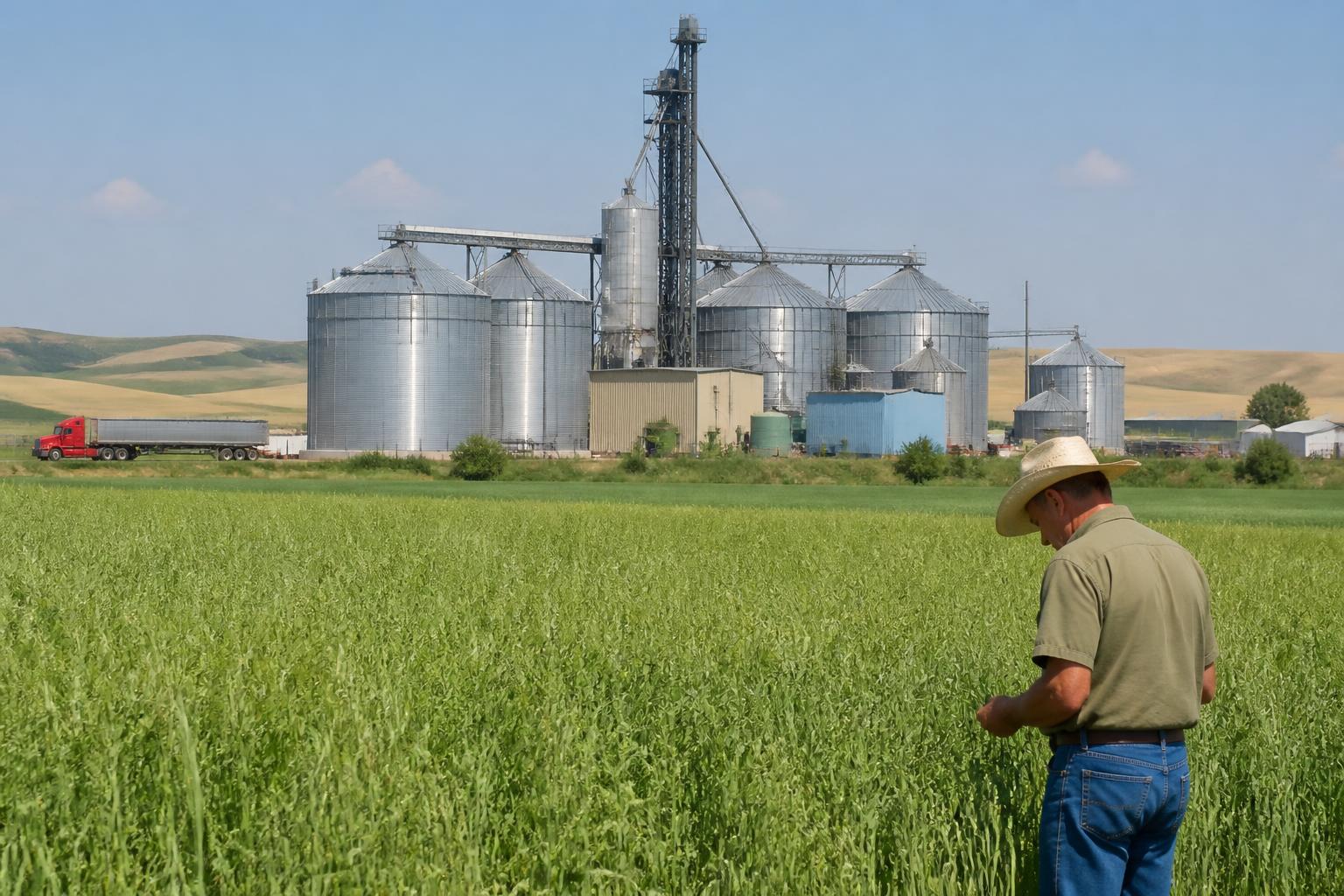
As summer settles over the Big Sky Country, Montana grain growers are watching shifting regional processing dynamics and targeted rural investments to help capture stronger margins. With international wheat competition putting pressure on standard bulk exports, localized value-add processing and specialty crop infrastructure are becoming increasingly critical for the state's agricultural economy.
Reinvigorating Regional Grain Processing and Infrastructure
A major development for northern Montana growers is the resumption of operations at the Pardue Grain processing plant. Backed by an international joint venture, the facility's revival provides a critical local outlet for pulse crops and grains. This restart comes at a time when producers are looking to diversify their marketing channels away from purely volatile global commodity streams.
Value-added opportunities also continue to grow in other specialty niches. Enterprises like Montana Gluten Free Oats showcase the viability of processing identity-preserved crops locally. To make sure these high-value crops flow smoothly from the fields to regional facilities, optimizing Montana agricultural transport corridors for summer harvest remains a key priority for regional shippers and elevator operators alike.
Research and Targeted Investment Bolster Specialty Crops
Public and institutional support is helping fuel agricultural innovation across the state. The USDA recently announced a 1 million dollar investment spread across five projects designed to boost rural Montana agriculture. These funds aim to enhance local marketing, processing, and distribution networks, keeping more agricultural dollars within rural communities.
On the research front, institutions are actively addressing quality and pest challenges:
- Malting Barley Quality: The Montana State University (MSU) Malt Quality Lab provides barley malt quality analysis, helping growers target premium craft beer and food industries.
- Pest Management Support: MSU students are actively trapping worms in regional grain fields to identify and mitigate crop damage, protecting yield potentials during critical summer growing weeks.
Conservation Pressures and Land Use Dynamics
While infrastructure expands, Montana's agricultural landscape continues to navigate land-use challenges. In the Northern Plains, the practice of sodbusting - plowing up native prairie for cropland - remains a point of tension. Concurrently, local land preservation efforts are gaining ground. The Gallatin Valley Land Trust recently announced the permanent protection of 190 acres of vital agricultural land near South Cottonwood Creek, ensuring it remains dedicated to farming and open space amid growing development pressures.
What it means for the market
For Montana grain producers, these infrastructure and research developments provide vital tools to combat global market headwinds, such as record-pace international wheat exports. The expansion of regional processing sites like Pardue Grain, coupled with specialized testing services like the MSU Malt Quality Lab, allows growers to transition from bulk commodity price-takers to premium specialty suppliers. Ensuring smooth logistics from field to processor this summer will be key to locking in these localized premium margins.
Comments
No comments yet - be the first to share your take.