
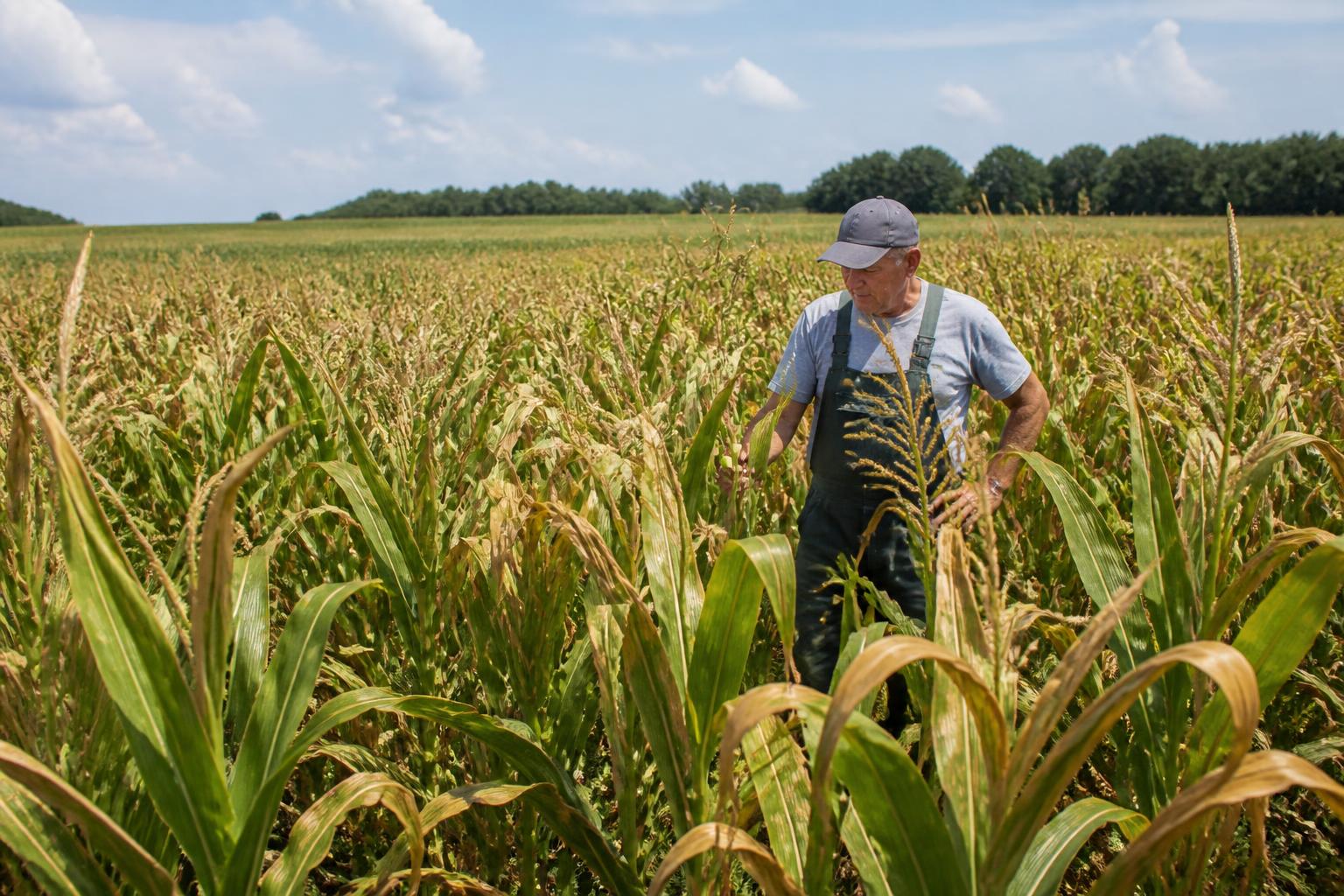
As summer settles across Virginia, the state's agricultural community is facing a demanding season. From the fields of the Shenandoah Valley to the sandy soils of the Eastern Shore, local growers are dealing with a tough mix of declining corn yields, rising input costs, and trade tariffs that are tightening profit margins.
Agronomic Hurdles and the Quest for Yield Stability
One of the most pressing agronomic issues for Virginia grain producers this season is a notable decline in corn yields. While weather patterns always play a critical role in summer crop performance, growers are increasingly looking at long-term systemic factors. Effective management of weed pressure, crop diseases, and overall plant health has become essential to reverse these downward trends.
To help growers address these complex issues, academic and extension efforts are shifting focus. The recent appointment of Charlie Cahoon as assistant professor of plant pathology, physiology, and weed science, as well as an Extension specialist at Virginia Tech, highlights the state's commitment to delivering targeted agronomic research directly to the field. Farmers are relying more on academic partnerships to optimize their chemical applications and field management, particularly when improving Virginia crop protection strategies to combat stubborn weeds and pests.
Input Costs and Tariffs Squeeze Profitability
Beyond agronomic challenges, the financial reality of modern farming is taking a heavy toll. Rising input costs - spanning fertilizers, fuel, and seed technology - continue to erode margins. For some Virginia operations, these high operational costs are compounded by the ongoing pressure of international trade tariffs, forcing family farms to make difficult decisions about their long-term viability. In some cases, the combination of high financial overhead and market volatility has even led growers to contemplate exiting the business entirely.
Logistics also play a key role in regional commodity movement. Managing transportation overhead is highly critical when transporting crops during peak summer logistics. Efficiently routing grain from local elevators to coastal terminals or feed mills is vital for minimizing losses and preserving what margin remains.
Key Takeaways for Virginia Agribusinesses
- Focus on Efficiency: Tight margins mean that every input application must be precisely calibrated. Working with local extension offices can help optimize fertilizer and pesticide usage.
- Risk Management: With tariffs and market volatility impacting prices, utilizing diverse marketing strategies and forward contracting is more important than ever.
- Logistics Coordination: Planning freight and storage requirements early can help avoid bottlenecks during the late summer and fall harvest.
What it means for the market
The combination of declining corn yields and elevated production expenses in Virginia is likely to keep local grain supplies tight and basis levels highly variable this season. Agribusinesses, livestock operations, and grain elevators must brace for tighter local balances and potentially higher sourcing costs. To navigate these challenges successfully, growers and input buyers alike must focus on precision agronomics, strong risk management practices, and efficient local logistics network coordination.
Comments
No comments yet - be the first to share your take.